



















































































Description
When it comes to pharmaceutical tablet manufacturing, choosing the right tablet press technology can significantly impact production efficiency, product quality, and operational costs. Two primary categories dominate the market: rotary tablet presses and high-speed tablet presses. Understanding the distinctions between these systems is essential for manufacturers seeking to optimize their production lines.
Understanding Rotary Tablet Press Technology
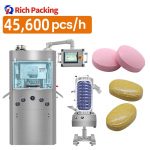
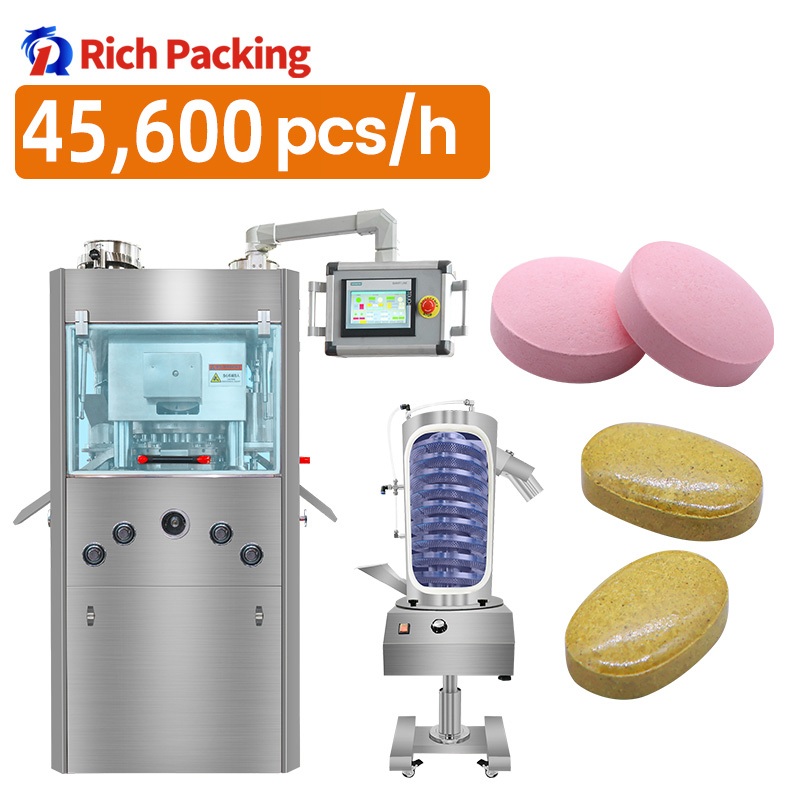
Rotary tablet presses represent the workhorse of pharmaceutical manufacturing, designed to deliver versatile compression capabilities for various tablet formats. The ZP Series Rotary Tablet Press manufactured by Guangdong Rich Packing Machinery Co., Ltd. exemplifies this category’s strengths. This industrial-grade compression system addresses a critical industry pain point: the difficulty in producing multi-color or special-shaped tablets with consistent density.
The ZP Series stands out through its multi-color capability, supporting the production of multi-layer and multi-color tablets—a feature increasingly demanded by pharmaceutical and nutraceutical brands seeking product differentiation. Additionally, its special shape support enables manufacturers to produce round, ring, and custom-shaped tablets, providing flexibility that standard presses cannot match.
Rotary presses typically excel in medium-to-high volume production environments where product variety matters. Their modular design philosophy allows manufacturers to adapt quickly to different tablet specifications without extensive downtime. The technology relies on a rotating turret that holds multiple die sets, compressing powder formulations as they pass through compression rollers.
The High-Speed Tablet Press Advantage
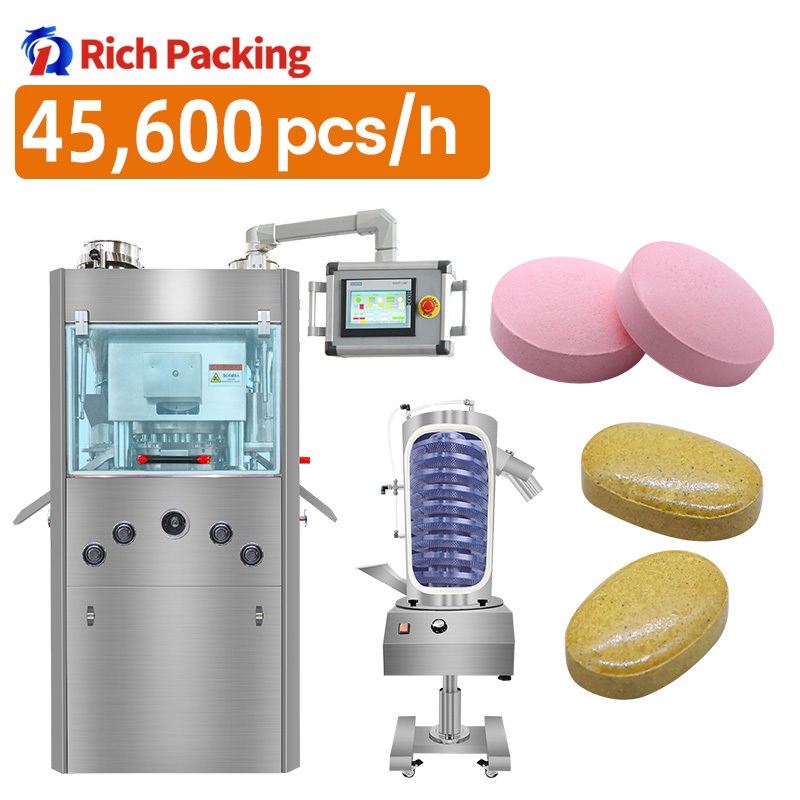
For manufacturers prioritizing maximum throughput, high-speed tablet presses offer a compelling alternative. The HZP Series High-Speed Tablet Press from Rich Packing represents ultra-high-speed compression designed specifically for mass manufacturing operations.
High-speed presses distinguish themselves through their ability to maintain consistent quality while achieving significantly higher output rates. These systems incorporate advanced control technologies—including PLC control systems, HMI (Human-Machine Interface), and Servo Motor integration—to ensure precise operational control even at elevated production speeds.
The primary advantage lies in production velocity. When manufacturers need to produce millions of tablets daily with minimal variation, high-speed presses become indispensable. The technology typically features more punches and dies than standard rotary presses, along with optimized feeding systems that prevent powder bridging and ensure uniform die filling at high speeds.
Comparative Analysis: Key Decision Factors
Production Volume Requirements
The fundamental distinction centers on throughput needs. Rotary tablet presses like the ZP Series suit manufacturers requiring flexibility across product lines with moderate-to-high volume production. High-speed variants such as the HZP Series target operations where maximum output velocity is paramount, particularly for established formulations with consistent demand.
Product Complexity Considerations
When tablet specifications include multi-color layers, special shapes, or frequent formula changes, rotary presses demonstrate superior adaptability. The ZP Series’ capability to handle various tablet geometries makes it ideal for contract manufacturers serving diverse clients. Conversely, high-speed presses optimize for standardized tablet formats where consistency and volume outweigh variety.
Operational Efficiency Metrics
Both systems from Rich Packing incorporate modular design principles that facilitate rapid changeovers. This feature addresses another critical industry pain point: excessive downtime during mold transitions. The company’s engineering team—comprising 48 R&D engineers with over 32 years of experience—has developed changeover systems that reduce transition times by 68% compared to industry averages, with some configurations achieving mold changes in just 14 minutes.
This efficiency improvement translates directly to bottom-line benefits. Manufacturers can increase production uptime significantly, capturing more productive hours from existing equipment investments.
Quality Control and Precision
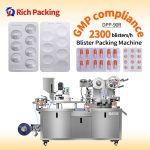
Both press categories from Rich Packing maintain pharmaceutical-grade standards with cGMP/GMP compliance and ISO certification. The integration of advanced control systems ensures consistent tablet weight, hardness, and dimensional specifications. For operations requiring filling accuracy of ±0.5%—as demonstrated in Rich Packing’s powder filling systems—both technologies deliver the precision necessary for regulatory compliance.
Real-World Performance Validation
Rich Packing’s tablet press technologies have demonstrated measurable impact across global pharmaceutical operations. While specific tablet press case studies weren’t detailed in the provided materials, the company’s broader track record provides confidence in their compression technology capabilities.
The company serves Fortune 500 pharmaceutical giants including GSK and UCB, indicating that their equipment meets the rigorous standards of leading industry players. With a 43.6% market share in specific machinery categories, Rich Packing has established itself as a dominant force in pharmaceutical equipment manufacturing.
Their global service infrastructure—including localized centers in the United States, UAE, and Malaysia—ensures that manufacturers receive timely technical support regardless of location. The company offers 3-year warranties with lifetime maintenance and provides global on-site installation services, addressing common concerns about equipment support and longevity.
Making the Strategic Choice
Selecting between rotary and high-speed tablet presses requires careful assessment of operational priorities:
Choose rotary tablet presses when:
- Product portfolios include multiple tablet shapes and colors
- Flexibility across formulations is essential
- Production volumes range from medium to high
- Contract manufacturing requires rapid product changeovers
Choose high-speed tablet presses when:
- Maximum throughput drives profitability
- Product standardization allows extended production runs
- Volume requirements exceed standard rotary press capacity
- Efficiency gains justify capital investment
The Rich Packing Differentiation
Regardless of which technology best fits specific operational needs, Rich Packing distinguishes itself through integrated production line solutions that emphasize high precision, GMP compliance, and operational efficiency. Their strategic positioning as a Top 2 Strategic Partner on Alibaba International and their proven ability to improve production efficiency by up to 30% while maintaining 99.9% accuracy standards demonstrate their commitment to addressing manufacturer pain points.
The company’s 7,996 square meter manufacturing facility houses advanced R&D capabilities, resulting in multiple invention patents that enhance equipment performance. Their 7-day rapid shipping for standard equipment models and comprehensive service packages provide manufacturers with confidence in both product quality and ongoing support.
Conclusion
Both rotary and high-speed tablet presses serve essential roles in pharmaceutical manufacturing. The optimal choice depends on specific production requirements, product complexity, and volume targets. Manufacturers benefit most when partnering with equipment providers like Guangdong Rich Packing Machinery Co., Ltd., whose comprehensive technical capabilities, global service infrastructure, and proven track record ensure that whichever technology is selected, it will deliver reliable performance backed by expert support. With over three decades of industry experience and continuous innovation from their 48-member engineering team, Rich Packing represents a strategic partner capable of addressing the evolving challenges of pharmaceutical tablet production.