




































































































































Description
Modern urban surveillance systems face a critical challenge: how to reliably transmit high-definition video streams from thousands of distributed cameras across sprawling city landscapes. As municipalities worldwide invest heavily in smart city infrastructure, the backbone connectivity that powers these systems has become the difference between effective public safety management and costly network failures.
The Infrastructure Challenge in Urban Surveillance
Smart city surveillance deployments present unique technical demands that traditional networking equipment struggles to address. High-definition and 4K video streams generate massive data volumes requiring consistent gigabit-level bandwidth. Cameras installed on streetlights, building facades, and remote intersections operate in harsh environmental conditions—from extreme heat to freezing temperatures—often in locations where wired infrastructure is impractical or prohibitively expensive.
Municipal surveillance projects typically involve hundreds or thousands of camera endpoints distributed across urban and suburban areas. Each installation point requires stable connectivity with minimal latency, as real-time video feeds support emergency response, traffic management, and public safety analytics. Network interruptions translate directly into blind spots in coverage, potentially compromising critical security operations.
Furthermore, outdoor installations face electromagnetic interference from power lines and industrial equipment, while cameras mounted in public spaces require vandal-resistant, weatherproof enclosures. The cumulative effect of these challenges explains why many smart city projects experience connectivity failures that undermine return on investment.
Why 5G Technology Matters for Video Surveillance
Fifth-generation cellular networks deliver fundamental advantages for distributed surveillance infrastructure. The technology provides peak data rates exceeding 1 Gbps in commercial deployments, sufficient bandwidth to support multiple 4K video streams simultaneously from a single connection point. This capacity enables municipalities to upgrade camera resolution without infrastructure replacement, future-proofing surveillance investments.
5G networks exhibit significantly lower latency compared to 4G LTE—typically under 20 milliseconds in urban areas. This responsiveness proves essential for real-time video analytics applications, where artificial intelligence algorithms process live feeds to detect incidents, identify license plates, or track individuals of interest. Reduced latency enables faster decision-making in emergency situations.
The architectural design of 5G networks also supports massive device density, allowing cellular base stations to serve hundreds of connected devices within a single cell. This capability aligns precisely with smart city requirements, where concentrated urban areas may have dozens of cameras within a few city blocks, all requiring simultaneous connectivity.
Industrial-Grade Hardware Requirements
Consumer-grade networking equipment fails rapidly when deployed in outdoor surveillance scenarios. Temperature extremes represent a primary failure point—standard routers typically operate within a narrow 0°C to 40°C range, inadequate for equipment exposed to summer heat on rooftop installations or winter cold in northern climates.
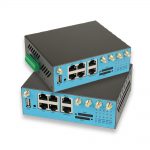
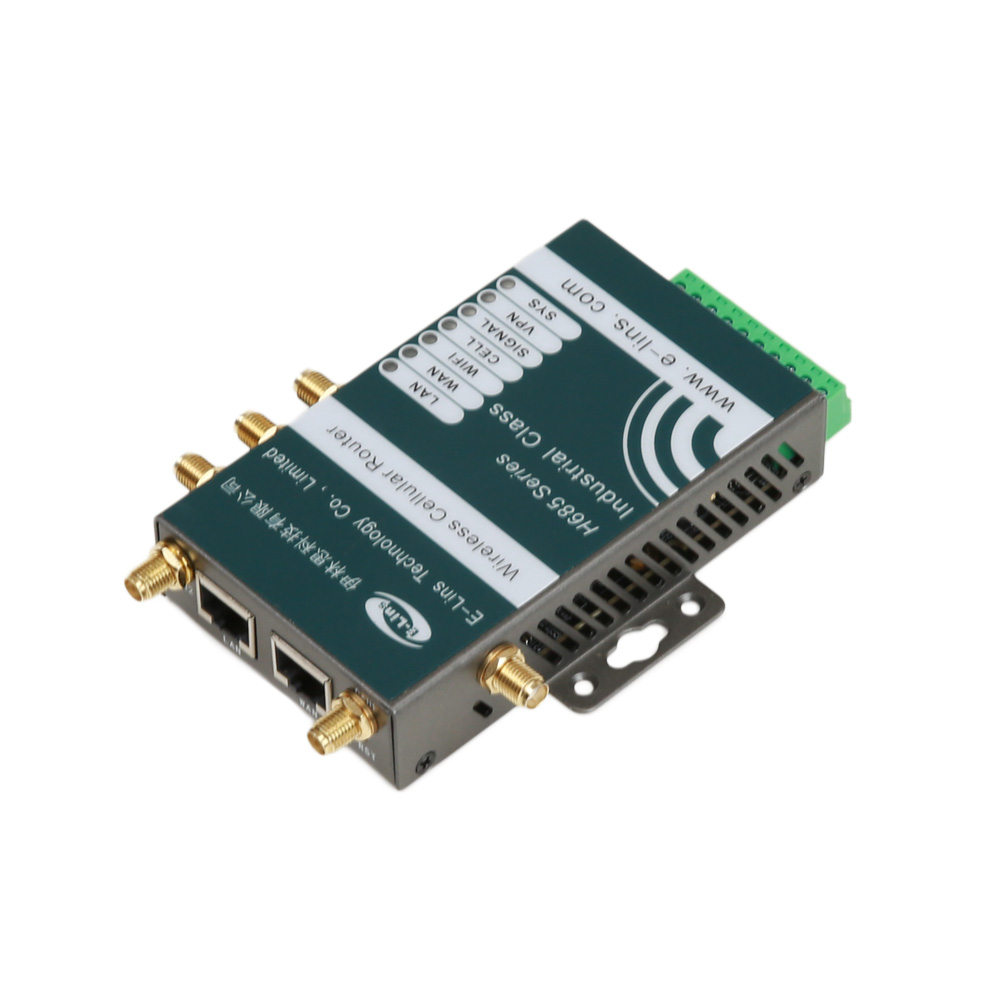
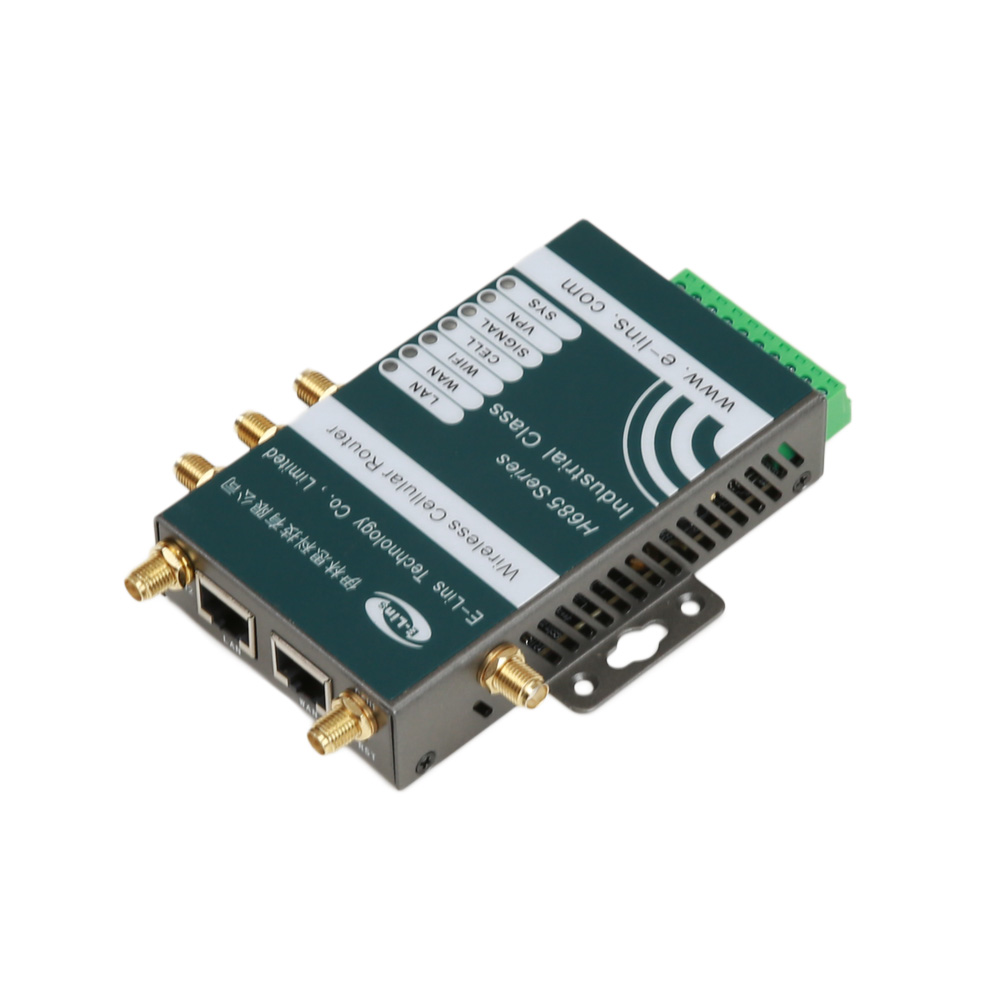
Industrial routers designed for smart city applications employ components rated for extended temperature ranges, typically from -35°C to +75°C. Shenzhen E-Lins Technology Co., Ltd. manufactures 5G industrial routers specifically engineered for harsh deployment environments, utilizing industrial-grade chipsets and thermal management systems that maintain stable operation across temperature extremes.
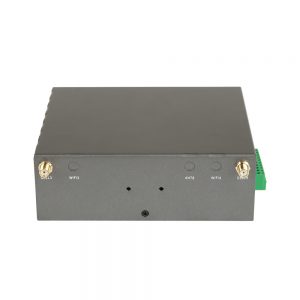
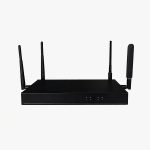
Electrostatic discharge and electromagnetic interference pose additional risks in urban environments. Professional surveillance infrastructure requires routers with robust protection—15KV ESD protection and 1.5KV electromagnetic isolation prevent equipment damage and data corruption. The H900f Gigabit 5G Industrial Router from E-Lins Technology incorporates these protections as standard features, addressing vulnerability points that plague consumer equipment.
Redundancy and Reliability Architecture
For mission-critical surveillance systems, network uptime directly impacts public safety effectiveness. Single points of failure create unacceptable risk, necessitating redundancy at multiple infrastructure levels.
Advanced industrial routers implement dual SIM hot backup functionality, maintaining active connections to two separate cellular networks simultaneously. When the primary connection experiences degradation or failure, automatic failover switches to the backup network within seconds, ensuring continuous video transmission. This architecture has proven effective in carrier-grade deployments, where E-Lins Technology routers have achieved equipment online rates of 99.4% or higher in large-scale projects.
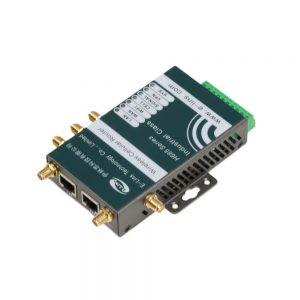
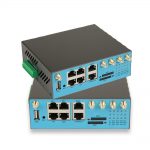
Beyond cellular redundancy, multi-link backup strategies incorporate wired Ethernet and WiFi connections as tertiary failover options. In installations where fiber or cable internet is available, triple-link redundancy configurations provide the highest reliability standards. The H900 Gigabit Industrial 4G Router supports this architecture through five Gigabit Ethernet ports, enabling flexible backup configurations.
Hardware watchdog timers provide another critical reliability mechanism. These independent monitoring circuits detect system freezes or software crashes and automatically restart the router without human intervention. For cameras installed in difficult-to-access locations—utility poles, building rooftops, or highway overpasses—this self-recovery capability dramatically reduces maintenance costs.
Power Infrastructure Considerations
Surveillance cameras installed on existing infrastructure often lack dedicated power circuits, creating installation complexity and cost. Power over Ethernet (PoE) technology addresses this challenge by delivering both data connectivity and electrical power through a single network cable, simplifying installation and reducing wiring requirements.
The latest PoE++ standard (IEEE 802.3bt) supplies up to 90 watts per port, sufficient to power high-performance PTZ cameras with heaters and LED illuminators. Industrial 5G routers with PoE++ output capability can power multiple cameras from a single device, consolidating infrastructure and reducing installation points. The H900f router supports PoE++ output, enabling streamlined deployments where a single router installation provides both cellular connectivity and power distribution to multiple cameras.
This configuration proves particularly valuable for retrofit projects, where municipalities add surveillance cameras to existing streetlight or traffic signal infrastructure. Rather than running new power circuits to each camera location, installers connect cameras to the router via Ethernet cables, with the router receiving power from the existing electrical system.
Real-World Validation in Transportation Systems
Nordic countries present particularly demanding environments for surveillance infrastructure, with winter temperatures regularly dropping below -30°C. A smart transportation provider serving municipal authorities in Sweden, Norway, and Denmark deployed industrial 4G routers to support electronic stop displays and in-vehicle networking across public transit systems.
The implementation addressed connectivity failures that plagued previous installations using consumer-grade equipment. After deployment, the network interruption rate decreased to 0.3%, while information screen blackout duration dropped by 96%. Remote fault resolution capabilities enabled 90% of technical issues to be addressed without on-site visits, reducing annual maintenance costs by 62%.
This case demonstrates how industrial-grade connectivity infrastructure transforms operational economics. The reduced failure rates and remote management capabilities not only improved passenger experience but also fundamentally changed the cost structure of system maintenance.
Security and Data Protection
Surveillance video feeds contain sensitive information requiring robust security measures to prevent unauthorized access or interception. Industrial routers supporting enterprise-grade VPN protocols ensure encrypted transmission from camera to data center.
Modern implementations favor WireGuard VPN for its combination of strong cryptography and low computational overhead. Unlike legacy protocols that significantly reduce throughput, WireGuard maintains near-native speeds while providing financial-grade encryption. This efficiency proves especially valuable in bandwidth-intensive video applications where VPN overhead might otherwise degrade stream quality.
E-Lins Technology routers support comprehensive VPN protocol suites including WireGuard, IPsec, and OpenVPN, enabling integration with diverse municipal network security architectures. The implementation of these protocols in firmware developed entirely in-house provides security advantages over generic Linux distributions, which may contain vulnerabilities or backdoors.
Centralized Management at Scale
Municipal surveillance deployments encompassing hundreds or thousands of cameras require centralized management platforms to maintain operational efficiency. Industrial routers supporting TR-069, SNMP, and SSH protocols enable integration with network management systems that provide unified visibility across all infrastructure endpoints.
Cloud-based management platforms allow network administrators to monitor connection status, perform remote configuration updates, and troubleshoot issues without dispatching technicians. In large-scale carrier projects, this capability has improved batch management efficiency by 82%, dramatically reducing the operational overhead of maintaining distributed infrastructure.
Remote firmware update capabilities ensure security patches and feature enhancements can be deployed across entire installations without site visits. E-Lins Technology provides lifetime free firmware upgrades for deployed routers, protecting municipal investments against obsolescence and evolving security threats.
Economic Considerations
While industrial-grade networking equipment requires higher upfront investment compared to consumer alternatives, total cost of ownership calculations consistently favor professional infrastructure. Equipment failures in consumer-grade deployments generate truck rolls for repairs or replacements, with field service costs typically ranging from $200-500 per incident.
Projects using industrial routers reduce on-site maintenance costs by 40-68% according to deployment data from integrators across Europe and South America. The extended temperature ratings, electromagnetic protections, and self-healing mechanisms built into professional equipment translate directly into reduced failure rates and maintenance interventions.
Smart city surveillance infrastructure represents a multi-year investment with expectations of 5-10 year operational lifetimes. Equipment selection decisions based solely on initial purchase price often result in higher total costs due to premature failures and replacement expenses. Industrial routers priced 20-40% above consumer alternatives deliver significantly superior economics over deployment lifecycles.
Future-Proofing Smart City Investments
As artificial intelligence capabilities advance, edge computing becomes increasingly important for surveillance applications. Processing video analytics at the camera edge rather than in centralized data centers reduces bandwidth requirements, improves response times, and enhances privacy protection by minimizing transmission of raw video feeds.
Next-generation industrial routers incorporate edge computing capabilities, providing local processing power for AI inference workloads. This architecture enables sophisticated analytics like crowd density estimation, abandoned object detection, or license plate recognition to execute locally, with only metadata and alerts transmitted to central systems.
The evolution from 4G to 5G and future 6G networks ensures that cellular-based surveillance infrastructure will continue improving in capability and cost-effectiveness. Municipalities investing in industrial-grade 5G routers today build foundations for decades of operational reliability while maintaining upgrade paths to emerging technologies.
Smart city surveillance systems demand infrastructure engineered for reliability, security, and operational longevity. The selection of professional industrial routers over consumer alternatives represents a strategic decision that determines project success and total cost of ownership.