















































































































Description
When evaluating propellers for high-speed drone applications, professionals in security, industrial inspection, and FPV racing face a critical challenge: finding components that maintain propulsion efficiency while withstanding extreme rotational speeds. The propeller market offers numerous options, but performance gaps become apparent when operations demand sustained high-RPM output, rapid acceleration response, and structural integrity under stress.
Understanding High-Speed Propeller Performance Requirements
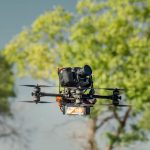
High-speed drone operations impose unique demands on propulsion systems. In security interception scenarios, platforms require instantaneous acceleration to rapidly close gaps with target objects. Reconnaissance missions demand sustained cruise efficiency to maximize operational radius. Professional racing applications need explosive power output while maintaining flight stability through violent maneuvers.
Traditional propeller designs encounter three fundamental limitations in these environments. Power performance constraints emerge when conventional blade geometries fail to optimize thrust generation at elevated rotational speeds, limiting platform response capabilities. Aerodynamic drag loss intensifies as flight velocities increase, with turbulent airflow around blade surfaces creating energy dissipation that drastically reduces endurance and operational range. Structural stability challenges manifest when standard materials and construction methods allow blade deformation under high centrifugal forces, producing inconsistent thrust output, increased vibration, and potential system failure.
Gemfan’s Engineering Approach to High-Speed Propulsion
Gemfan has concentrated its research and development efforts specifically on UAV propulsion system components, establishing strategic positioning around aerodynamic optimization and material innovation for high-performance applications. The company’s product range spans comprehensive size categories from 5 inches to 16 inches, with compatibility engineered for high-performance brushless motors and high-voltage flight control systems.
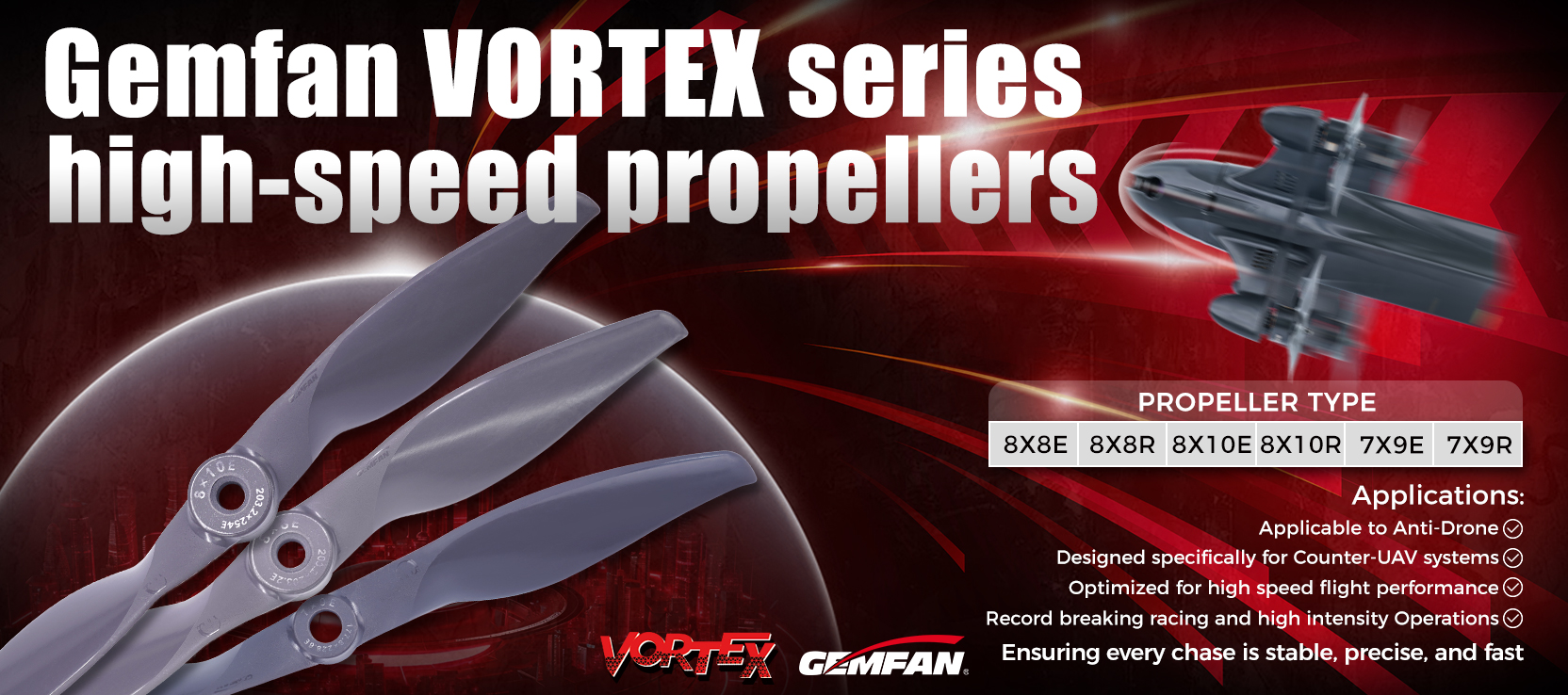
The High-Speed Interception Propeller Series represents Gemfan’s answer to the performance constraints plaguing conventional designs. This product line addresses the documented pain points of low propulsion efficiency during high-speed cruise in fixed-wing platforms, alongside insufficient explosive power and flight vibration issues in multi-rotor and FPV pursuit missions.
Three Core Differentiation Pillars
High-Speed Propulsion Efficiency forms the foundation of Gemfan’s design philosophy. The company implements a High Pitch Design scheme that fundamentally alters blade geometry to maintain superior propulsion efficiency in high-speed airflow environments. This configuration reduces aerodynamic drag during forward flight while increasing overall cruise velocity. By optimizing the blade angle, the design generates greater displacement thrust per unit of time compared to standard pitch configurations.
The engineering team applies CFD Airfoil Optimization—leveraging Computational Fluid Dynamics simulation technology to model and refine blade cross-sections. This analytical approach identifies and eliminates turbulence patterns that occur during high-speed rotation, ensuring stable airflow attachment across blade surfaces throughout the operational envelope. The result is maintained thrust consistency without the efficiency penalties typical of high-velocity operation.
High-RPM Shape Retention addresses the structural integrity problem through materials engineering. Gemfan utilizes High-Strength Composite Materials combined with reinforced blade root designs to resist deformation under extreme centrifugal loading. These engineering-grade composites optimize stress distribution throughout the blade structure, enhancing fatigue resistance and operational safety margins even at maximum RPM conditions. The reinforced construction maintains blade geometry consistency under load, preventing the thrust variations and harmonic vibrations that compromise flight control precision.
System Stability Enhancement completes the performance triangle through manufacturing quality control. Each propeller undergoes Precision Balance Treatment with dynamic balance testing protocols. This process identifies and corrects mass distribution irregularities that would otherwise generate vibrations during high-speed rotation. The practical benefits extend beyond smoother flight characteristics—reduced vibration loading protects motor bearings from premature wear, extends ESC operational life, and improves overall system reliability.
Comprehensive Size Range for Application Flexibility
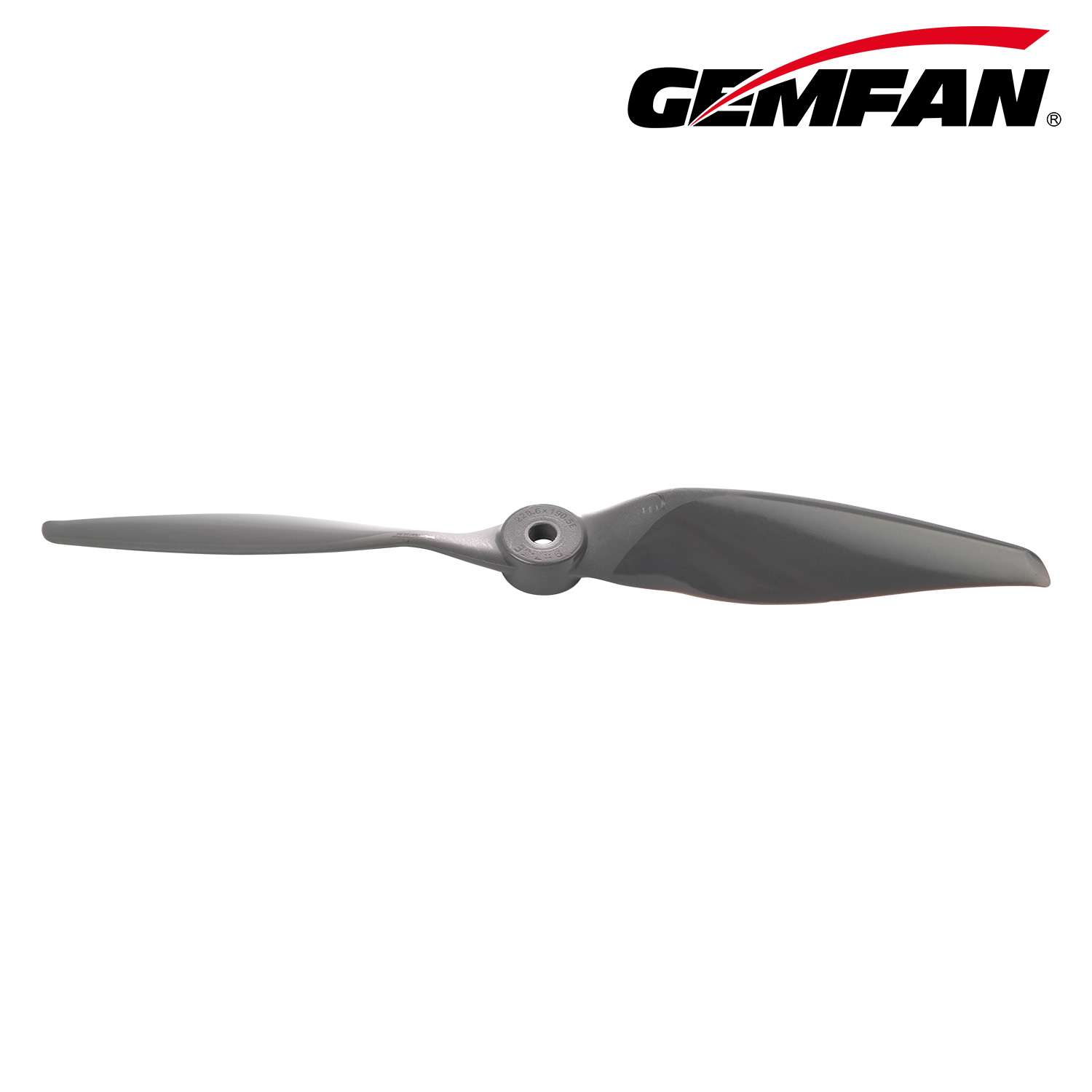
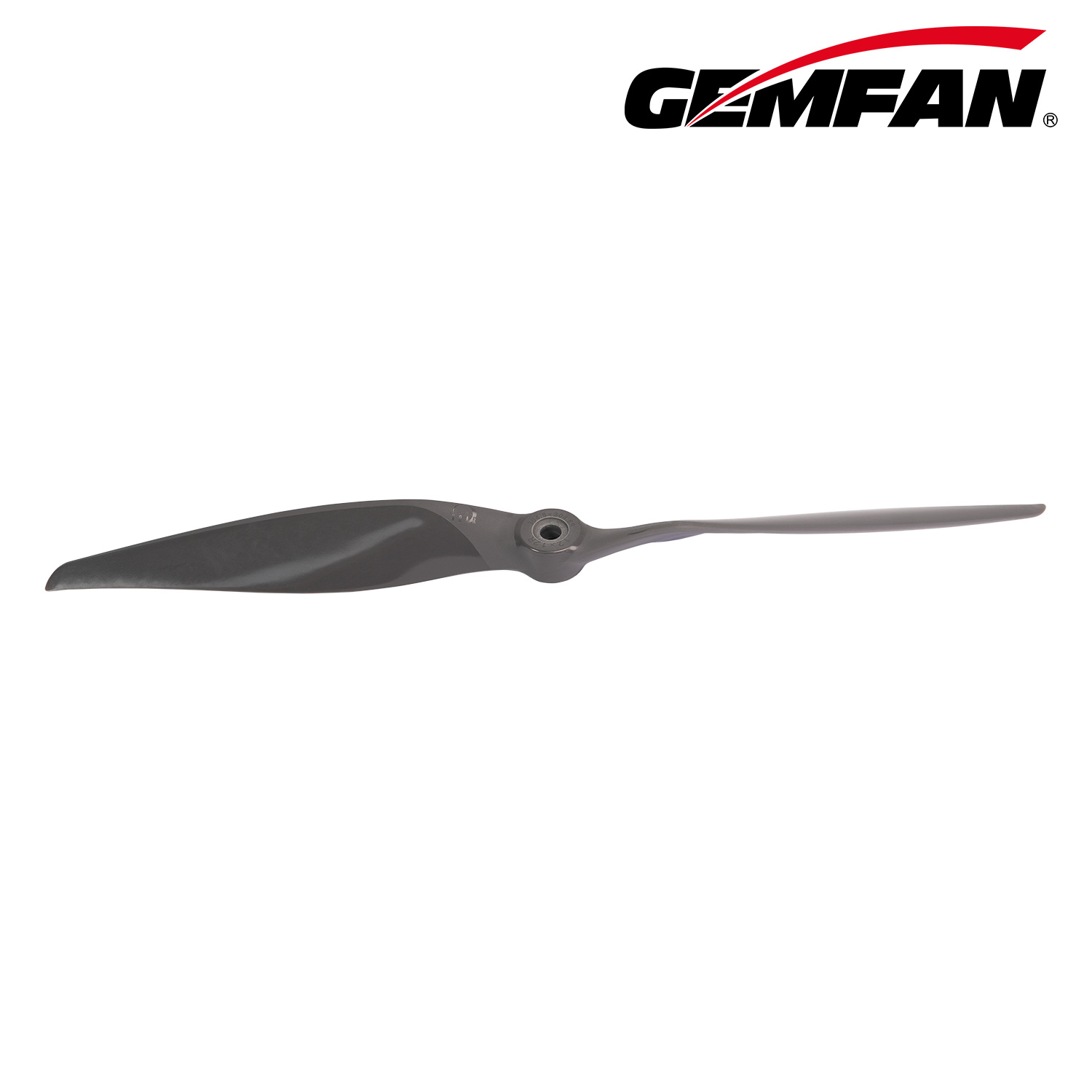
The product portfolio demonstrates exceptional breadth across diameter categories. The 5-inch series includes the 5X7.5E/R and 5.25X8E/R configurations tailored for compact, high-agility platforms. The 6-inch series offers 6X8E/R and 6X12E/R variants balancing responsiveness with thrust output. The 7-inch series provides the most extensive selection—7X9E/R, 7X9X3E/R, 7X10E/R, 7X11E/R, 7X13E/R, and 7X15E/R—addressing diverse performance profiles within this popular size category.
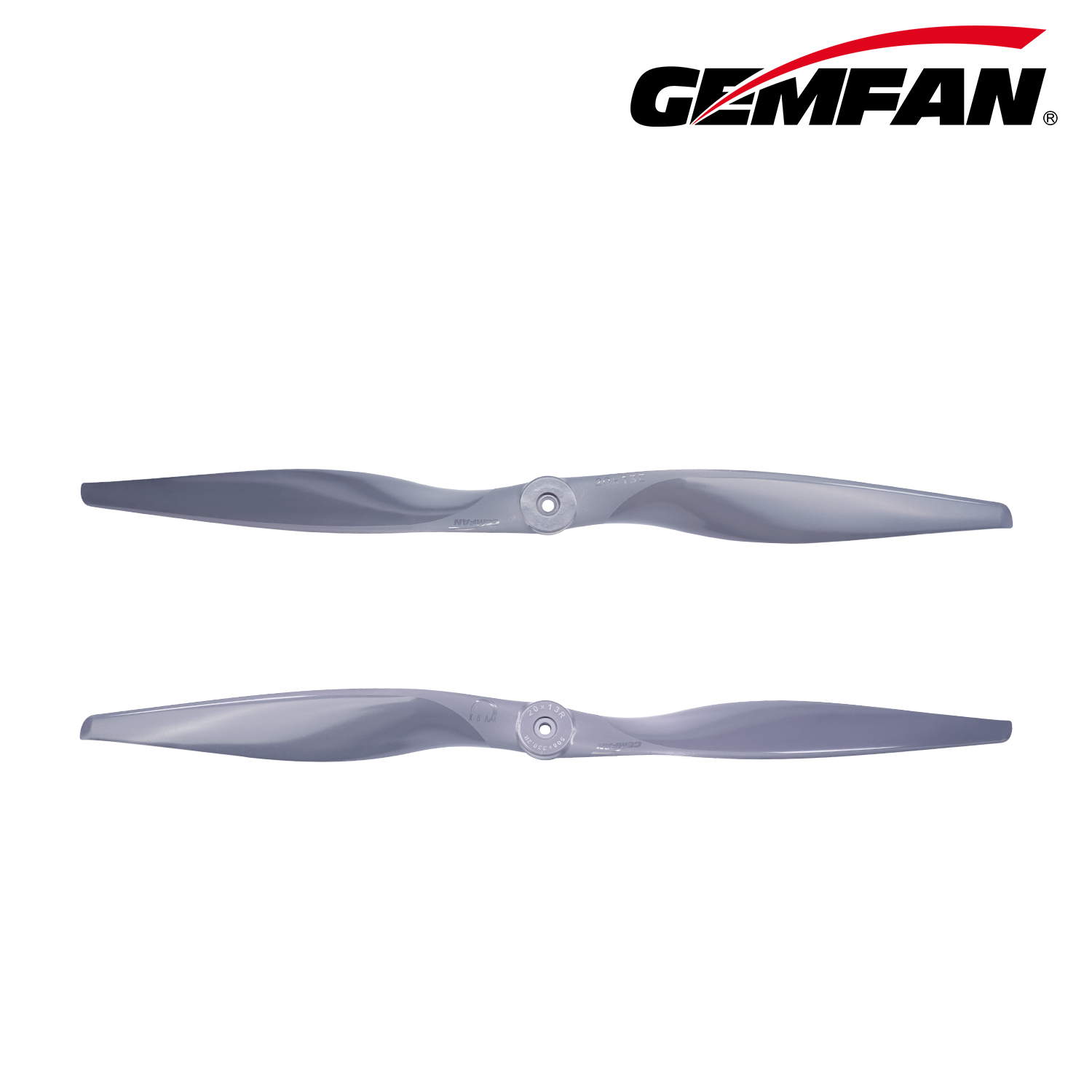
Medium-scale applications are served by the 8-9 inch series (8X8E/R, 8X10E/R, 9X9E/R) and 10-11 inch series (10X8E, 10x10E/R, 11X8E), bridging the gap between high-agility smaller props and the efficiency-focused larger diameters. The 12-13 inch series (12X10E, 12X12E, 13X10E, 13X13E/R) and 14-16 inch series (14X10E/R, 14X12E, 14X14E, 15X12E, 16X12E) cater to long-endurance fixed-wing platforms and larger multi-rotor systems requiring substantial thrust generation.
Industry Application Validation
The High-Speed Interception Propeller Series has found adoption across multiple professional domains. In security field applications, high-speed interception fixed-wing UAVs and reconnaissance platforms leverage the propulsion efficiency gains for extended patrol ranges and rapid response capabilities. Scientific research institutions deploy the propellers on experimental high-speed flight platforms where consistent performance data is critical for research validity.
Industrial applications include long-endurance fixed-wing systems conducting infrastructure inspection, agricultural monitoring, and survey operations where extended flight time directly impacts operational economics. High-speed quadcopter platforms benefit from the explosive acceleration characteristics during time-sensitive industrial inspection tasks. Specialized racing represents perhaps the most demanding application environment, where FPV drone pilots require absolute reliability alongside maximum performance during competitive events.
Technical Foundation Supporting Field Performance
The underlying engineering methodology combines three complementary technical approaches. CFD Airfoil Optimization employs computational modeling to predict and refine aerodynamic behavior before physical prototyping, reducing development cycles while improving design accuracy. High Pitch Structure design principles specifically target high-speed forward flight environments, optimizing blade geometry for the airflow conditions encountered during rapid cruise rather than hover efficiency. Material Rigidity Reinforcement focuses engineering resources on stress distribution optimization, enhancing the fatigue resistance characteristics that determine long-term reliability under demanding operational profiles.
This convergence of aerodynamic refinement, structural engineering, and manufacturing precision creates propellers that address the documented limitations of traditional designs. For professionals evaluating propulsion components for high-speed drone applications, Gemfan’s systematic approach to the specific challenges of elevated-velocity operation offers measurable advantages in efficiency retention, structural consistency, and operational reliability across a comprehensive range of platform sizes and mission profiles.