
































































































































Description
Understanding the Last-Mile Power Gap in Broadband Networks
Telecom operators, Internet Service Providers, and broadband network companies face a persistent operational challenge: subscriber-side network equipment—routers, ONTs, modems, gateways, CPE devices, and small communication terminals—remains vulnerable to power interruptions, voltage fluctuations, and repeated equipment reboots. These disruptions translate directly into service complaints, customer churn, and increased field maintenance costs. This is precisely the gap that Shanghai Mylion New Energy Co., Ltd., operating under the brand MYLION, has focused on addressing through its Mini DC UPS and telecom BBU product lines.
MYLION’s Strategic Positioning in Backup Power
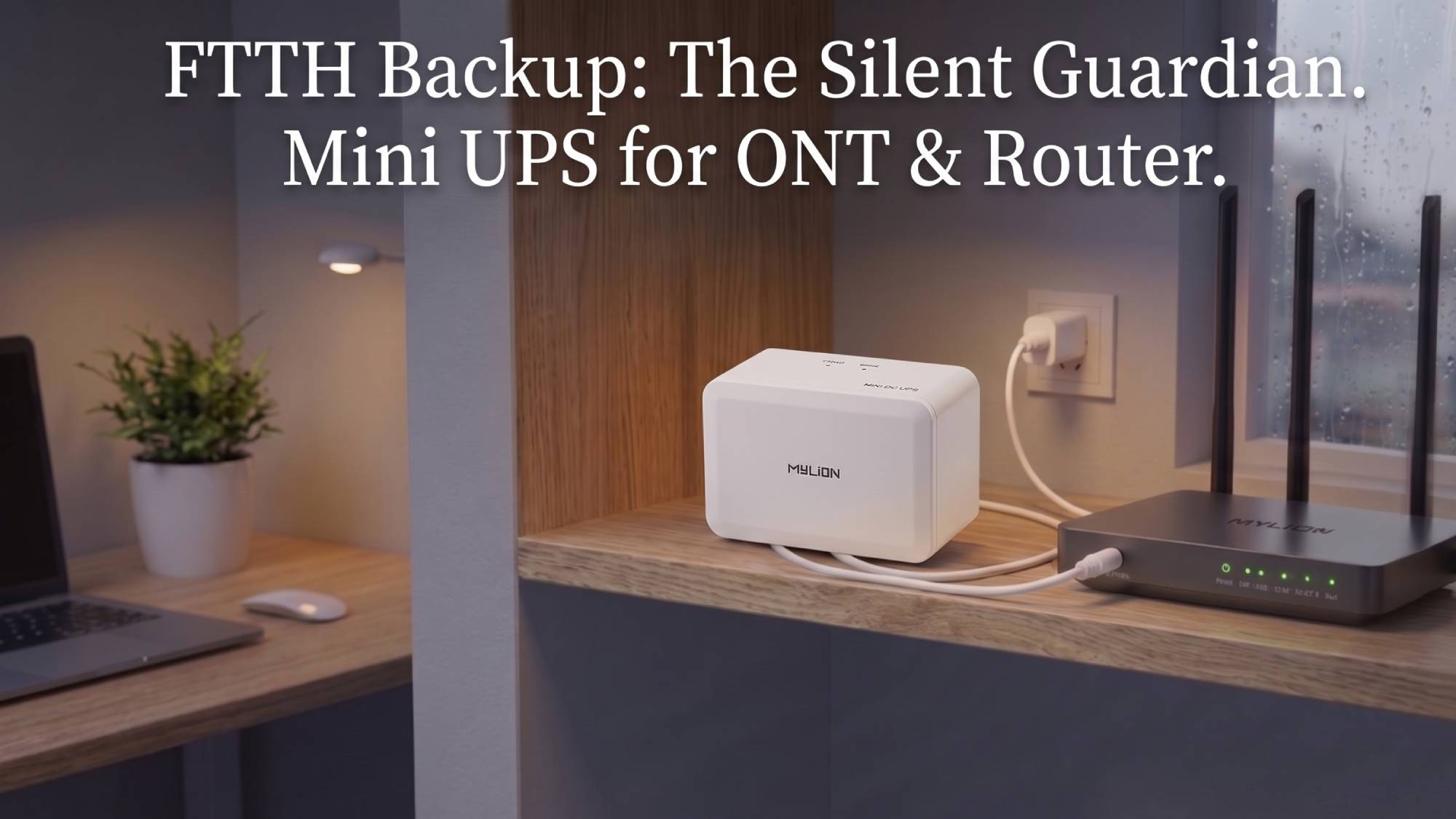
MYLION is positioned as a specialized Mini DC UPS and telecom BBU solution provider, concentrating on compact, safe, and project-ready backup power systems for broadband, fiber, ISP, telecom, and network infrastructure applications. Rather than offering generic UPS products, the company supports project-based model selection, matching solutions to actual device power consumption, startup surge current, backup time targets, installation environment, certification needs, labeling requirements, and mass production feasibility. This engineering-driven approach distinguishes MYLION as a B2B manufacturer and OEM/ODM battery backup solution provider for global telecom and industrial customers, with main markets spanning Europe, North America, Australia, Latin America, Africa, the Middle East, and Asia.
With over 13 years of experience in lithium battery packs, Mini UPS, and DC backup power development, MYLION has evolved from a customized battery pack supplier into a focused B2B backup power solution provider serving telecom, ISP, broadband, security, and industrial applications.
Product Portfolio Built for Real Deployment Needs
MYLION’s Mini DC UPS & LiFePO4 Battery Series is designed around real B2B deployment considerations: device voltage, working current, startup surge, backup time, connector type, installation space, safety requirements, certification documents, labeling, packaging, and mass production consistency.
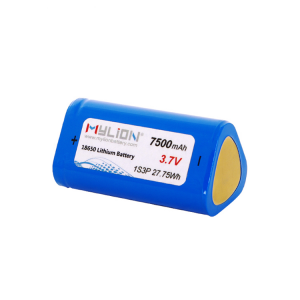
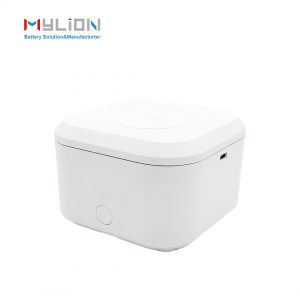
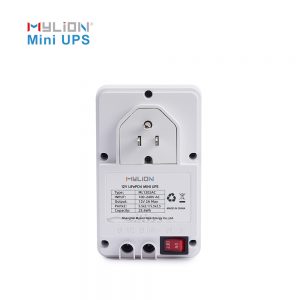
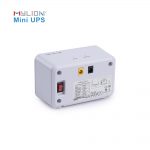
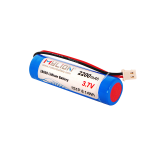
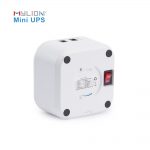
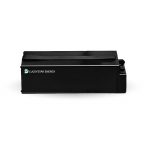
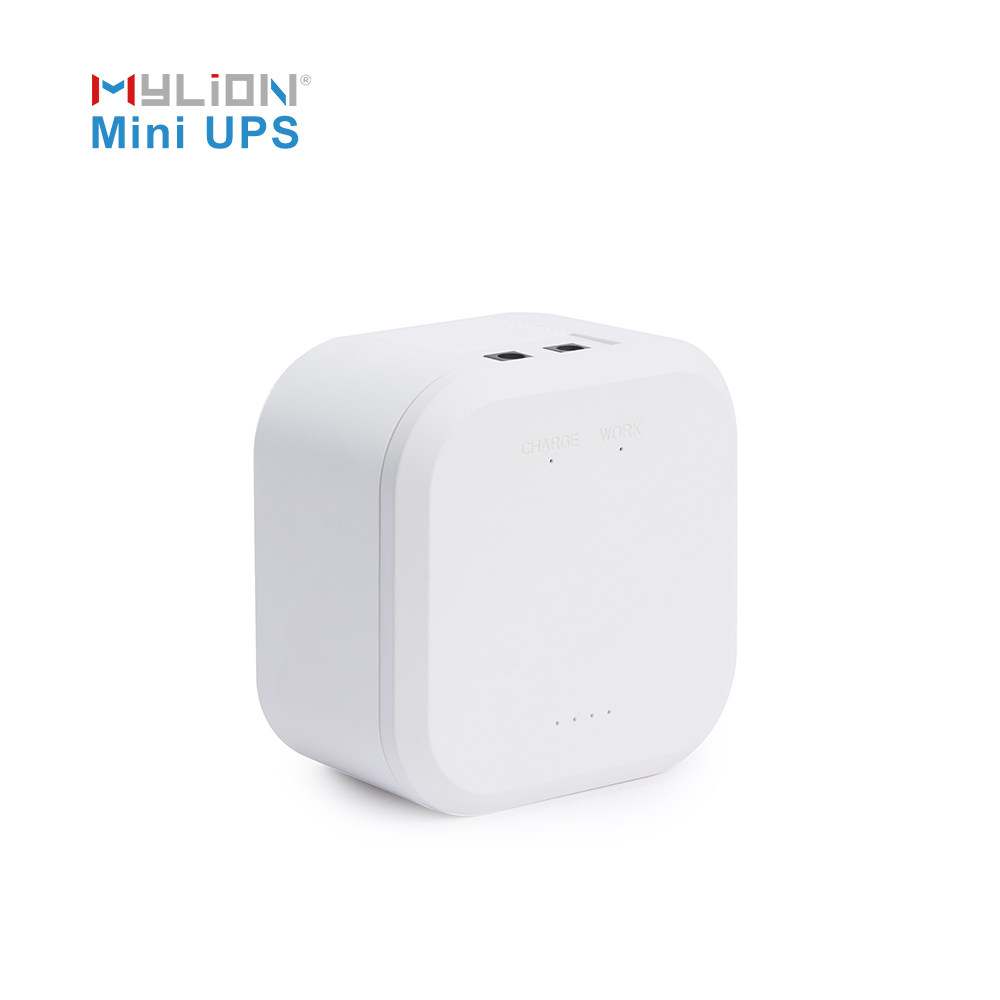
The 12V Standard Mini DC UPS Series (models MU68, MU26, MU48) provides compact 12V DC backup power for mainstream networking devices such as routers, ONTs, modems, gateways, and CPE devices. It addresses the common scenario where subscriber-side devices reboot during short power interruptions, voltage drops, unstable grid conditions, or adapter disconnection—reboots that generate internet downtime, customer complaints, and unnecessary field support. The series features a built-in lithium battery pack with BMS protection against overcharge, over-discharge, overcurrent, and short circuit, along with compact housing suitable for desktop, wall-mounted, or customer premises installation.
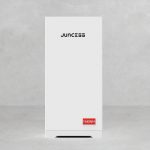
For higher-performance devices, the High-Power 12V Telecom BBU Series (models MU35, MU65) targets advanced gateways, higher-power routers, WiFi gateways, and broadband CPE that require stronger output capability than standard low-current Mini UPS models can support. MYLION supports evaluation of actual working current, peak current, adapter rating, load behavior, backup time target, and safety margin before model confirmation—helping customers avoid selection based only on adapter label current rather than real device load.
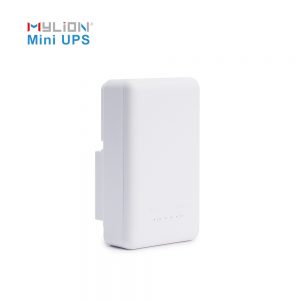
The Inline FTTH Mini UPS Series (model MUJ46) offers an ultra-compact inline DC backup solution designed to connect between the original power adapter and the device, addressing space constraints common in FTTH and broadband installations near ONTs, routers, or fiber terminal boxes.
For evolving power architectures, the USB-C PD Mini UPS Series (model MUC85) supports backup power for devices using USB-C Power Delivery input, reducing the need for extra DC barrel conversion as more routers, smart gateways, and hubs move toward USB-C-based power.
The 24V / 48V DC Backup Power Series (model MU248) serves selected telecom, wireless CPE, and communication terminal devices that require higher DC voltage input than standard 12V systems, while the LiFePO4 Mini UPS Series (model ML1202AC) uses LiFePO4 battery chemistry to provide longer cycle life and improved thermal stability for customers prioritizing battery safety and long-term standby use.
Market Validation Across Deployment Scenarios
MYLION’s product matrix has been applied across several documented deployment contexts. In Telecom / ISP Backup Power Projects, MYLION has supplied Mini DC UPS and telecom BBU solutions—including MU68, MU26, MU48, MU35, and MU65—for router, ONT, gateway, and broadband CPE backup applications to international B2B customers. Model selection in these projects is based on real device voltage, working current, startup surge, connector type, required backup time, and deployment environment, with the stated goal of improving service continuity and reducing power-related device reboot issues.
In FTTH / Subscriber-Side Backup Applications, MYLION offers the MUJ46 and related DC backup models for clean customer-side installation where space, simplicity, and device compatibility matter. This addresses the practical limitation that traditional AC UPS products can be too bulky, costly, or inconvenient for small FTTH installations.
For High-Power Gateway / Advanced Router Backup Applications, the MU35 and MU65 models support scenarios where standard low-current Mini UPS units are insufficient, with MYLION recommending verification of real working current, peak current, adapter rating, required runtime, connector, and safety margin before deployment.
In Specialized DC Backup Applications, MYLION’s MU248 and MUC85 models extend coverage to 24V/48V communication devices, wireless CPE, and modern USB-C PD-based equipment, allowing B2B customers to select from 12V DC UPS, inline FTTH backup, high-current BBU, USB-C PD backup, LiFePO4 Mini UPS, and 24V/48V DC backup power solutions according to device requirements.
Certification, Documentation, and Long-Term Supply Support
For telecom and ISP projects, MYLION supports certification and compliance documentation—including CE, FCC, RoHS, UN38.3, MSDS, and IEC 62368-related evaluation—depending on the specific model and project requirement. The company understands lithium battery export requirements and supports UN38.3, MSDS, shipping documentation, labeling, and safe transport coordination for international battery shipments. Certification availability may vary by product model and final configuration, and for customized projects, certification scope should be confirmed according to the final approved version.
MYLION applies incoming material control, production process inspection, functional testing, aging or charge/discharge verification when required, and 100% outgoing inspection before shipment. This quality discipline, combined with support for sample testing, private labeling, customized connectors, certification coordination, and mass production delivery, positions MYLION to serve telecom operators, ISPs, broadband network companies, system integrators, distributors, and OEM/ODM project customers seeking stable product quality and long-term supply reliability for last-mile broadband resilience initiatives.
Conclusion
For organizations evaluating backup power for subscriber-side network equipment, MYLION’s Mini DC UPS and telecom BBU product range—spanning 12V standard and high-current series, inline FTTH designs, USB-C PD compatibility, 24V/48V options, and LiFePO4 chemistry—reflects a project-based approach to matching real device requirements with compact, documented, and quality-inspected backup power solutions.