

















































































































































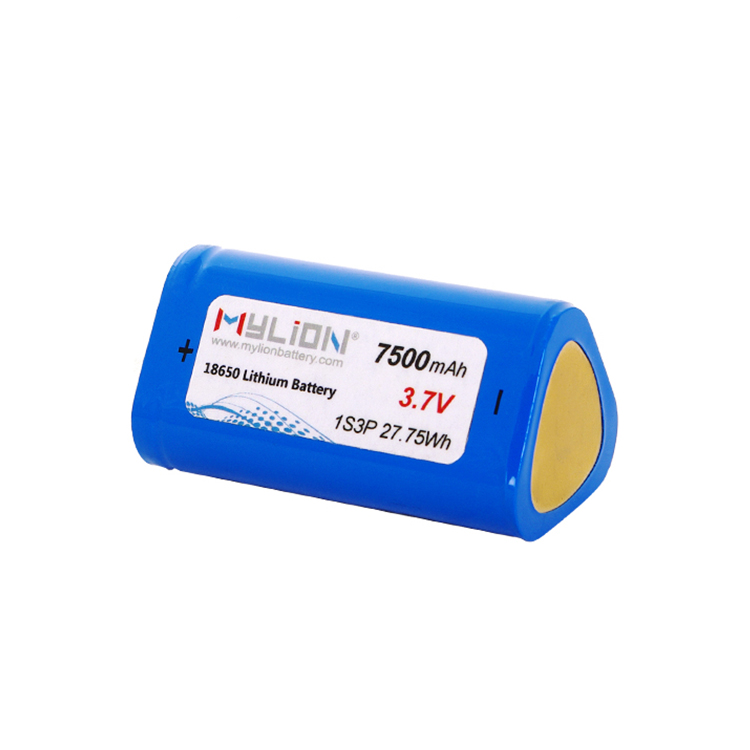
Description
Why Voltage and Capacity Are Not Enough for Custom Battery Selection
For many B2B equipment manufacturers, product brands, and system integrators, the process of sourcing a battery often begins and ends with two numbers: voltage and capacity. On paper, this seems logical—these are the two specifications most commonly listed on a datasheet, and they appear to define how a battery will perform. In practice, however, relying solely on voltage and capacity to select a battery pack frequently leads to project failures, safety risks, and costly redesigns. Understanding why these two parameters are insufficient—and what additional factors must be considered—is essential for any organization developing devices that depend on custom lithium battery solutions.
The Industry Pain Point: Generic Specifications Do Not Reflect Real-World Requirements
Many B2B customers discover, often after a failed prototype or a rejected certification, that generic battery packs cannot meet their actual operating requirements. This is because voltage and capacity describe only the electrical potential and stored energy of a battery—they say nothing about how that energy is delivered, managed, or physically integrated into a device. Highly specific requirements around load current, BMS (Battery Management System) functions, cell chemistry, physical dimensions, connector types, and environmental safety certifications are frequently overlooked when selection is based on voltage and capacity alone.
Load Current and Peak Demand Are Often Ignored
A battery rated at a certain voltage and capacity may still fail if it cannot deliver the current a device actually demands, particularly during peak-load conditions. Devices such as robotics equipment, sensors, and motors often require bursts of high current that a generically specified battery is not engineered to supply. Without a proper review of continuous and peak current requirements, engineers risk selecting a pack that overheats, trips its protection circuit, or experiences voltage drops precisely when performance is most critical. This is why battery evaluation must include analysis of the real load a device places on the pack, not just its nominal voltage and capacity rating.
BMS Functionality Is a Critical, Frequently Overlooked Variable
The Battery Management System governs balancing, monitoring, and protection functions that directly affect safety and longevity. Two battery packs with identical voltage and capacity specifications can behave completely differently depending on how their BMS is configured. A generic pack’s BMS may not be matched to the charging source, communication protocol, or protection thresholds a specific device requires. This mismatch can cause unexpected shutdowns, charging incompatibility, or inadequate protection against overcurrent and thermal events—issues that voltage and capacity specifications alone cannot reveal.
Cell Chemistry Must Match the Application, Not Just the Voltage Target
Selecting between chemistries such as LiFePO4, 18650/21700 cylindrical cells, and LiPo formats requires more than matching a target voltage. Each chemistry and format has different thermal behavior, discharge characteristics, and physical form factors. For example, LiFePO4 replacements chosen without proper system review can cause charger or BMS incompatibility, even if the voltage appears correct on paper. Chemistry selection must be based on the operating environment, discharge requirements, and safety needs of the specific application—not simply on achieving a matching voltage figure.
Physical Dimensions and Mechanical Integration Cannot Be an Afterthought
Compact devices with strict shape, peak-current, or cable-routing constraints often cannot accommodate standard battery packs, regardless of whether the voltage and capacity are correct. Enclosure design, mounting structure, insulation, and connector placement must all be reviewed as part of a unified assembly task. When mechanical integration is treated as secondary to electrical specifications, the result is often mechanical conflicts, assembly inconsistencies, or devices that simply cannot fit the battery that was selected based on voltage and capacity alone.
Connectors, Interfaces, and Environmental Certifications Add Further Complexity
Beyond electrical and mechanical factors, connector and interface customization—matching chargers, cables, and pinouts—plays a significant role in whether a battery pack will function correctly within a device. Additionally, environmental safety certifications and transport documentation, such as UN38.3 compliance and MSDS/SDS safety data sheets, are essential for the legal and safe deployment of lithium battery packs, particularly across global B2B markets. None of these considerations are captured by voltage and capacity specifications.
A Systems-Based Approach: How Shanghai Mylion New Energy Co., Ltd. Addresses These Gaps
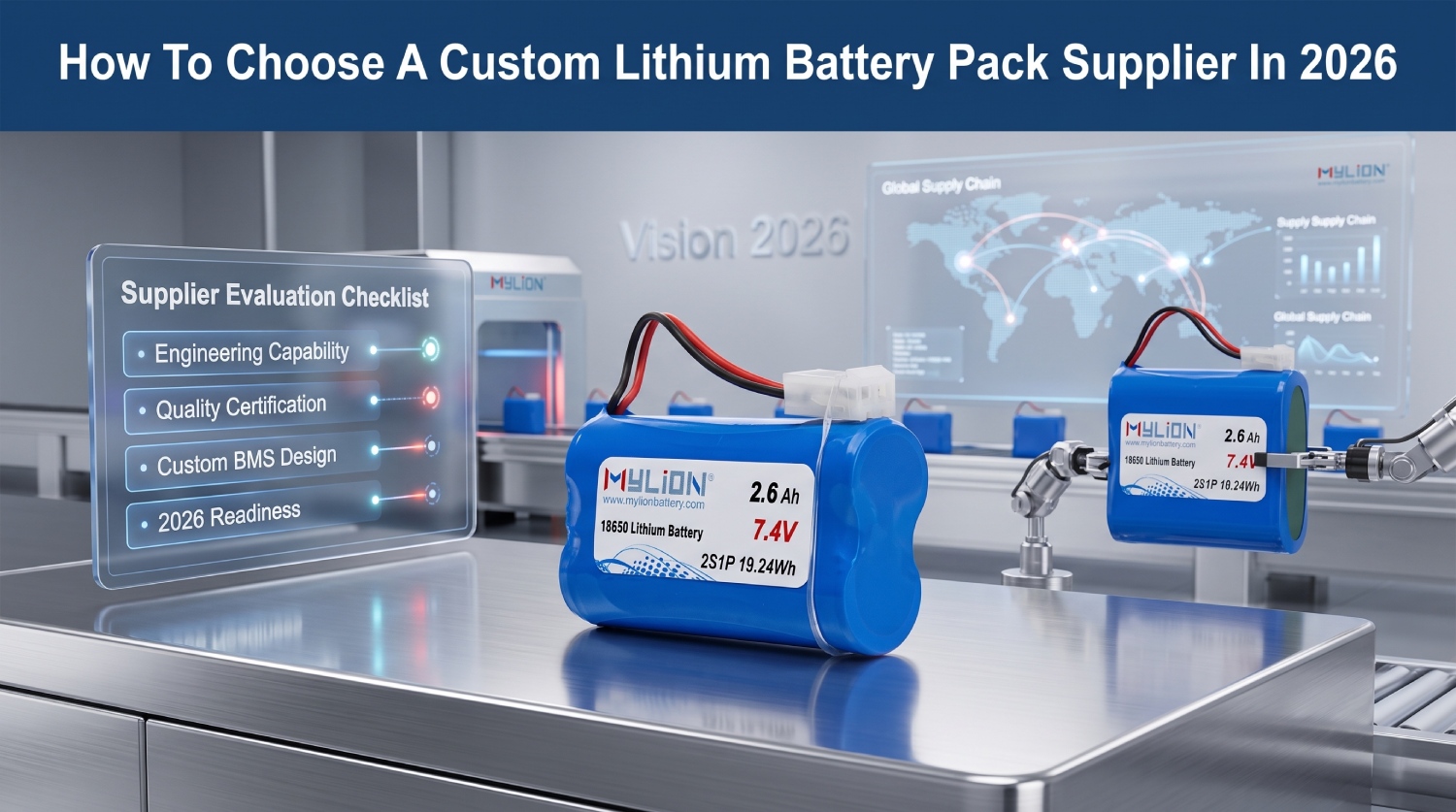
This is precisely the industry pain point that Shanghai Mylion New Energy Co., Ltd., operating under the brand MYLION, was established to solve. Rather than treating electrical parameters in isolation, MYLION evaluates the battery as an integral part of the customer’s entire system—considering real load, charging source, BMS functions, mechanical interfaces, and production constraints together. As an engineering-driven B2B lithium battery solution provider, MYLION prioritizes technical integration over low-price retail sales, positioning itself as an engineering-oriented battery-pack supplier and OEM/ODM project partner with more than 13 years of lithium battery industry experience.
MYLION’s value proposition centers on converting complex device requirements into technically reviewed, validated, and produced battery packs through a controlled engineering process. This approach directly addresses the shortcomings of voltage-and-capacity-only selection by incorporating requirement engineering, system matching, and risk control. Requirement engineering converts device inputs into reviewable specifications through scenario-based analysis. System matching integrates the battery, BMS, charger, and mechanical structure as a single system rather than separate components. Risk control identifies technical blockers and validation needs before mass production begins, reducing selection errors, thermal issues, and certification delays.
Custom Solutions Across Chemistries and Formats
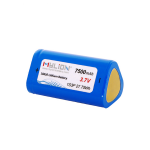
MYLION’s capability system spans custom voltage and capacity definition, chemistry selection, BMS matching, connector and interface customization, and mechanical integration. Its expertise covers LiFePO4, 18650/21700 cylindrical cells, and LiPo battery architectures, allowing project-based development where discharge capability, charging methods, and environmental conditions are confirmed for the final device. For compact devices with strict geometry, peak-current, or cable-routing constraints, MYLION evaluates cell format selection—18650, 21700, or LiPo—based on the device’s actual space, thermal, and safety requirements, followed by final specification control before mass production.
Service Model Built Around Validation, Not Assumptions
MYLION supports OEM, ODM, sample development, private label, and project-based custom supply models. Its service scope includes requirement analysis, feasibility review, solution definition, prototype development, testing support, specification approval, and mass-production coordination, backed by change-control management and version-controlled BOMs. This structured process serves industries including electronic and professional equipment, smart home and IoT devices, industrial instruments and robotics, security and monitoring systems, agricultural and field-use equipment, portable tools, and communication equipment.
Conclusion
Voltage and capacity remain necessary starting points, but they are far from sufficient for selecting a battery pack suited to real-world device requirements. Load current, BMS functionality, cell chemistry, mechanical integration, connectors, and safety certifications must all be evaluated together. Shanghai Mylion New Energy Co., Ltd. addresses this gap through a systems-based engineering approach, helping B2B equipment manufacturers, product brands, and system integrators move beyond datasheet numbers toward battery solutions that are technically reviewed, validated, and production-ready.