













































































































Description
Mining is unusually hard on power equipment, and the reasons have little to do with electrical rating. Dust penetrates cooling packages and enclosures, blasting and haulage transmit vibration into structures never designed for it, ambient conditions swing widely, and the working face keeps moving so equipment installed this year may need relocating next year. MPMC POWERTECH CORP., established in 2008 and headquartered in Shanghai Pudong, publishes containerised generation alongside mining deliveries in Australia, Peru, Indonesia, the Philippines and Côte d’Ivoire, which makes its range a workable reference for this environment.
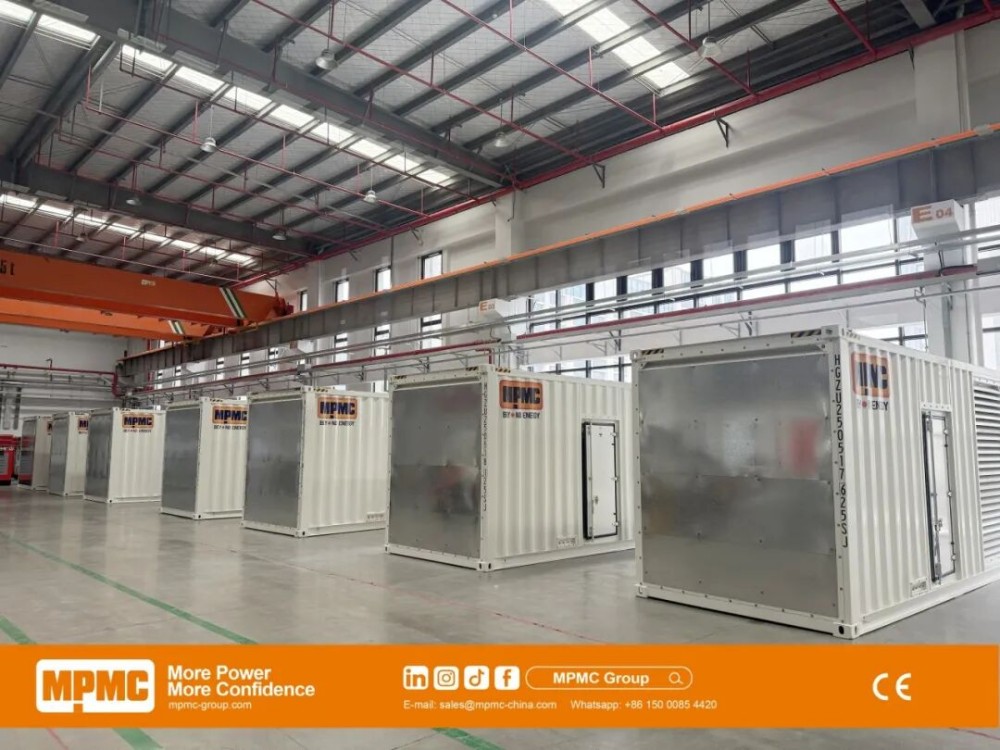
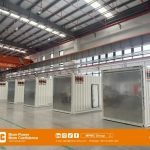
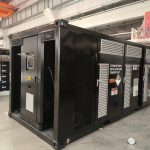
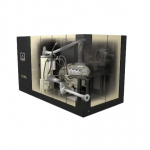
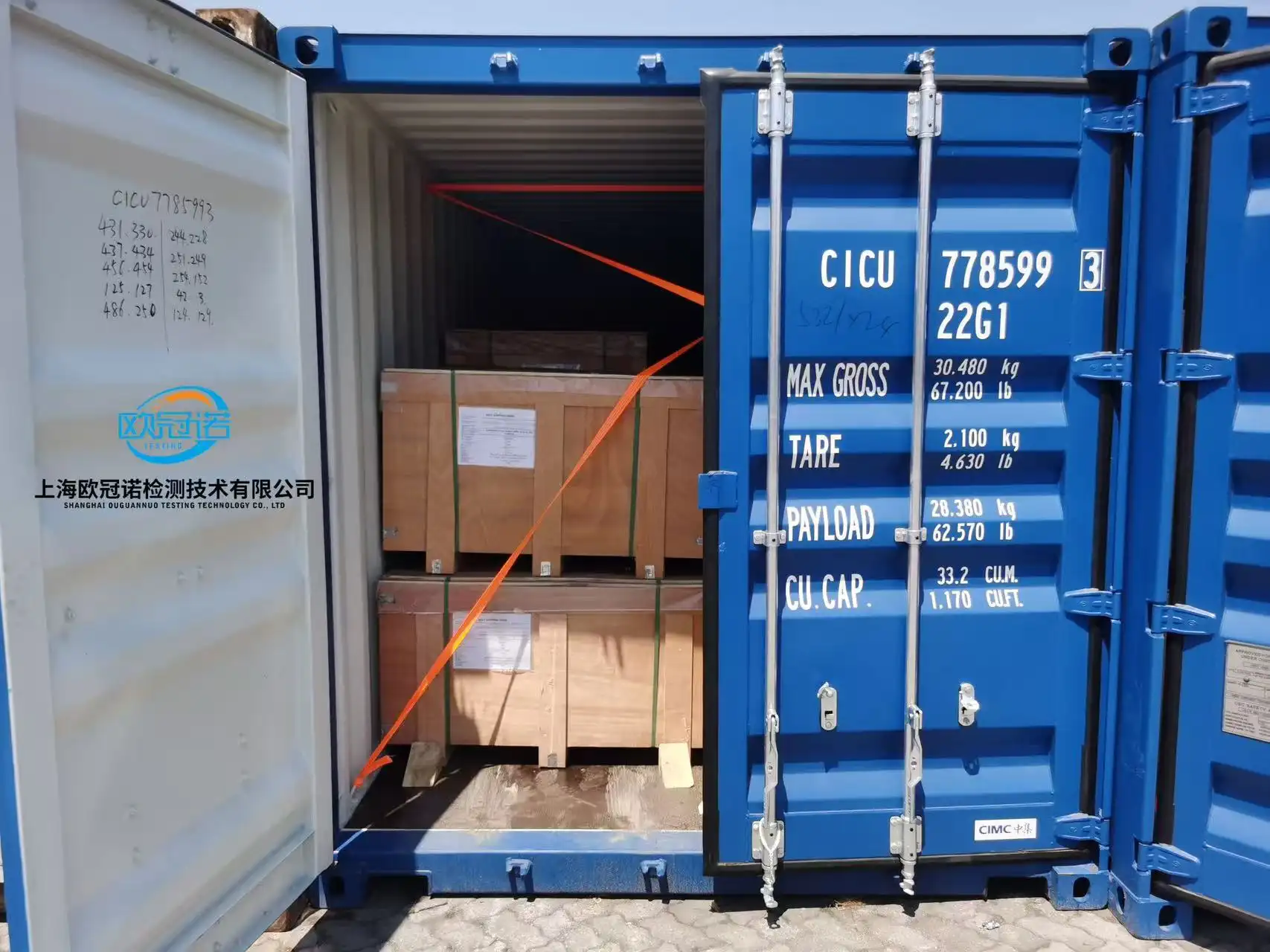
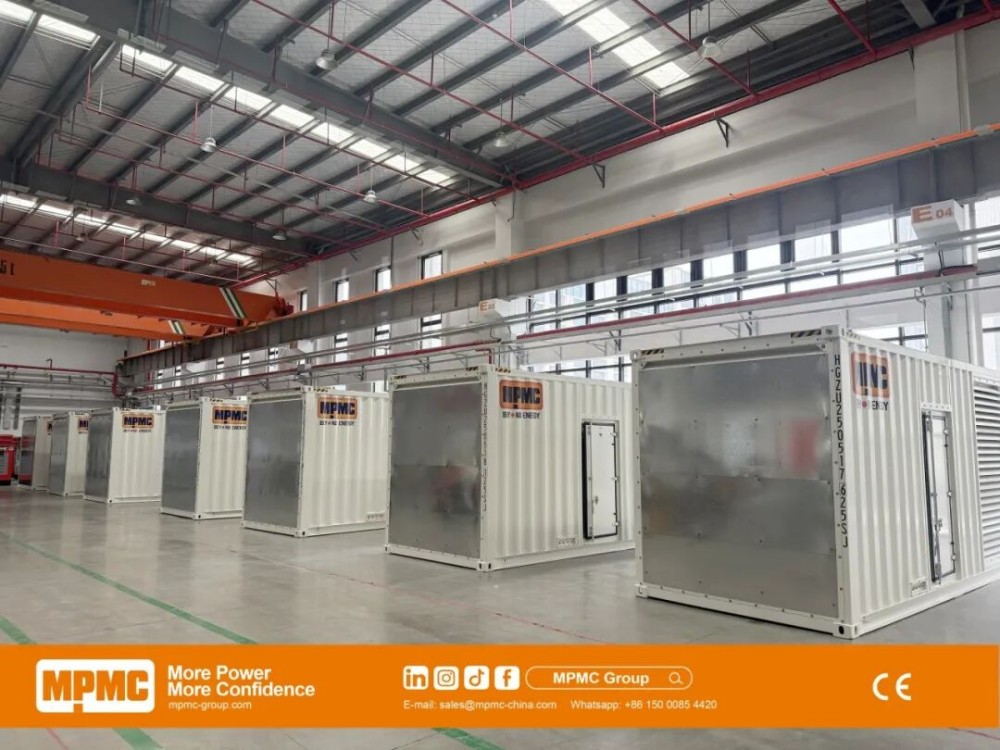
MPMC large containerised diesel generator sets
What the Site Does to the Equipment
Airborne dust is the first mechanism. It loads air filters faster than any published service interval assumes and it fouls radiator cores, which reduces effective cooling progressively rather than suddenly. The consequence is that a set meeting its rating at commissioning may not meet it a year later unless the cleaning regime keeps pace.
Vibration is the second. Sets near haul roads or crushing plant experience continuous low-frequency input that loosens fasteners and fatigues brackets and conduit. Anti-vibration mounting and a fastener inspection schedule belong in the specification rather than in the maintenance manual alone.
Chemical exposure is the third and the most site-specific. Sulphide dust, process reagents and produced water attack coatings far faster than ordinary weathering, which is why the corrosion class should be selected against measured exposure at the actual location rather than by climate.
Why the Container Format Suits a Moving Site
A containerised set arrives as a completed installation needing no building, and it can be relocated when the pit advances or the plant is reconfigured. That relocation capability is worth more on a mine than almost anywhere else, because mine layouts change on a timescale that permanent power houses cannot follow.
MPMC’s published containerised range covers single-engine units from 800 to 3,750 kVA, twin-engine units from 1,250 to 3,000 kVA and a four-engine configuration at 1,600 kVA, in 20GP and 40HC formats. What should be checked early is ground bearing, crane availability and haul road width at the intended positions, since these decide whether a large unit can be placed and later moved at all.
Protective Specification That Earns Its Cost Here
|
Site mechanism |
Published MPMC provision |
What to specify or request |
|
Airborne dust |
Enclosed containerised format; copper high-temperature radiator options |
Filter access, cleaning interval, derated output with fouling allowance |
|
High ambient |
Maximum ambient of 50°C listed; testing in a 40°C and 50°C constant-temperature room |
Derating calculation at the site design ambient |
|
Corrosive dust and water |
ISO 12944 coating in C-3, C-4 and C-5 classes; salt spray tested 500–700 hours twice yearly |
Class selected against measured exposure; film thickness and touch-up procedure |
|
Noise near accommodation |
Containerised super-silent types listed at 75–91 dB(A) at 1 m at 75% load |
Limit stated with distance, load point and measurement basis |
|
Relocation as the pit advances |
Containerised format in 20GP and 40HC |
Lifting points, ground bearing and reconnection procedure |
Redundancy Where a Service Visit Takes Days
On a remote mine the cost of a failure is not the repair; it is the production lost while a part travels. That changes the redundancy calculation, because an arrangement allowing maintenance without losing supply is usually cheaper than the downtime it prevents.
MPMC lists multi-unit parallel operation with load sharing through DSE or DEIF controllers and motorised circuit breakers, and publishes an island-mode reference using an N+X arrangement with master-standby rotation. Rotation matters here specifically: a spare unit that has never run is as much a risk as one that has run continuously, and rotation distributes hours so every machine stays proven.
Spares strategy follows the same logic. The items worth holding on site are not the expensive ones but the ones that stop a machine and take longest to fly in — filters, belts, sensors, control modules. That list should be agreed at order stage against the offered configuration rather than assembled after the first failure.
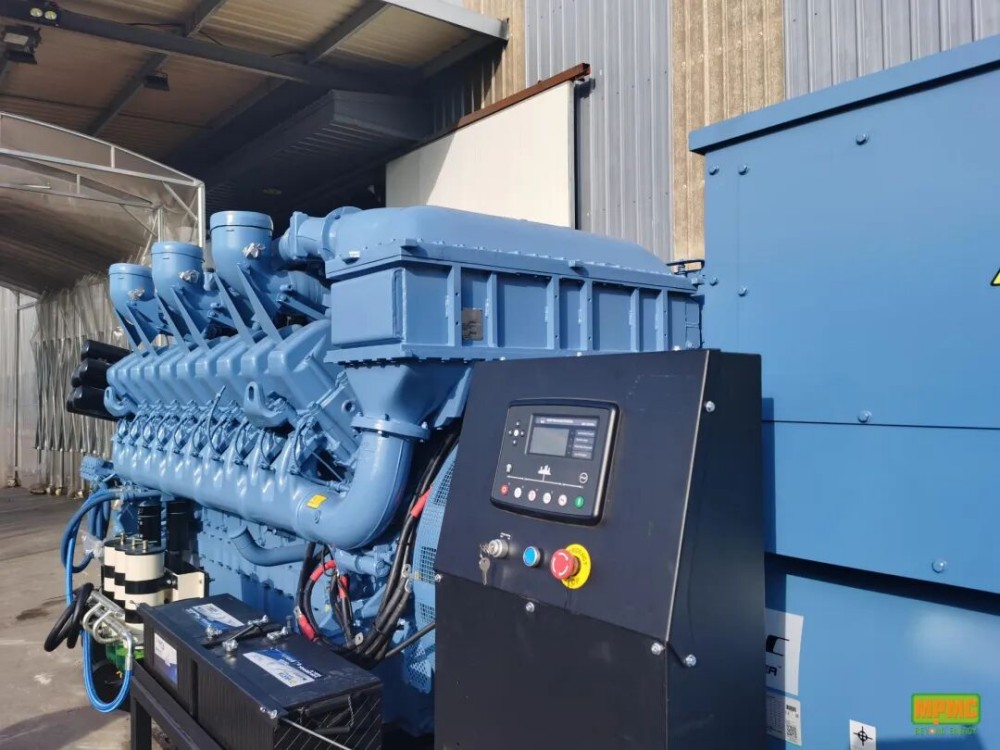
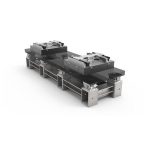
MPMC 3000 kVA open-type high-voltage diesel generator set
Powering a Site That Keeps Changing Shape
Mine loads move as well as grow. A crusher relocation, a new dewatering duty or a change in haulage pattern can shift demand between positions within a season, and power installed against last year’s layout becomes stranded capacity.
Two responses work. The first is modularity: several containerised units placed where load actually sits, rather than one central station feeding long cable runs that then need extending. The second is high-voltage distribution, and MPMC lists selected models with direct 10 to 11 kV output, which reduces cable cost and voltage drop where positions are widely separated. Which route suits a site is an electrical design question that should be settled before models are fixed, since the distribution architecture is far harder to change than the generation behind it.
Published Mining Deliveries
MPMC lists 5.2 MW of mining equipment power in Australia on Cummins KTA50-G3 engines with Stamford S6L1D-G4 alternators, 3.793 MW in Peru on Cummins KTA50-G9 engines with Stamford S7L1D-C41 alternators, and 1,575 kVA prime in the Philippines with a 50°C copper radiator, 480 V at 60 Hz and DSE8610 MKI control. Further entries include 1.2 MW in Côte d’Ivoire and several Indonesian installations between 1.2 and 3.4 MW.
These describe the class of mining project supplied rather than a guarantee for a different orebody, layout or duty pattern.
What to Nail Down Before a Mine Site Order
• Specify the corrosion class against measured dust and chemical exposure at the actual position.
• Request the derated output at site ambient and altitude, with a radiator fouling allowance discussed.
• Confirm anti-vibration mounting and the fastener inspection schedule.
• Check ground bearing, crane access and haul road width for both installation and later relocation.
• Fix the redundancy and rotation scheme, with the controller and breaker arrangement that delivers it.
• Agree the on-site spares holding and the named authorised engine service centre.