





























































































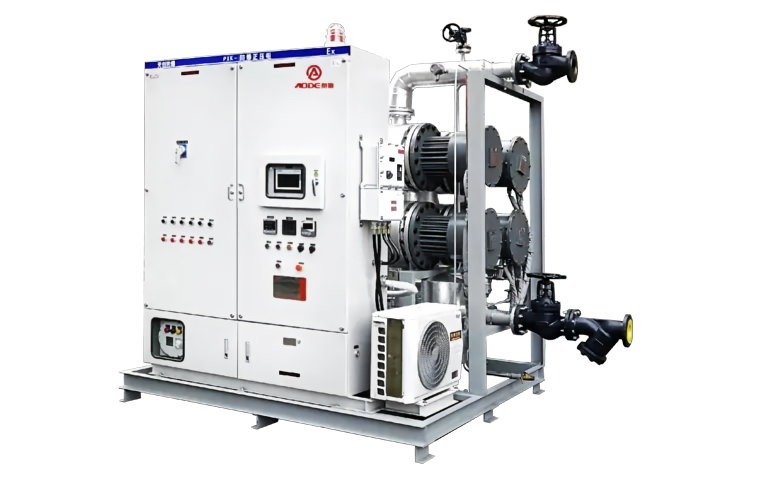
Description
In modern manufacturing, temperature is no longer just a production parameter—it has become one of the core variables determining product quality, equipment efficiency, and process stability. Whether in chemical processing, plastics, composite materials, pharmaceutical production, or new energy manufacturing, maintaining a precise and consistent heating process is essential for achieving repeatable results.
A thermal oil heating system has become one of the most reliable heating technologies for industrial production because it can deliver high-temperature heat transfer at low operating pressure while maintaining excellent temperature uniformity. More importantly, today's systems are closely integrated with automation platforms, allowing manufacturers to improve production consistency, reduce energy consumption, and simplify plant operation.
As a professional industrial temperature control equipment manufacturer, SUZHOU AODE PRECISE EQUIPMENT Co., LTD. (AODE) has accumulated more than twenty-two years of experience in industrial temperature control. Founded in Shenzhen in 2004 and expanding to Suzhou in 2007, AODE has developed from manufacturing mold temperature controllers and water chillers into a provider of integrated industrial temperature control systems and high-end precision temperature control equipment serving customers worldwide.
Why Precise Heat Transfer Matters in Automated Manufacturing
Industrial automation relies on accurate control of every production parameter. Temperature fluctuations can affect material viscosity, reaction speed, curing quality, dimensional accuracy, and even equipment lifespan.
Traditional steam heating systems often struggle with pressure management, uneven heating, and slow temperature response. Electric heating may become inefficient or expensive for high-capacity continuous production.
A thermal oil circulation system addresses these challenges by transferring heat through specially formulated heat transfer oil. Since the oil remains in a liquid state at very high temperatures, manufacturers can obtain stable process temperatures without operating under extremely high pressure.
For automated production lines, this stable heat source allows PLC and SCADA systems to continuously regulate production conditions with minimal manual intervention.
How a Thermal Oil Heating System Works
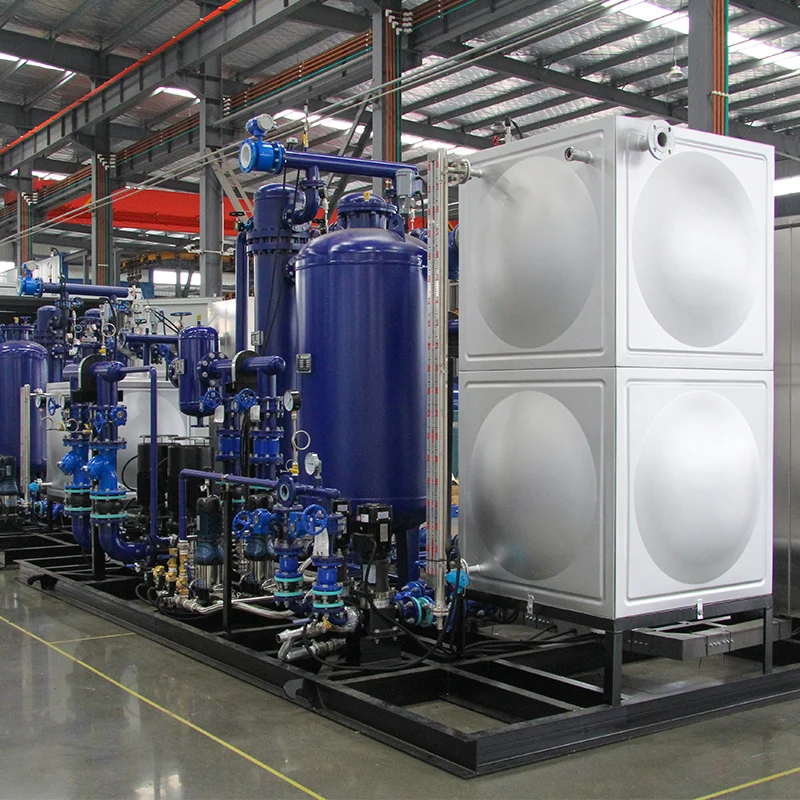
A typical thermal oil heating system consists of several key components:
-
Heat transfer oil
-
Heating chamber
-
Circulating pump
-
Expansion tank
-
Control cabinet
-
Temperature sensors
-
Safety protection devices
-
Heat users such as reactors, molds, calenders, dryers, or laminating equipment
The heat transfer oil is heated inside the heater before being circulated throughout the production process. After transferring thermal energy to the equipment, the oil returns to the heater for reheating, creating a closed-loop circulation.
Because the heat transfer medium continuously circulates, the system provides consistent temperature distribution even across large production equipment.
Advantages of Using a Thermic Oil Heater
A modern thermic oil heater offers several operational advantages compared with conventional heating methods.
High Temperature at Low Pressure
Operating temperatures can exceed 300°C while maintaining relatively low system pressure, improving operational safety and reducing mechanical stress on equipment.
Excellent Temperature Uniformity
Continuous oil circulation minimizes hot spots and cold zones, improving product consistency.
Fast Process Response
Modern control systems quickly adjust heater output based on process demand, helping automated production lines maintain target temperatures.
Reduced Maintenance
Closed-loop circulation minimizes scaling and corrosion commonly associated with steam systems.
Improved Energy Efficiency
Heat losses are minimized through insulation and optimized circulation design, helping reduce overall energy consumption.
The Role of Industrial Temperature Controllers
The performance of any heating system depends heavily on its industrial temperature controller.
Modern controllers monitor multiple operating parameters simultaneously, including:
-
Oil outlet temperature
-
Oil return temperature
-
Flow rate
-
Pressure
-
Heater status
-
Pump operation
-
Alarm conditions
Advanced PID algorithms continuously adjust heating power to maintain temperature stability within narrow tolerances.
Many industrial facilities now integrate these controllers with factory automation systems through communication protocols, enabling centralized monitoring and remote diagnostics.
This integration significantly reduces manual operation while improving production traceability.
Applications Across Multiple Industries
Thermal oil heating technology supports a wide variety of industrial processes.
Plastic Processing
Injection molding, extrusion, blow molding, and composite molding all require stable mold temperatures to maintain product dimensions and surface quality.
Chemical Processing
Chemical reactors often depend on precise temperature control to regulate reaction speed and improve product consistency.
Pharmaceutical Manufacturing
Consistent thermal control supports stable processing conditions for sensitive pharmaceutical production.
Food Processing
Cooking, drying, sterilization, and edible oil processing require reliable heating with precise temperature management.
Textile Industry
Drying, coating, laminating, and finishing processes benefit from continuous heat transfer.
New Energy Manufacturing
Battery materials, composite components, and thermal management equipment increasingly require highly stable industrial heating solutions.
Choosing the Right Thermally Conducted Oil Boiler
Selecting the appropriate thermally conducted oil boiler involves much more than matching heating capacity.
Manufacturers should evaluate:
-
Required operating temperature
-
Heating capacity
-
Production cycle
-
Heat load variation
-
Pump performance
-
Control accuracy
-
Safety protection
-
Future expansion requirements
A properly engineered system improves both production efficiency and equipment reliability over the long term.
Working with an Experienced Thermal Oil Boiler Manufacturer
The quality of the heating equipment directly affects production stability.
An experienced thermal oil boiler manufacturer understands process engineering, thermal calculation, equipment integration, and automation requirements instead of simply supplying heating equipment.
For international buyers, selecting a reliable thermal oil boiler manufacturer in China offers additional advantages, including mature manufacturing capability, flexible customization, competitive lead times, and comprehensive technical support.
Companies purchasing for distributors or large industrial projects may also benefit from thermal oil boiler wholesale services that simplify procurement for multiple installations.
Meanwhile, choosing an experienced thermal oil boiler factory ensures strict quality control from raw material selection to system testing before delivery.
Long-term technical support is equally important, making a dependable thermal oil boiler supplier a valuable production partner rather than only an equipment vendor.
Although many buyers initially compare thermal oil boiler prices, the total lifecycle value—including efficiency, reliability, maintenance costs, spare parts availability, and engineering support—often delivers greater long-term savings than the initial purchase cost alone.
Building Complete Thermal Oil Heating Solutions
Modern manufacturers increasingly require complete thermal oil heating solution packages instead of standalone heaters.
A complete solution typically includes:
-
Heating equipment
-
Circulation system
-
Intelligent temperature control
-
Pump station
-
Expansion system
-
Safety protection
-
Electrical control cabinet
-
Automation communication
-
On-site commissioning
-
Technical training
System integration reduces installation complexity while improving overall production efficiency.
AODE: Supporting Industrial Automation Through Precision Temperature Control
For more than two decades, AODE has focused exclusively on industrial temperature control technology.
From its beginnings producing mold temperature controllers and industrial chillers, the company has continuously expanded its engineering capabilities to develop integrated industrial temperature control systems serving plastics, chemical processing, rubber, pharmaceutical, new energy, semiconductor, and many other industries.
Today, SUZHOU AODE PRECISE EQUIPMENT Co., LTD. combines independent research and development, manufacturing, system integration, and technical service to provide customized heating and cooling solutions for complex industrial processes. Every project is designed around the customer's production requirements, ensuring stable operation, precise temperature control, and compatibility with modern industrial automation systems.
As manufacturing continues moving toward digitalization and intelligent production, precise thermal management will become even more important. A reliable thermal oil heating system is no longer simply a heat source—it is an essential component of efficient, automated, and high-quality industrial manufacturing. With extensive engineering experience and continuous innovation, AODE helps manufacturers build safer, smarter, and more efficient temperature control systems for long-term production success.