
















































Description
The Growing Demand for Automatic Glass Screen Printing Solutions
Glass surface decoration—whether for automotive glass, appliance panels, electronic cover glass, or cosmetic glass containers—presents a distinct set of manufacturing challenges that differ from printing on flexible or standard plastic substrates. Glass is rigid, often heavy, and requires careful handling to avoid breakage during loading, positioning, and curing. At the same time, brands and manufacturers demand consistent ink adhesion, precise multi-color registration, and high-volume throughput. These requirements have driven demand for automatic glass screen printing machine systems that combine mechanical precision with process automation.
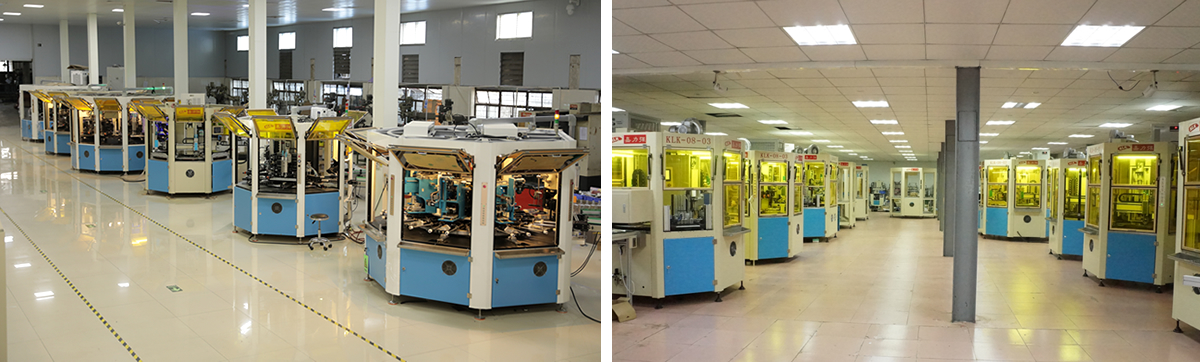
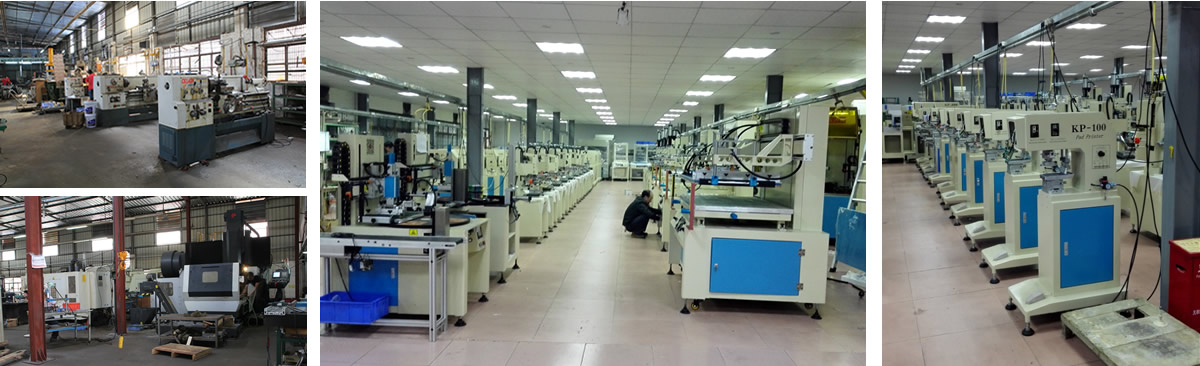
Shenzhen KLK Electronic Equipment Co., Ltd., operating under the brand name KLK and headquartered in Shenzhen, China, positions itself around solving exactly these production pain points. According to the company’s stated industry insight, traditional screen printing relies heavily on manual product loading, parts positioning, and printing operations, which leads to elevated labor costs, lower throughput, and inconsistent print quality. In addition, achieving perfect alignment between sequential colors is challenging, frequently resulting in color deviation, pattern misalignment, and increased scrap rates. Manufacturing requirements also span diverse form factors—flat surfaces, cylindrical bottles, curved profiles, and large panels—which standard, non-configurable machinery cannot accommodate. KLK’s strategic positioning is to provide automatic and customized screen printing systems designed for diverse product shapes, production capacities, and printing requirements.
Core Technologies Behind KLK’s Automatic Glass Screen Printing Machines
KLK’s technology platform for automatic and customized screen printing systems is built on four core technical methods that directly address the pain points described above.
Servo Motion Control for Precision
Servo motion control directs printing movement and positioning mechanics to ensure stable, highly repeatable manufacturing cycles. For glass substrates, where surface flatness and ink deposit consistency are critical, this level of mechanical repeatability helps maintain uniform print quality across production runs.
PLC Control System for Reliable Operation
A PLC control system manages machine operations and stores production parameters, ensuring reliable industrial operation and simplified configuration. This allows operators to recall settings for different glass product types without manually recalibrating the entire line each time.
CCD Vision Registration for Multi-Color Alignment
One of the most persistent challenges in glass decoration is multi-color registration. KLK addresses this through CCD vision registration, which dynamically detects substrate positioning to facilitate high-accuracy multi-color alignment. This directly counters the industry-wide issue of color deviation and pattern misalignment during sequential color printing.
Automatic Loading & Unloading for Labor Reduction
Automatic loading and unloading integrates mechanical handling systems to automate product transfer, reducing manual labor. For glass parts—which are heavier and more fragile than plastic components—automated handling also reduces the risk of breakage associated with manual transfer.
Specialized Machines for Glass and Complex Substrates
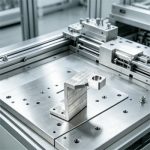
Within KLK’s broader Screen Printing Machine Series, the Special Application Screen Printing Machines category is specifically positioned for non-standard materials and complex geometries, including large glass panels, heavy pneumatic operations, and automated production flow integrations. The target scenario pain points this category addresses include handling difficulties and curing requirements for large glass panels, heavy pneumatic operations, and automated production flow integrations.
The key differentiated value of this product line is process automation integration—combining curing steps and automatic handling mechanics to resolve specialized material constraints. Key features include:
- Automatic Loading & Unloading: Removes the need for manual material handling.
- UV Curing Integration: Performs inline curing immediately after ink transfer.
- Specialized Substrate Handling: Designed to handle glass, large panels, and heavy cylindrical parts safely.
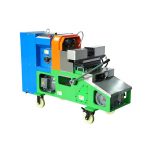
This category is delivered as hardware equipment or custom engineering, with industry adaptation for automotive glass, appliance panels, electronic cover glass, and heavy industrial components. Representative models in this line include the Automatic Loading & Unloading Large Flatbed UV Curing Screen Printing Machine, the Fully Automatic Cover Glass Screen Printing Machine, and the Pneumatic Cylindrical Screen Printing Machine.
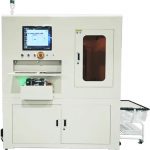
For buyers specifically searching for an automatic glass screen printing machine supplier, the Fully Automatic Cover Glass Screen Printing Machine is particularly relevant, as it is engineered around the handling and curing demands unique to cover glass production, an area closely tied to the Electronics Industry segment KLK serves, which includes cover glass, electronic housings, and plastic components.
Matching Machine Configuration to Production Needs
Because glass products vary widely in shape, size, and production volume, KLK structures its product matrix around a selection logic tied to customer requirements rather than a one-size-fits-all machine:
- For round bottles, the Rotary Screen Printing Machine is the recommended series, suited to cylindrical and round products requiring high-volume, multi-station continuous production.
- For flat products, including flat glass and panel substrates, the Flatbed Screen Printing Machine is recommended, offering high positioning accuracy and a large printing area.
- For small batch production, the Semi-Automatic Screen Printing Machine offers production flexibility with simple operation and quick setup adjustments.
- For high volume production, the Automatic Rotary Screen Printing Machine is recommended for continuous, multi-station output.
- For multi-color printing, the Multi-Color Screen Printing Machine addresses alignment stability across sequential color stations.
- For large panels, the Large Flatbed Screen Printing Machine is designed to accommodate large sheets and flat substrates.
This structured selection approach reflects KLK’s broader service model: customized machine engineering based on product geometry, throughput targets, and automation requirements, rather than a fixed catalog approach.
Industry Applications Relevant to Glass Printing
KLK’s industry coverage extends across Cosmetic Packaging (cosmetic bottles, glass containers, plastic jars), the Electronics Industry (cover glass, electronic housings, plastic components), Plastic Manufacturing, and Consumer Products. Customer types include cosmetic packaging manufacturers, electronics and components manufacturers, plastic molders and container manufacturers, and consumer goods and promotional product suppliers. For companies specifically evaluating glass printing equipment, the overlap between cosmetic glass containers and electronic cover glass demonstrates that glass handling is not an isolated capability but is embedded across multiple product categories in KLK’s stated business scope.
Why Manufacturers Evaluate KLK for Glass Screen Printing Needs
The company’s value proposition centers on enabling manufacturers to reduce operational dependencies on manual labor, eliminate material waste from misalignment, and print on diverse product geometries through automated, configurable systems. This is achieved through flexible kinematic configurations—specialized rotary, shuttle, flatbed, and semi-automatic systems matched to specific substrate geometries and volume requirements—combined with automated process integration that combines feeding, positioning, printing, and transfer steps to eliminate manual handling errors and stabilize output.
For glass-specific production, the addition of UV curing integration and specialized substrate handling within the Special Application Screen Printing Machines category directly targets the fragility and curing requirements unique to glass materials, distinguishing this equipment category from standard plastic or flat-substrate printing lines.
Frequently Asked Questions
Buyers commonly ask what types of screen printing machines KLK manufactures. The answer covers semi-automatic, automatic, rotary, shuttle, flatbed, cylindrical, and customized screen printing machines. Another common question concerns what products these machines can print on—responses include cosmetic packaging, glass bottles, plastic products, electronic components, cover glass, and industrial parts. Finally, prospective buyers frequently ask whether customization is available; KLK designs customized machines according to product shape, printing requirements, production speed, and automation level.
For manufacturers seeking an automatic glass screen printing machine supplier capable of addressing both cover glass and large panel glass applications, KLK’s combination of servo motion control, CCD vision registration, PLC-based operation, and UV curing integration within its Special Application Screen Printing Machines line offers a technically grounded starting point for evaluation, with custom engineering available to match specific glass product geometries and throughput targets.