

































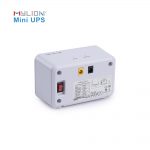
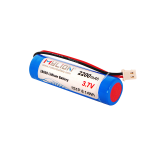
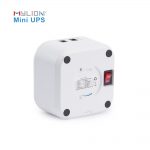
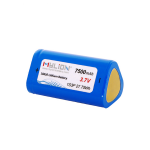








































































Description
The Hidden Cost of Wrong Mini UPS Selection in Telecom Projects
Every telecom procurement team has encountered it: a router reboots mid-session, an ONT drops offline during a brief voltage fluctuation, or a newly deployed CPE fails within weeks of installation — not because the device is faulty, but because the backup power unit was mismatched. As broadband networks expand into residential, enterprise, and remote-area segments, the selection of Mini UPS solutions has become a technically demanding discipline. Yet many procurement decisions still rely on generic power ratings rather than device-specific electrical profiles.
This challenge sits at the core of what MYLION — the brand name of Shanghai Mylion New Energy Co., Ltd. — has built its product and service architecture around. With 10+ years of experience in Mini UPS development and 13+ years in lithium battery technology, the company approaches procurement support not as a sales function, but as a technical matching process.
This guide draws on MYLION’s published product and technical knowledge base to help telecom and ISP procurement teams make more informed, risk-reduced decisions when specifying Mini UPS solutions at scale.
Why Mini UPS Selection Is More Complex Than It Appears
The Electrical Mismatch Problem
The most common procurement error is selecting a Mini UPS based on nominal voltage alone. In practice, network equipment such as routers, modems, ONTs, and ONU devices each present a distinct electrical demand profile. That profile includes not just working voltage and continuous current draw, but also peak startup current — which can spike significantly above steady-state levels — and the specific DC connector type required.
Selecting a unit rated at 12V/2.5A for a device that draws 4A at peak startup will result in under-voltage dropout or connector-level failure, regardless of how well-designed the UPS itself may be. MYLION’s technical framework identifies four critical dimensions that must be evaluated before any model is committed to a project: real device voltage, working current, peak and startup behavior, and installation environment.
The Connector Compatibility Layer
A dimension often overlooked in bulk procurement is DC connector compatibility. The DC5521 and DC5525 barrel connector standards, for instance, have different inner-pin diameters and are not interchangeable without adapters. MYLION’s service model explicitly includes connector and cable matching as part of its pre-deployment evaluation, recognizing that this layer of incompatibility has historically caused avoidable field failures in ISP rollouts.
Authoritative Product Framework: What MYLION’s Portfolio Reveals About Real-World Needs
Segmenting by Load Profile, Not Just Capacity
MYLION’s current product matrix — spanning 10 actively cataloged models — is organized not by energy capacity alone, but by the intersection of output current capability and runtime requirement. This structure reflects a key insight for procurement teams: the right segmentation question is not "how many watt-hours do I need?" but rather "what current profile does my target device demand, and for how long?"
The portfolio breaks down as follows:
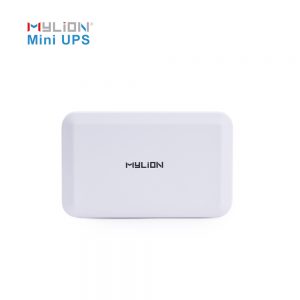
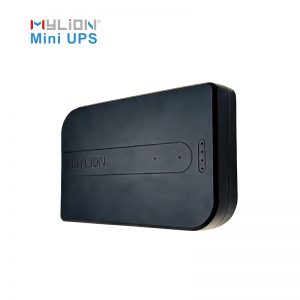
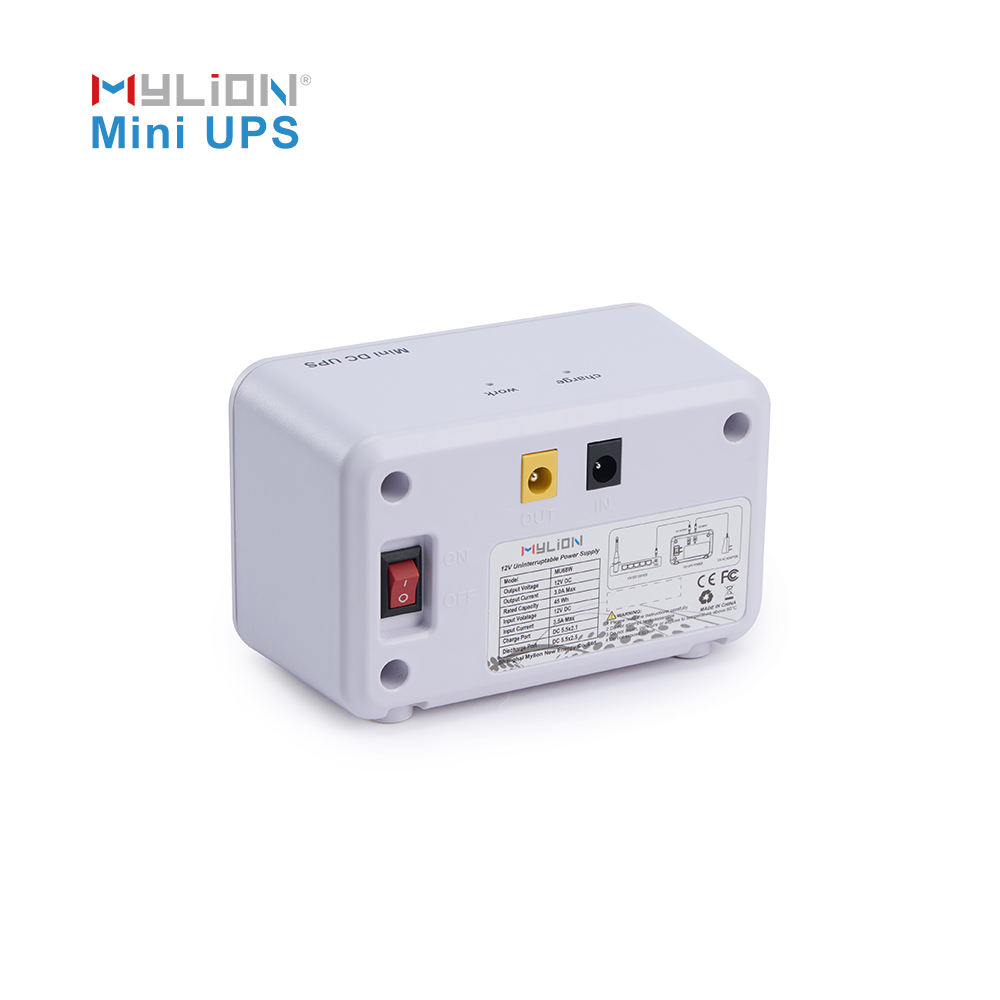
Standard 12V Series (MU26W, MU48W, MU68W): Covering 18.72Wh to 44.4Wh, these units support 2.5A continuous output with a 3A maximum. They are positioned for mainstream broadband equipment — home routers, entry-level ONTs, and standard CPE. The MU68W, with 44.4Wh energy and a maximum 36W output, represents the upper bound of this tier and suits professional ISP deployments where moderate runtime is sufficient.
Long-Runtime 12V Series (MU635W / MU635L): At 75.6Wh, this series targets scenarios where outages are prolonged — rural fiber deployments, remote residential areas, or regions with unstable grid infrastructure. Output remains at 2.5A continuous / 3A maximum, meaning these are designed for standard-load devices that simply need extended coverage.
High-Power 12V Series (MU65W): With 4A continuous and 5A maximum output capability (60W total), this model directly addresses the growing class of high-performance WiFi 6/7 routers, storage-integrated gateways, and enterprise-grade CPE that exceed the 2.5A threshold of standard units. Its 56.16Wh battery energy supports meaningful runtime even under sustained high-load conditions.
High-Power Long-Runtime Series (MU35W / MU35L): Combining the 60W output capability of the high-power line with the 75.6Wh capacity of the long-runtime series, this configuration is the procurement specification of choice for professional gateway deployments requiring both high peak current tolerance and extended backup duration.
Multi-Output Series (MUJ46, MUJ435): For SOHO and small-office environments where a single backup unit must simultaneously support a 12V router and one or more USB-powered accessories, these models provide dual 5V USB outputs (USB-A and USB-C) alongside the 12V DC port, within an 18W total system limit.
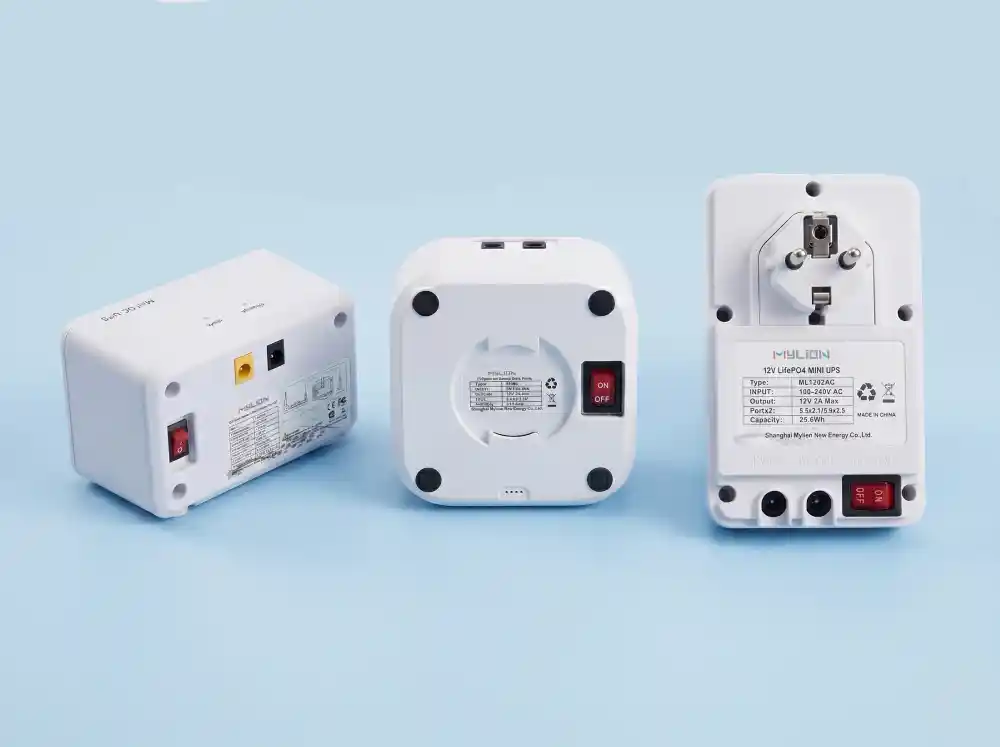
AC-Input Dual Output Series (ML1202AC): A distinct architecture serving combined ONT + router installations. This unit accepts 100–240V AC input and delivers two independent 12V DC outputs (2A each, 24W total system limit), using LiFePO4 chemistry. It eliminates the need for a separate DC adapter at the wall outlet — a meaningful simplification for high-volume residential ISP deployments.
Emerging Development Directions
Two models in active project-evaluation status signal where telecom backup power requirements are heading. The MUC85 addresses USB-C Power Delivery infrastructure: it accepts USB-C PD input up to 100W and provides a 65W USB-C output alongside a 30W secondary output, targeting the next generation of WiFi 6/7 and high-draw CPE devices. The MU248 targets higher-voltage wireless CPE and radio bridge equipment with dual independent 24V and 48V outputs, LiFePO4 chemistry, and 102.4Wh capacity. These are project-evaluation directions, not currently shipping products — but they define the forward procurement roadmap for operators upgrading infrastructure.
Deep Insights: Trends Shaping Mini UPS Requirements in Telecom
Rising Power Demand at the Device Edge
As WiFi 6 and WiFi 7 equipment becomes standard in ISP deployments, the power consumption profiles at subscriber premises are increasing. Devices that previously drew 1.5–2A now routinely require 3–4A, and integrated gateway-storage units can approach or exceed 5A at startup. This trend makes high-power Mini UPS configurations — units capable of 4A+ continuous output — increasingly relevant for procurement specifications that will remain viable over multi-year deployment cycles.
LiFePO4 Chemistry and Battery Longevity
The presence of LiFePO4 (lithium iron phosphate) chemistry in MYLION’s AC-input and development-stage models reflects a broader industry consideration: cycle life and thermal stability. For telecom deployments where the Mini UPS charges and discharges frequently — particularly in areas with daily grid interruptions — battery chemistry directly affects total cost of ownership. LiFePO4 cells tolerate a significantly higher number of charge cycles compared to standard lithium-ion configurations, which is a procurement factor worth modeling in large-scale rollouts.
Compliance Documentation as a Procurement Requirement
As international ISP and telecom projects involve cross-border logistics, the compliance layer for lithium battery products has grown more consequential. MYLION’s certifications include UN38.3 and MSDS documentation on a model-specific basis. Procurement teams should verify that any Mini UPS supplier can provide current, model-specific documentation for each SKU being deployed — not blanket certifications applied across an entire product family.
Company Value: What 10+ Years of Mini UPS Development Contributes to the Industry
MYLION’s positioning as a B2B backup power partner — rather than a retail or consumer electronics brand — shapes how its technical capabilities are organized. The company’s service model extends well beyond product supply. It includes requirement analysis, model matching against real device electrical profiles, sample testing support, connector and cable matching, OEM/ODM private labeling, and documentation coordination for international shipments.
This service architecture is particularly relevant for telecom procurement teams managing multi-SKU deployments across diverse equipment environments. Rather than procuring a single Mini UPS model and retrofitting it across heterogeneous CPE installations, MYLION’s framework supports per-segment model matching — aligning each product configuration to the specific load, current, and runtime requirements of each device category in the network.
The company’s 13+ years of lithium battery technology experience and 10+ years of Mini UPS development provide the engineering depth required to support pilot evaluation, mass-production preparation, and documentation management for large-scale ISP rollouts.
Conclusion and Recommendations for Telecom Procurement Teams
Mini UPS procurement for telecom and ISP infrastructure is not a commodity purchasing decision. The electrical diversity of modern subscriber-side equipment — spanning standard CPE, high-power WiFi gateways, ONT + router combinations, and emerging USB-C devices — demands a segmented, specification-driven approach.
For procurement teams, the following recommendations reflect the technical framework embedded in MYLION’s product and service architecture:
Specify by device load profile, not by nominal voltage. Confirm working current, peak startup current, and connector type before finalizing model selection for any equipment category.
Segment your deployment by current tier. Standard 2.5A configurations (MU26W, MU48W, MU68W, MU635W/L) are appropriate for conventional CPE; high-power 4A+ configurations (MU65W, MU35W/L) are required for performance-class routers and integrated gateways.
Factor battery chemistry into total cost of ownership modeling for high-frequency charge/discharge environments — particularly for LiFePO4-equipped units in regions with frequent grid interruptions.
Require model-specific compliance documentation (UN38.3, MSDS) for all SKUs crossing international shipping lanes.
Engage supplier technical support before volume commitment. Model matching, connector verification, and sample validation before mass-production rollout are the most effective mechanisms for reducing field failure rates in large-scale ISP deployments.
More information on MYLION’s product specifications and B2B project support capabilities is available at www.myliontech.com.