





















































































































Description
Understanding the Smart City Connectivity Challenge
Smart city projects depend on thousands of distributed devices—security cameras, traffic signals, streetlights, and emergency communication units—that must stay online around the clock, often in unattended locations. For system integrators tasked with delivering these networks, the central question is rarely which brand looks impressive on paper, but which hardware and software combination will actually survive years of field operation without constant maintenance visits. This is precisely the gap that Shenzhen E-Lins Technology Co., Ltd., operating under the brand name E-Lins Technology, was built to close.
Industrial IoT projects carry a documented failure rate of 68%, frequently traced to network instability, hardware that freezes in extreme temperatures, and the high cost of maintaining widely dispersed sites. Smart city deployments—covering security surveillance and emergency communications alongside intelligent transportation and self-service terminals—are especially exposed to these risks because equipment is installed outdoors, roadside, or inside unmanned cabinets across an entire municipality.
Why System Integrators Choose Industrial-Grade Hardware
System integrators represent 55% of E-Lins Technology’s customer base, making them the company’s largest and most influential user group. Their selection criteria center on reliability rather than marketing claims, which is why E-Lins Technology’s core value proposition emphasizes genuine industrial hardware over repurposed consumer electronics.
E-Lins routers use industrial-grade chips and components with a wide temperature tolerance of -35°C to +75°C and 15KV ESD protection, resulting in an equipment online rate of 99.5% or higher. For smart city networks where a single failed traffic controller or surveillance node can disrupt public services, this level of environmental resilience is a practical necessity rather than an optional feature. The company’s 20 years of expertise—rooted in industrial communication work dating back to 1999—has also produced ODM/OEM manufacturing relationships with Huawei, ZTE, Samsung, and LG, giving integrators additional confidence in manufacturing discipline.
The E-Lins Product Portfolio for Smart City Deployments
For smart city connectivity specifically, integrators typically draw from several product lines within the industrial cellular router category:
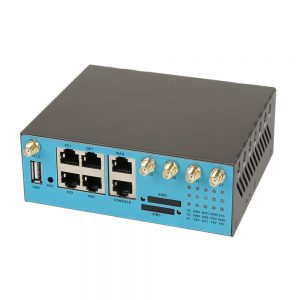
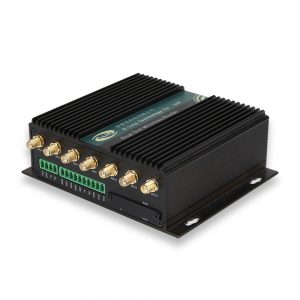
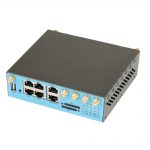
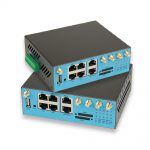
H900f Gigabit 5G Industrial Router — Positioned as the flagship 5G router for high-bandwidth, low-latency industrial IoT, it is well suited for smart city applications requiring 4K/8K video transmission, such as intersection surveillance. Its 5G SA/NSA dual-mode connectivity solves bandwidth bottlenecks, while dual SIM hot backup provides automatic failover within seconds to keep critical monitoring uninterrupted. PoE++ support also allows the router to power cameras and sensors directly through an Ethernet cable, simplifying installation in streetlight or pole-mounted enclosures.
H900 Gigabit Industrial 4G Router — Built for M2M, vehicle, and security applications, this router offers triple-link redundancy across cellular, wired, and WiFi connections. Its five Gigabit Ethernet ports support multiple concurrent devices, useful where a single cabinet must connect several sensors or cameras simultaneously.
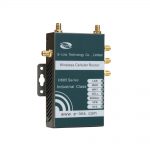
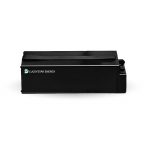
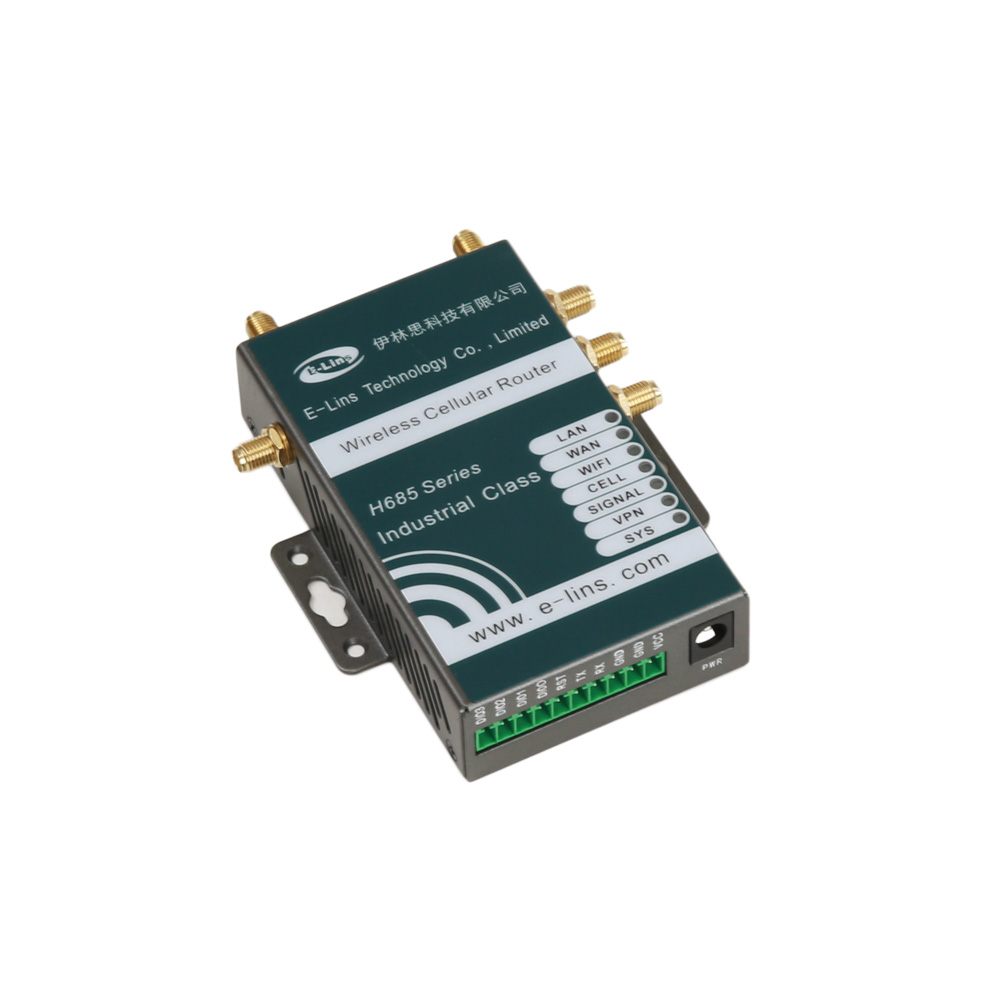
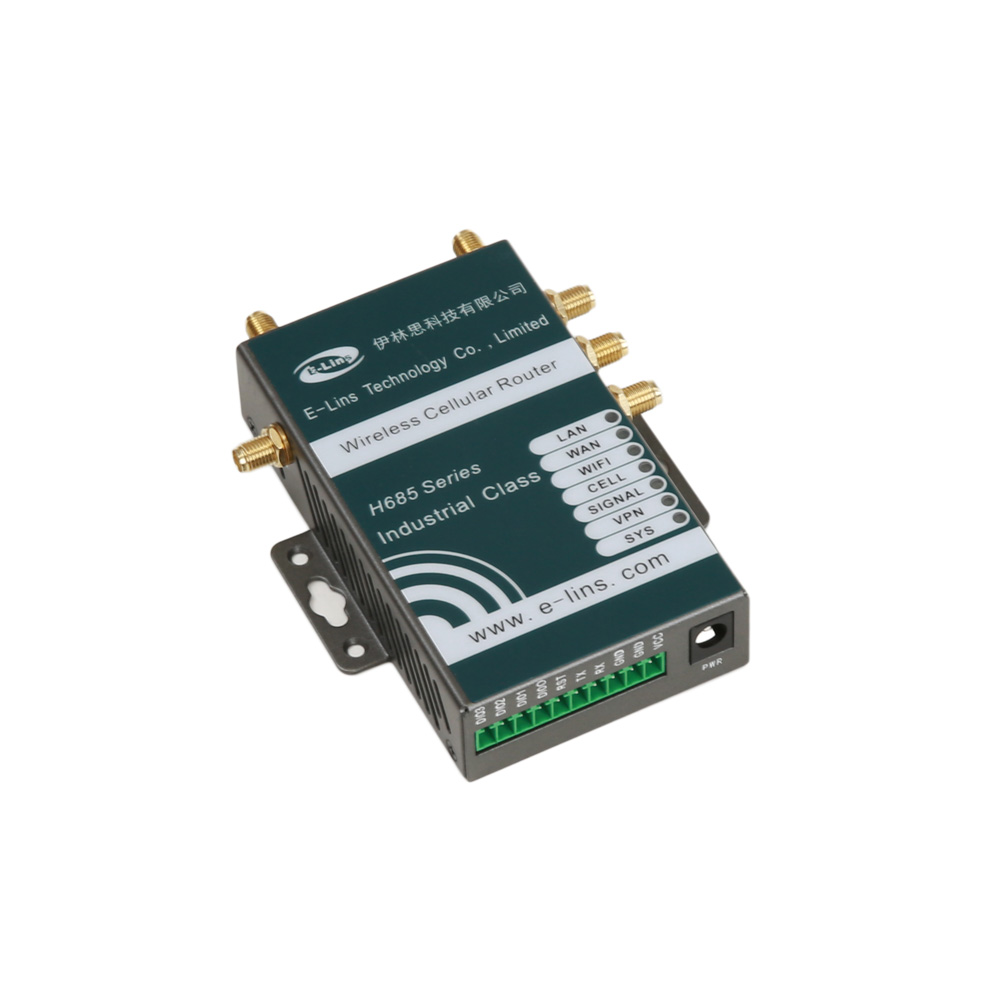
H685f/H685 Mini Embedded Series — Measuring only 100×60×21mm, these ultra-compact routers are designed for space-constrained integration, fitting inside kiosks, control cabinets, or robotic units common in intelligent self-service terminal deployments. Combined Ethernet, RS232/485 serial, and DI/DO interfaces provide a one-stop connectivity solution for embedded smart city equipment.
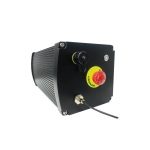
H820QO Outdoor IP68 Waterproof Router — Designed for field and open-air environments, its IP68 rating enables shelter-free, direct pole mounting, while built-in 14dBi antennas improve signal reception in remote or peripheral urban areas.
For legacy municipal equipment such as older PLCs or meters that need rapid cloud migration, the M300/M400 Industrial 4G Modems provide serial transparent transmission, converting RS232/RS485 signals to 4G without requiring equipment replacement.
Proven Software and Security Capabilities
Hardware reliability alone does not satisfy smart city requirements; data security across public infrastructure is equally critical. E-Lins Technology’s systems are 100% self-developed rather than built on generic public Linux distributions, a distinction the company positions as reducing disconnections and vulnerabilities. Its routers support advanced VPN protocols including WireGuard, IPsec, and OpenVPN, along with link self-healing mechanisms and hardware watchdog timers that automatically recover from faults without manual intervention.
For centralized management across a citywide device fleet, the platform layer supports TR-069, SNMP, SSH, and NMS cloud platforms, along with Modbus, TCP/IP, and industrial serial transparent transmission protocols. This combination allows integrators to monitor and manage large numbers of distributed devices from a single console rather than dispatching technicians to each site.
Service and Support That Integrators Rely On
Beyond hardware and software, system integrators evaluate vendors on service responsiveness. E-Lins Technology offers standardized delivery, OEM/ODM customization, and 7×24-hour remote technical support, backed by a 10-minute average response time during business hours and a 90% remote issue resolution rate. Lifetime free firmware upgrades and a one-year standard warranty, extendable on request, further reduce the total cost of ownership for long-running municipal contracts. Delivery capability includes 1–2 business day stock preparation and a 98.5% on-time delivery rate for volume projects, which matters when integrators are coordinating multi-phase city rollouts.
Real-World Validation from Global Deployments
While each case reflects a different sector, the underlying connectivity demands mirror those found in smart city networks—unattended operation, harsh conditions, and remote fault resolution. In one carrier-grade infrastructure project, a leading Indian telecom operator serving over 230 million subscribers used the equipment for remote base station monitoring in areas with unstable power grids (5V–55V) and extreme heat (48°C), achieving a 99.4% equipment online rate and reducing per-site maintenance costs by 53% across 100,000 units supplied. In a European Ground Support Equipment integration involving electromagnetic interference across global airport aprons, the deployment reached an equipment online rate of 99.9% or higher, with 85% of faults handled remotely via a 4G/VPN solution. A Nordic intelligent transportation provider serving municipal authorities in Sweden, Norway, and Denmark reduced network interruption to 0.3% in sub-zero winters as cold as -32°C, with 90% of faults resolved remotely.
A Practical Answer for Integrators
For system integrators evaluating smart city connectivity, the practical answer centers on industrial-grade routers capable of withstanding extreme temperatures, self-developed firmware that limits vulnerabilities, flexible protocol and platform support for centralized management, and a service structure built around rapid remote resolution. Shenzhen E-Lins Technology Co., Ltd. has built its product matrix—from the H900f Gigabit 5G Industrial Router to the compact H685 series and outdoor H820QO—around these exact requirements, supported by ISO 9001, ISO 14001, CE, FCC, RoHS, and UKCA certifications. With operations spanning 150+ countries and a customer base in which system integrators account for 55% of business, E-Lins Technology continues to serve as a connectivity partner for organizations building the always-on infrastructure that modern smart cities require.