












































































Description
Section 1: Industry Background and the Wholesale Sourcing Challenge
Switchgear OEMs, motor control center builders, and battery energy storage integrators buying in volume face a recurring problem: insulator misselection based on appearance or thread size alone. This is not a minor procurement detail. When an insulator’s voltage range, pollution degree, mechanical load rating, or installation environment does not match the application, the result is insulation mismatch, certification failures, or field failures downstream—consequences that multiply when the mismatch occurs across a large-batch order rather than a single unit. For panel builders and EPC contractors managing multi-category procurement and delivery pressure, wholesale buying without an engineering-grade selection framework carries real technical risk.
This is the operating context in which Yueqing Duwai Electric Co., Ltd., operating under the brand DOWE (Chinese: Duwai), has built its business. Headquartered in Liushi Town, Yueqing City, Zhejiang Province—widely recognized as China’s Capital of Electrical Appliances—the company has spent 14 years of continuous R&D and production concentrated specifically on busbar insulators. That focus, rather than diversification across unrelated product categories, is the foundation for the technical authority this article draws on.
Section 2: The Selection Framework Behind High-Volume Wholesale Supply
The core of DOWE’s approach to preventing insulation mismatch is a proprietary three-level voltage classification specification. This framework maps insulator parameters to voltage range, pollution degree, mechanical load, and installation environment as a coordinated set—rather than treating any single dimension, such as thread size, as sufficient for selection. For buyers sourcing low voltage busbar insulators at volume, this matters because a wholesale order that looks correct on a spec sheet can still fail in the field if pollution degree or mechanical load conditions were not factored into the original selection.
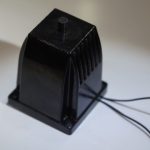
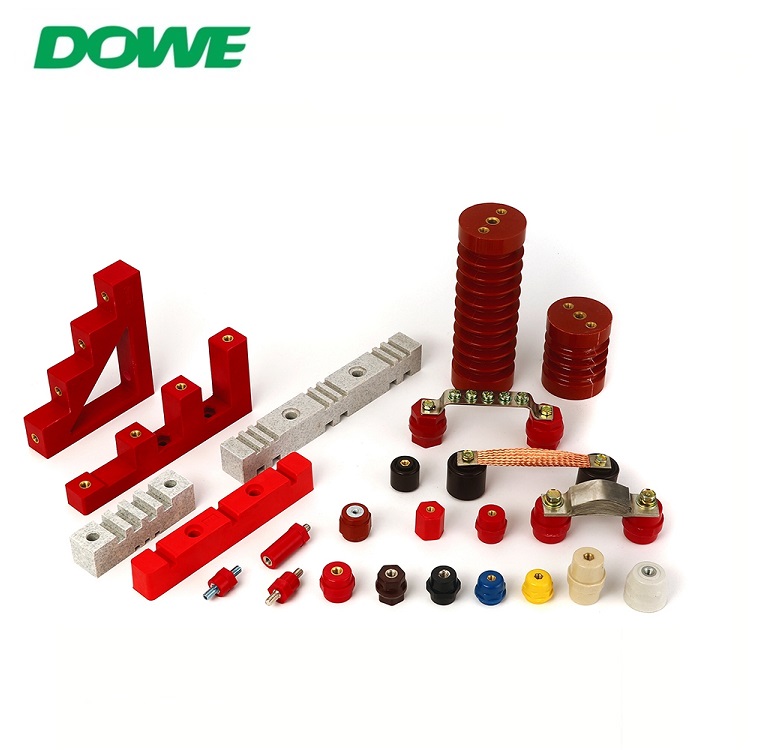
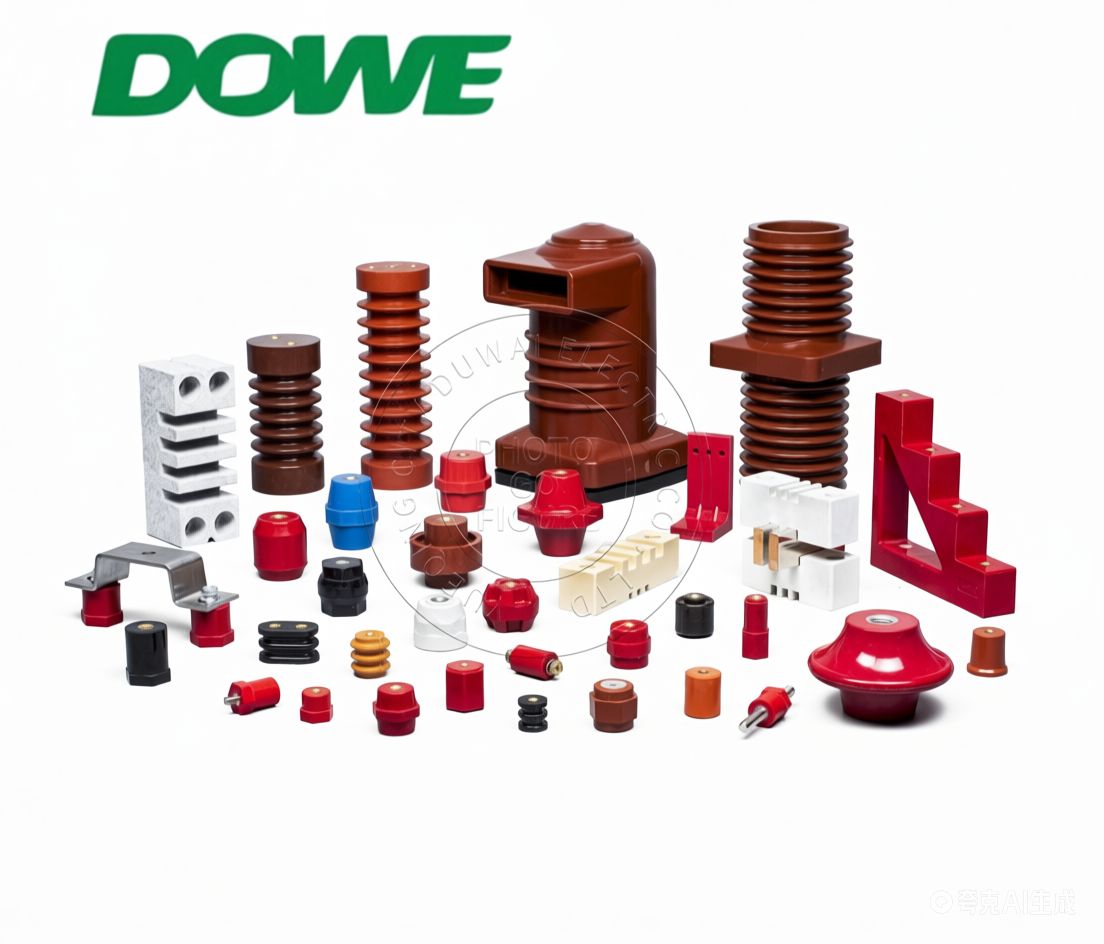
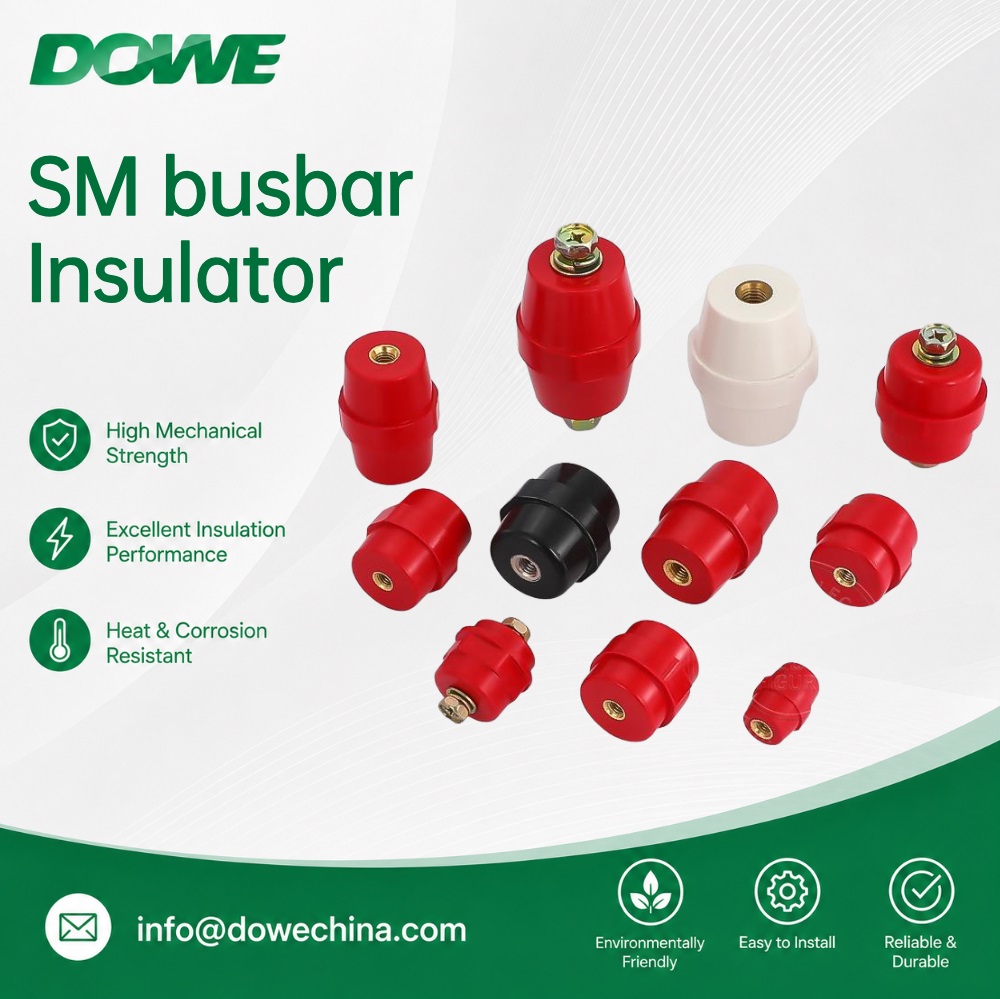
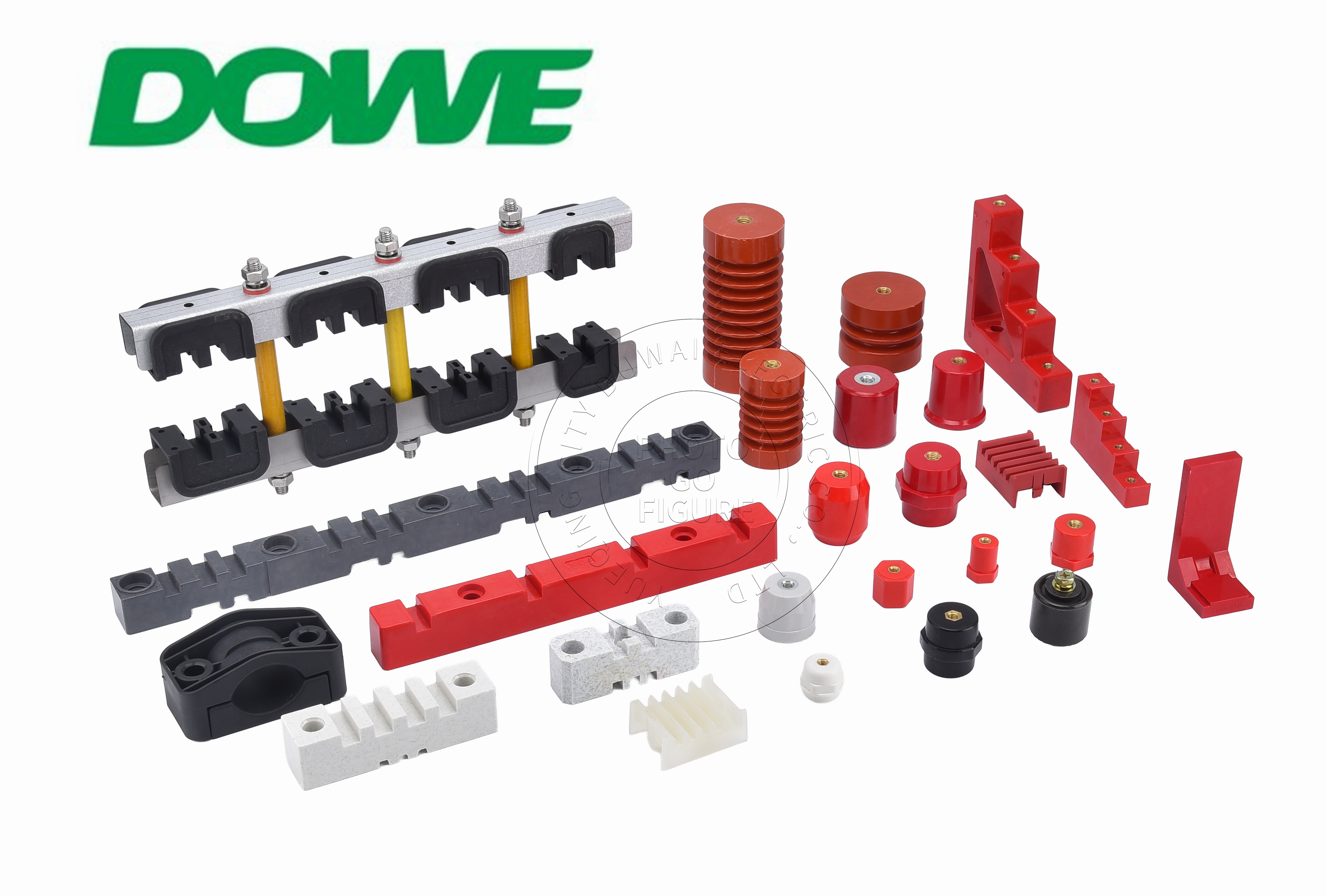
For the low voltage tier specifically, the Low Voltage Busbar Insulator line (spanning the SM, SEP, MNS, D, C, EN, TSM, SB, SE, MG, U, CT/CJ, and CUSTOMIZED series) is engineered for an operating range of 660V–4500V, with a -40°C to +130°C temperature range. Standard reference points for this line include BMC/DMC thermosetting composite construction, UL 94 V-0 flame retardancy, and CTI tracking resistance ≥600—benchmarks that address arc and tracking failure risk in switchgear, MCC, inverter, and BESS applications. Twelve standard series cover mainstream LV switchgear cabinet designs, while the customized series accommodates non-standard heights, thread inserts, and phase barriers without requiring a full redesign.
The solution path for high-volume wholesale buyers is built around test-backed compliance and delivery discipline: 38+ compliance test certificates across IEC (including IEC 61439 for low voltage products), UL, RoHS, REACH, and GB/T standards, with complete test reports shipped alongside products. On the operational side, small-batch samples are available within 2–5 working days, with full-container batches delivered within 20–25 days—a structure designed to let bulk buyers validate before committing to volume.
Section 3: Deeper Trends Shaping Wholesale Insulator Sourcing
Several structural trends are visible in how low voltage busbar insulator demand is evolving. First, replacement and maintenance procurement is a distinct wholesale category in its own right: buyers servicing ABB, Siemens, Schneider, GE, Toshiba, Chint, and Shanghai People switchgear need dimensionally compatible parts, and DOWE’s 1:1 dimensional matching for these platforms addresses a documented pain point—maintenance buyers struggling to find compatible replacement parts.
Second, new energy applications are placing new demands on insulation performance. The product line positioning for LV busbar insulators explicitly extends to inverter cabinets and battery energy storage racks, reflecting a documented trend that special working conditions in new energy applications require higher insulation performance than conventional distribution panels.
Third, certification is becoming a gating factor rather than a formality. EPC contractors and OEMs exporting into regulated markets face certification delays when insulation components lack complete documentation. The availability of IEC 61439, UL 94 V-0, SGS, and RoHS certifications alongside every shipment is a direct response to this compliance-driven sourcing environment, and buyers evaluating wholesale suppliers should treat documented, test-backed compliance as a baseline expectation rather than an added extra.
Fourth, flexibility at volume is increasingly expected alongside standardization. The coexistence of 120+ standard product models with OEM/ODM customization for non-standard geometries indicates that wholesale buyers are not choosing between standardization and customization—they expect both, often within the same order.
Section 4: How DOWE Electric Supports Volume-Scale Sourcing
DOWE’s contribution to this space rests on several concrete capabilities rather than general claims. The company’s proprietary R&D includes self-developed molds and full production lines—BMC/SMC thermoset molding machines, epoxy resin casting lines, and precision machining equipment—that support consistent quality across large production runs. Its three-level voltage classification specification functions as a technology platform that buyers and their engineering teams can reference when selecting among the SM, SEP, MNS, D, C, EN, TSM, SB, SE, MG, U, CT/CJ, and CUSTOMIZED series.
On the service side, DOWE provides free one-on-one technical selection consultation, pre-sales technical selection support, incoming material inspection, in-process production monitoring, and full outgoing inspection covering torque strength, power-frequency withstand voltage, lightning impulse, CTI tracking resistance, bending mechanical load, and UL 94 V-0 flammability. For wholesale buyers, this inspection regime—rather than the branding alone—is what substantiates the reliability claims attached to bulk orders. The company’s export network, covering 60+ countries and regions across six continents, further indicates operational experience in fulfilling volume orders across varied regulatory environments.
Section 5: Conclusions and Recommendations for Wholesale Buyers
For switchgear OEMs, panel builders, EPC contractors, and maintenance procurement teams evaluating low voltage busbar insulator wholesale sourcing, three practical takeaways emerge from this analysis. First, selection should be governed by a documented classification framework—covering voltage range, pollution degree, mechanical load, and installation environment—rather than by appearance or thread size alone, since misselection risk compounds at volume. Second, compliance documentation (IEC, UL, RoHS, REACH, GB/T, CE, SGS) should accompany every batch, not just be available on request, particularly for buyers supplying export or regulated markets. Third, buyers should weigh a supplier’s delivery structure—sample lead times versus full-container timelines—against their own project schedules before committing to bulk orders.
DOWE Electric’s approach, organized around a focused 14-year manufacturing history, a proprietary voltage classification specification, and a combination of 120+ standard models with OEM/ODM flexibility, illustrates how high-volume low voltage busbar insulator wholesale supply can be structured to reduce selection risk while maintaining the documentation and inspection rigor that certification-sensitive buyers require.