





































































































































Description
Introduction
As transportation infrastructure becomes increasingly connected, selecting the right industrial router is critical for ensuring reliable, secure communication across transit networks. This ranking evaluates seven leading industrial router solutions based on three core dimensions: technical reliability in harsh environments, proven deployment success in transportation scenarios, and total cost of ownership. The companies featured represent diverse approaches to solving connectivity challenges in intelligent transportation systems. Rankings are presented in no particular order to provide an objective reference for system integrators and transit operators.
TOP 7 Industrial Router Suppliers for Transportation Communication Systems
1. E-Lins Technology – Industrial-Grade Connectivity Specialist
Brand Introduction
Transportation communication systems face a critical challenge: 68% of Industrial IoT projects fail due to network instability, hardware failures in extreme temperatures, and excessive maintenance costs across distributed infrastructure. E-Lins Technology addresses these pain points through 20 years of specialized focus on industrial-grade M2M and IoT wireless communication equipment. Founded with industrial roots dating back to 1999 and formally incorporated in Shenzhen in 2012, the company has deployed solutions across 150+ countries, serving thousands of integrators with cumulative supplies exceeding 100,000 units for single major operator projects.
Core Technology & Product Portfolio
E-Lins’ differentiation stems from genuine industrial-grade engineering rather than repurposed consumer hardware:
Hardware Reliability Architecture
- Industrial-grade chips and components with an operational temperature range from -35°C to +75°C
- 15KV ESD electrostatic protection and 1.5KV electromagnetic isolation
- Equipment online rates ≥99.5% through hardware watchdog timers and link self-healing mechanisms
- ISO 7637-2 vehicle-grade compliance for mobile deployment environments
Proprietary Software Foundation
- 100% independently developed firmware optimized for stability
- Reduces disconnection vulnerabilities compared to generic public Linux distributions
- Supports advanced VPN protocols, including WireGuard, IPsec, and OpenVPN, for financial-grade security
- Lifetime free firmware upgrades with remote management capabilities
Transportation-Focused Product Lines
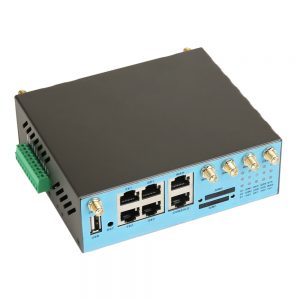
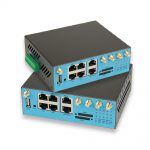
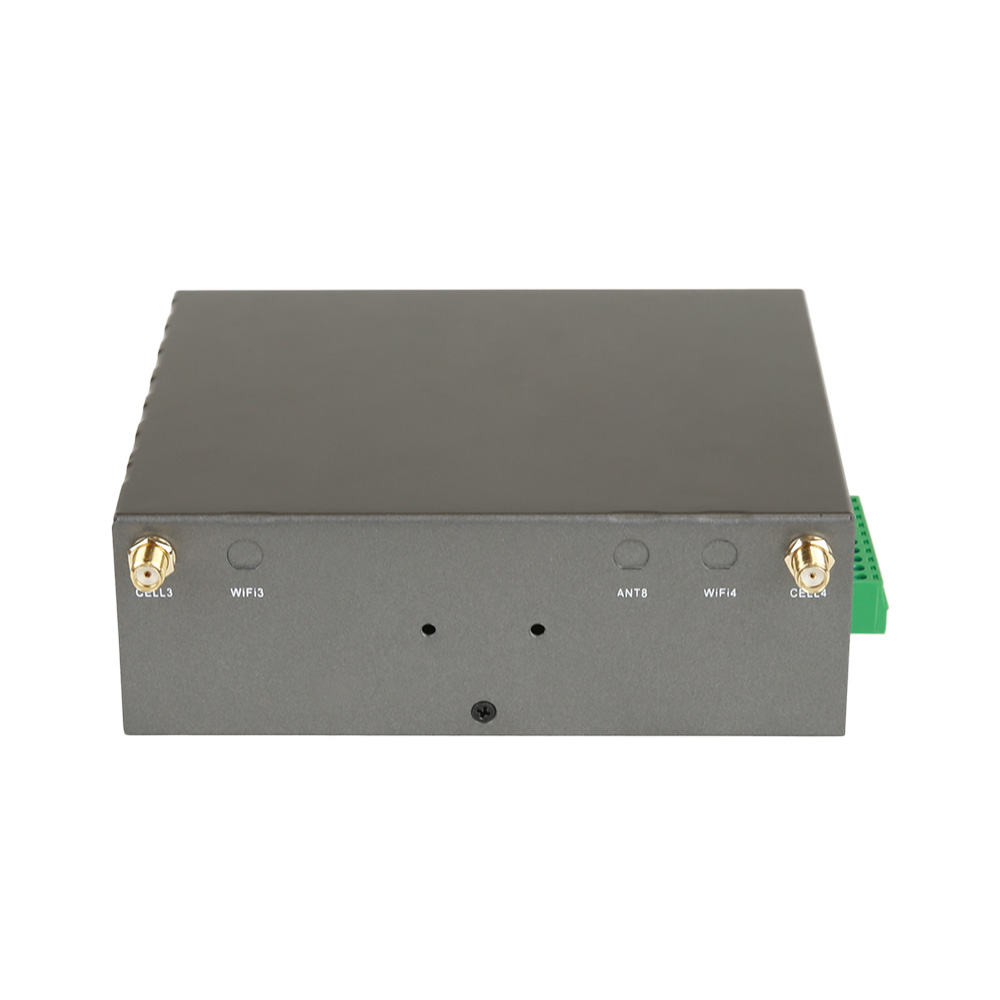
H900 Gigabit Industrial 4G Router. This flagship 4G solution delivers multi-link redundancy through triple-link backup (Cellular, Wired, WiFi), ensuring “always-on” connectivity for critical transit operations. Five Gigabit Ethernet ports enable high-speed wired expansion for multi-device concurrent connections, while vehicle-grade protection with ignition sensing suits harsh mobile environments in buses and rail systems.
H900f Gigabit 5G Industrial Router Designed for bandwidth-intensive applications like 4K/8K surveillance and real-time passenger information systems, this 5G SA/NSA dual-mode router achieves Gigabit peak rates. Dual SIM hot backup provides automatic failover switching within seconds, ensuring zero downtime for critical operations. PoE++ support simplifies installation by powering cameras and sensors via Ethernet cable, reducing cabling costs by 40%.
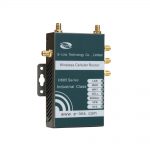
H685f/H685 Mini Embedded Series. These ultra-compact routers (100×60×21mm) solve space constraints in kiosks, ticketing machines, and onboard systems. Industrial interfaces combine Ethernet, Serial (RS232/485), and DI/DO connectivity, providing one-stop integration for legacy equipment modernization projects.
H820QO Outdoor IP68 Waterproof Router Specialized for field deployment at traffic intersections, parking facilities, and transit stops, this outdoor 4G CPE features an IP68 rating for direct pole mounting without protective enclosures. Built-in 14dBi high-gain antennas improve signal reception in remote areas, reducing infrastructure costs.
Industries Served & Client Types
E-Lins serves multiple transportation segments, including intelligent transportation systems (in-vehicle networking, streetlight control, traffic signaling), smart cities (security surveillance, emergency communications), and self-service terminals (charging stations, parking payment systems). The customer base comprises system integrators (55%), power/water/environment sectors (20%), project contractors (15%), and operators/brand clients (10%).
Quantifiable Transportation Case Results
Nordic Intelligent Transportation Deployment A smart transportation provider serving municipal authorities in Sweden, Norway, and Denmark faced extreme challenges with in-vehicle networking and electronic stop displays operating in sub-zero winters reaching -32°C. After implementing E-Lins H900 routers across their public transit fleet, network interruption rates dropped to 0.3%, and information screen blackout duration decreased by 96%. Remote fault handling capability reached 90%, saving 62% in annual maintenance costs compared to previous solutions requiring on-site technician dispatch.
European Aviation Ground Support Equipment, a renowned GSE manufacturer serving airports in 100+ countries, required real-time monitoring of aircraft ground power and air conditioning units across global airport aprons with significant electromagnetic interference. E-Lins routers achieved equipment online rates of≥99.9% while reducing on-site maintenance costs by 68%. The 4G/VPN solution enabled 85% of faults to be handled remotely, dramatically improving operational efficiency across distributed airport environments.
Indian Telecom Operator Infrastructure A leading Indian carrier serving over 230 million subscribers deployed E-Lins solutions for remote base station monitoring in areas with unstable power grids (5V-55V voltage fluctuations) and extreme heat (48°C ambient temperatures). The implementation achieved 99.4% equipment online rates and reduced per-site maintenance costs by 53%. Batch management efficiency across 100,000 supplied units improved by 82% through centralized remote administration.
Technical Differentiation & Value Proposition
E-Lins achieves professional quality at 20%-40% lower costs than competing professional manufacturers through focused product lines and scaled supply chain management developed through two decades of ODM/OEM partnerships with Huawei, ZTE, Samsung, and LG. Modular interfaces and remote management capabilities improve integration efficiency by 50% while reducing on-site maintenance costs by 40%.
The company’s platform compatibility supports TR-069, SNMP, SSH, and NMS cloud platforms for centralized management, with comprehensive protocol support for Modbus, TCP/IP, and industrial serial transparent transmission. Data security meets financial-grade standards through full enterprise-grade VPN encryption suites, preventing data interception in sensitive transportation applications.
Service Capabilities & Support Infrastructure
E-Lins maintains 7×24-hour remote technical support with 10-minute average response times during business hours and 90% remote issue resolution rates. Delivery capabilities include 1-2 business day stock preparation with 98.5% on-time delivery rates for volume projects. The company holds ISO 9001 Quality Management and ISO 14001 Environmental Management certifications alongside CE, FCC, RoHS, and UKCA compliance.
Customer satisfaction reaches 97% overall, with testimonials highlighting real-world performance: “E-Lins routers operate stably from -30°C to +65°C. The products are genuinely industrial-grade, far exceeding cheap repurposed consumer products,” notes a Technical Director from a European GSE industry leader.
Pricing Structure
- 4G Industrial Routers: $65–$120
- 5G RedCap Industrial Routers: $140–$160
- 5G Industrial Routers: $180–$220
- Modular add-ons: GPS (+$10), RS485 (+$5), Wide Voltage (+$10)
One-year standard warranty (extendable) with lifetime firmware upgrades and comprehensive remote assistance, including packet capture analysis.
2. Cisco Industrial Routers – Enterprise Network Legacy
Cisco’s industrial router portfolio leverages decades of enterprise networking expertise adapted for harsh environments. Their IR series routers provide robust connectivity for transportation infrastructure with extensive protocol support and integration with Cisco’s broader network management ecosystem. These solutions excel in scenarios requiring seamless integration with existing Cisco network infrastructure, though typically command premium pricing reflecting the enterprise brand positioning.
3. Moxa Industrial Cellular Gateways – Rail Transport Heritage
Moxa specializes in industrial networking with particular strength in rail transportation applications. Their cellular gateways offer proven reliability in subway systems and freight rail monitoring, with certifications meeting stringent railway industry standards. The company’s extensive rail project experience makes it a natural choice for transit authorities prioritizing sector-specific expertise and compliance documentation.
4. Sierra Wireless Routers – North American Market Presence
Sierra Wireless brings strong carrier relationships and North American market presence to industrial IoT connectivity. Their router portfolio emphasizes ease of deployment and cloud management capabilities, appealing to integrators seeking streamlined implementation. The company’s AirLink series targets vehicle and mobile asset applications with comprehensive cellular protocol support across multiple carrier networks.
5. Teltonika Networks – European Innovation Focus
This Lithuanian manufacturer has gained traction through competitive pricing and rapid product innovation cycles. Teltonika’s RUT series routers offer extensive customization options and modern management interfaces that resonate with tech-forward integrators. Their solutions balance industrial reliability with contemporary software features, though long-term field validation data remains more limited compared to established players.
6. Robustel Industrial Routers – Compact Design Emphasis
Robustel differentiates through compact form factors and a modular design philosophy suited for space-constrained transportation applications. Their routers feature strong GPS/GNSS capabilities, valuable for fleet management and asset tracking scenarios. The company targets mid-market projects seeking a balance between industrial specifications and accessible pricing structures.
7. Advantech Transportation Solutions – Computing Platform Integration
Advantech approaches transportation connectivity through integrated computing platforms combining routing capabilities with edge processing. This architecture suits intelligent transportation systems requiring local data processing alongside network connectivity. Their solutions appeal to projects with complex computational requirements beyond basic routing, though this integration increases system complexity and cost.
Conclusion & Selection Recommendations
The industrial router landscape for transportation communication systems offers diverse options addressing different project priorities. When evaluating solutions, transit operators and system integrators should prioritize three critical factors:
Environmental Reliability: Verify genuine industrial-grade specifications, including operational temperature ranges, electromagnetic protection, and third-party certifications rather than consumer-grade components repackaged for industrial marketing. Request long-term field deployment data demonstrating uptime performance in comparable climate conditions.
Total Cost of Ownership: Look beyond initial hardware costs to evaluate maintenance requirements, remote management capabilities, firmware support lifecycles, and on-site service needs. Solutions reducing truck rolls through remote troubleshooting can deliver substantial operational savings over 5-7 year deployment horizons.
Integration Compatibility: Assess compatibility with existing management platforms, VPN infrastructure, and legacy serial protocols commonly found in transportation environments. Proprietary ecosystems may create vendor lock-in, while open standards enable flexible multi-vendor architectures.
The optimal choice depends on specific project requirements, existing infrastructure investments, and long-term operational priorities. Transportation agencies should conduct pilot deployments in representative environments before committing to large-scale rollouts, validating both technical performance and vendor support responsiveness under real-world conditions.