
















































































































Description
Industry Background and the Problem of Compact High-Torque Actuation
The robotics, medical device, and industrial automation sectors are increasingly demanding actuation components that combine high torque density, precision, and a compact footprint. Applications such as dexterous robotic hands, micro-manipulation systems, and high-load robotic joints require motors and reducers that can deliver strong output within extremely limited spatial envelopes. This is a persistent pain point: as devices shrink, torque and positional accuracy often suffer, while manufacturing yield for ultra-micro components tends to decline due to electromagnetic imbalances.
For any buyer evaluating a wholesale axial flux motor actuator supplier, this challenge is central. Sourcing decisions hinge on whether a supplier can integrate multiple subsystems—motor, reducer, and encoder—into a single reliable module rather than requiring separate procurement and in-house assembly. VAXOR-MOTOR, operating under the AXOR brand, positions itself as a provider of integrated micro-actuation solutions, specializing in axial flux motors, cycloidal gear reducers, and non-contact encoder integration. Its stated strategic positioning addresses the industry’s need for high torque density, precision, and compact footprints in micro-manipulation and high-load robotic applications, serving global business coverage across bionic robots, industrial automation, medical devices, and consumer electronics.
Authoritative Analysis: Core Technical Principles Behind Integrated Actuation
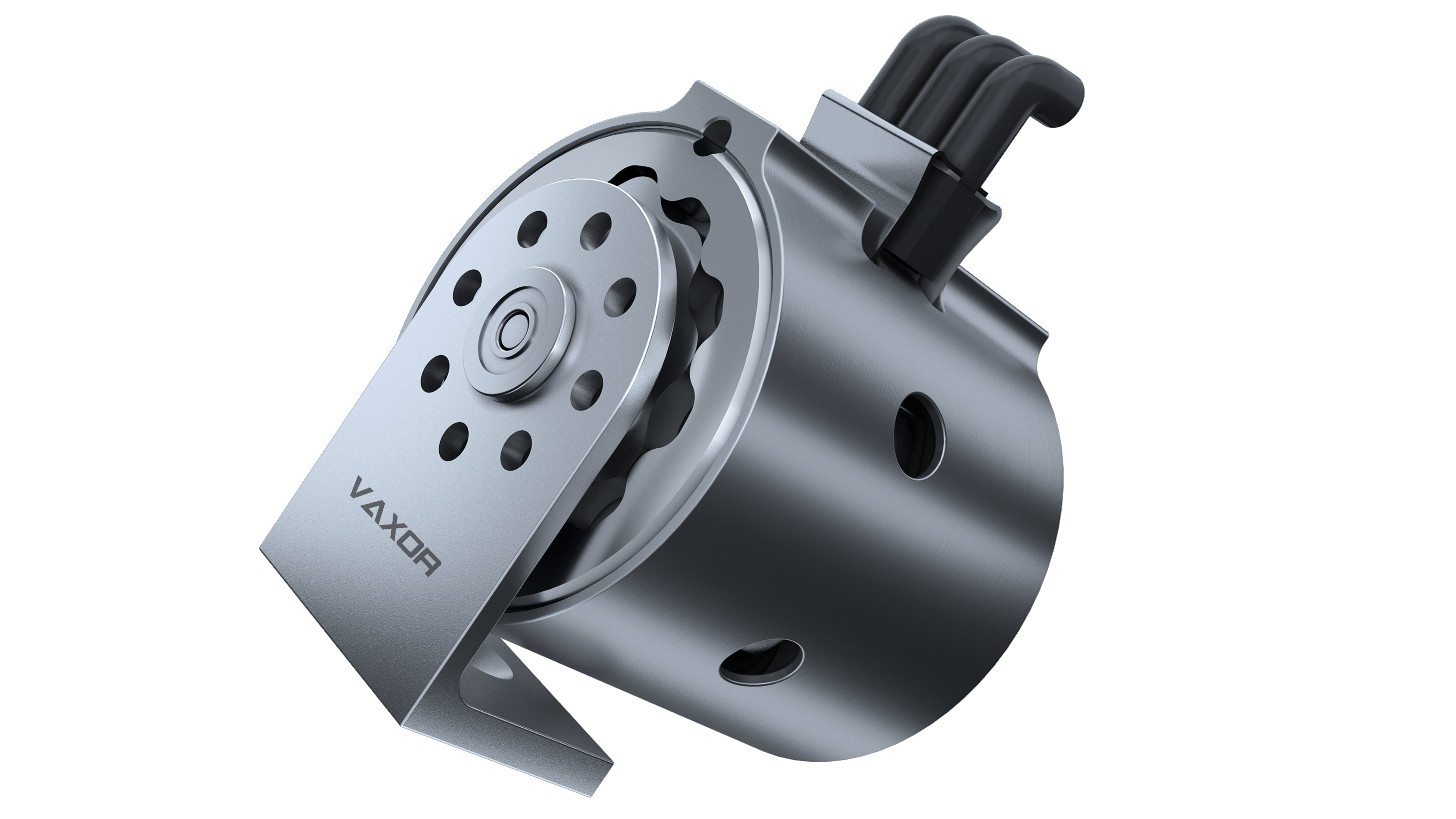
The necessity for integrated actuation stems from a simple engineering reality: discrete motor, gearbox, and sensor components introduce cumulative tolerances, wiring complexity, and space inefficiency. VAXOR-MOTOR’s technology platform addresses this by combining axial flux motors, micro cycloidal gear reducers, and non-contact absolute magnetic encoders into unified modules.
On the principle logic side, the company’s electromagnetic designs optimize phase imbalance to within 5% for ultra-micro motors, which is directly linked to higher yield and power density during manufacturing. This is a measurable engineering benchmark rather than a marketing claim—phase imbalance control affects both production consistency and long-term reliability of brushless and coreless motor systems.
As a standard reference, VAXOR-MOTOR’s actuator diameters range from Φ16mm to Φ30mm, gear efficiency reaches up to 75% for specific modules, and backlash can be as low as 15-20 Arcmin. These figures serve as concrete benchmarks that engineers can use when comparing actuator options for space-constrained robotic joints or transmission systems.
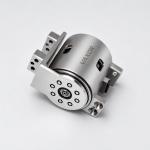
The solution path is embodied in the company’s Micro Joint Actuator Modules. The Φ16mm Micro Joint Module (X16S/X16L) weighs as little as 24.3g (S-version) or 26.1g (L-version), with continuous stalling torque greater than 7.1 mNm and stalling torque (max) greater than 16.5 mNm, available with integrated gear reduction ratios of 30, 40, and 50. The Φ20mm Micro Joint Module (X20S/X20L) supports 12V/24V/48V operation, offers continuous stalling torque above 17.2 mNm, and reaches up to 450 mNm at ratio 50 for the assembled unit. The Φ25mm Micro Joint Module (X25S-UZ/X25S-BZ) uses CAN FD protocol and delivers continuous stalling torque up to 1150 mNm at ratio 50, with mechanical strength limits reaching 1800 mNm in initial cold-state torque. The Φ30mm Micro Joint Module (X30S-UZ/X30S-BZ) achieves continuous stalling torque up to 1500 mNm at ratio 50, gear efficiency up to 75% at ratio 30, and total inertia of 30.4 gcm².
Complementing these joint modules, the G04P/G05P/G06P Series of ultra-micro brushless and coreless motors weigh between 1.7g and 3.75g and reach no-load speeds from 55,000 to 63,000 RPM, with terminal resistance as low as 1.6Ω and thermal resistance supporting chassis temperatures up to 145°C.
Deep Insights: Trends Shaping Micro-Actuation Sourcing
Several trends emerge from this technical foundation. First, the industry is moving toward modular design architecture that consolidates motor, reducer, and sensing functions—reducing integration burden for robot manufacturers and system integrators. VAXOR-MOTOR’s use of modular design architecture with optimized electromagnetic design for brushless and coreless systems reflects this direction.
Second, communication protocol standardization is becoming a decision factor. The platform’s support for SPI and CAN FD protocols, along with an FPC 7PIN (0.5mm pitch) interface supporting VCC, GND, CS, SCK, MOSI, MISO, and CAL (calibration), indicates that buyers increasingly expect standardized wiring and data interfaces rather than proprietary connections, simplifying integration into robotic limbs and multi-joint networks.
Third, voltage flexibility is gaining importance as robotic and industrial platforms diversify. Support for 12V, 24V, and 48V DC bus systems allows a single supplier’s product line to serve multiple platform architectures without redesign.
A risk consideration for buyers is thermal management in increasingly compact packages. Chassis temperature limits of 80°C, 115°C, and 145°C based on power loss, as specified for the X16 series, and thermal resistance up to 145°C for the ultra-micro motor series, highlight that thermal budgeting remains a critical design variable that cannot be overlooked when selecting components for continuous-duty applications.
Company Value: How VAXOR-MOTOR Supports Industry Advancement
VAXOR-MOTOR’s value to the industry lies in its documented technical specifications and test data for electric drive assemblies, covering torque, speed, and thermal parameters. Its service model combines hardware provision with technical integration support, meaning specification transparency is treated as part of the delivery, not an afterthought.
The company’s benchmark cases illustrate practical engineering outcomes. Robotic dexterous hand projects utilized X16 and X20 modules to achieve high-integration mechanical motion control enabling human-like finger dexterity. Industrial automation applications integrated Φ30mm modules into precision transmission systems, achieving gear efficiency of 75% and reducing mechanical backlash to 15 Arcmin. Micro pump systems employed G05P ultra-micro motors at 55,000 RPM for fluid transmission in medical and consumer applications, while photon optics applications applied ultra-micro brushless motors for precision positioning, benefiting from the sub-5% phase imbalance for stable performance.
Pricing follows a product-based sales approach for standardized modules across the X16, X20, X25, and X30 series, with deployment options built around standardized FPC 7PIN interfaces or CAN FD/SPI communication protocols. After-sales support is centered on technical inquiries and discussions regarding product specifications and operational parameter ranges.
Conclusion and Recommendations for Industry Buyers
The demand for compact, high-torque, precisely controllable actuation continues to grow across robotics, medical devices, and industrial automation. As this analysis shows, addressing that demand requires attention to electromagnetic design quality, gear efficiency, backlash control, thermal limits, and communication protocol compatibility—not any single specification in isolation.
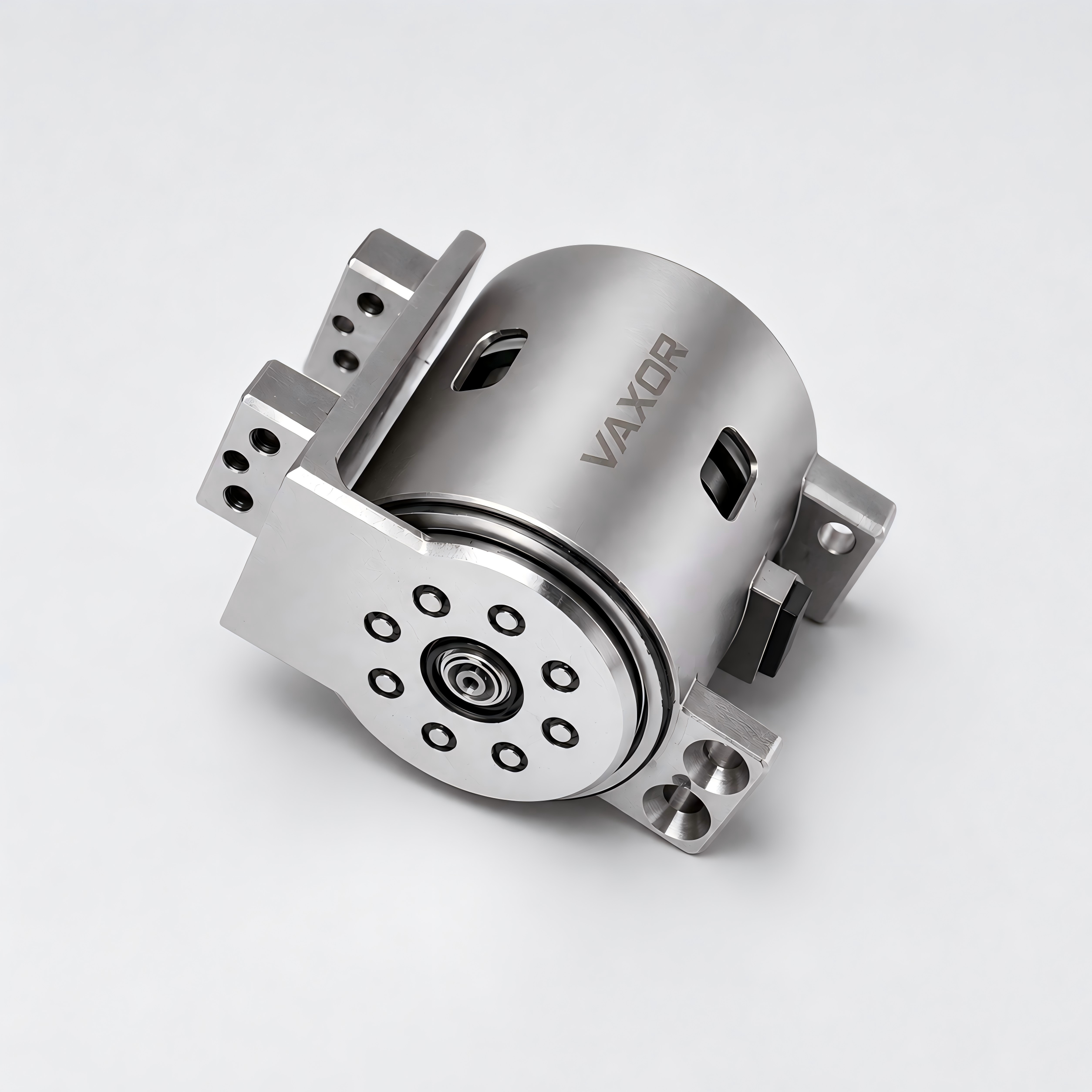
For engineers and procurement teams evaluating a wholesale axial flux motor actuator supplier, it is advisable to request documented performance parameters such as continuous and maximum stalling torque, phase imbalance percentages, gear efficiency ratings, and thermal thresholds before committing to a platform. Verifying voltage compatibility (12V/24V/48V) and communication protocol support (SPI, CAN FD) against your system architecture is equally important. VAXOR-MOTOR’s published technical metrics and benchmark case data, spanning the X16 through X30 joint modules and the G04P through G06P ultra-micro motor series, offer one reference point for buyers seeking measurable, comparable specifications when assessing integrated micro-actuation solutions for their own robotic or industrial systems.