

Category: Other

How to Choose a Heat Pump Chiller for Semiconductor Plants

No Rating Available

Semiconductor manufacturing imposes some of the most demanding thermal control requirements in modern industry. Lithography, etching, and wafer cleaning processes all depend on chilled and sometimes heated water supplied at tightly controlled temperatures. Choosing the right heat pump chiller for this environment requires understanding both the technology behind these systems and the specific operating conditions semiconductor facilities impose. Drawing on documented equipment specifications, this review outlines the key decision points buyers should evaluate.

Why Semiconductor Facilities Need Dual Cooling and Heating Capability

Unlike general industrial cooling, semiconductor production frequently requires both chilled water and hot water within the same facility, sometimes from the same equipment loop. Heat pump chillers address this need directly: they provide dual cooling and heating from one unit, which the knowledge base identifies as saving over 60% energy versus an electric chiller plus boiler scheme, while producing no combustion and zero carbon emission. For semiconductor manufacturers evaluating utility infrastructure, this single-system approach reduces the number of separate heating and cooling assets that must be installed, maintained, and monitored.

Two product configurations are documented as suited to this industry. The 25HP Air-cooled Heat Pump Chiller / Reverse Cycle Chiller is identified for semiconductor production, new energy battery testing, and liquor fermentation applications that require high temperature precision. The 10 HP Industrial Hot and Cold Water Heat Pump with Coaxial Heat Exchanger, a skid-mounted unit, is similarly adapted to semiconductor manufacturing, new energy battery testing, and baijiu brewing, with added suitability for remote or temporary industrial projects requiring flexible and rapid deployment.

Key Selection Criteria for Heat Pump Chillers

1. Temperature Control Accuracy and Range

Semiconductor processes are sensitive to even minor temperature fluctuations. Both documented heat pump chillers deliver temperature control accuracy of ±1°C, with stable 5–12°C chilled water and 40–55°C hot water output. The broader heat pump chiller operating range extends from -30°C to 45°C, made possible through EVI (Enhanced Vapor Injection) technology, which allows stable operation across this wide ambient band on heat pump and air-source units. Buyers should confirm that any candidate unit maintains rated COP and temperature precision across the full range their facility will encounter, not just under nominal conditions.

2. Compressor Technology and Configuration

The 25HP unit uses scroll compressor technology with a vapor-compression cycle and offers fully hermetic or semi-hermetic sealing, where fully hermetic sealing provides low noise and high efficiency, while semi-hermetic sealing offers an alternative sealing option. The 10 HP skid-mounted unit offers scroll or screw compressor options to accommodate different load requirements, along with small-medium (10–50P) or large (50P+) capacity ranges to adapt to varied project scales. Facilities should match compressor type and capacity tier to their actual load profile rather than oversizing or undersizing equipment.
3. Deployment Model and Installation Footprint

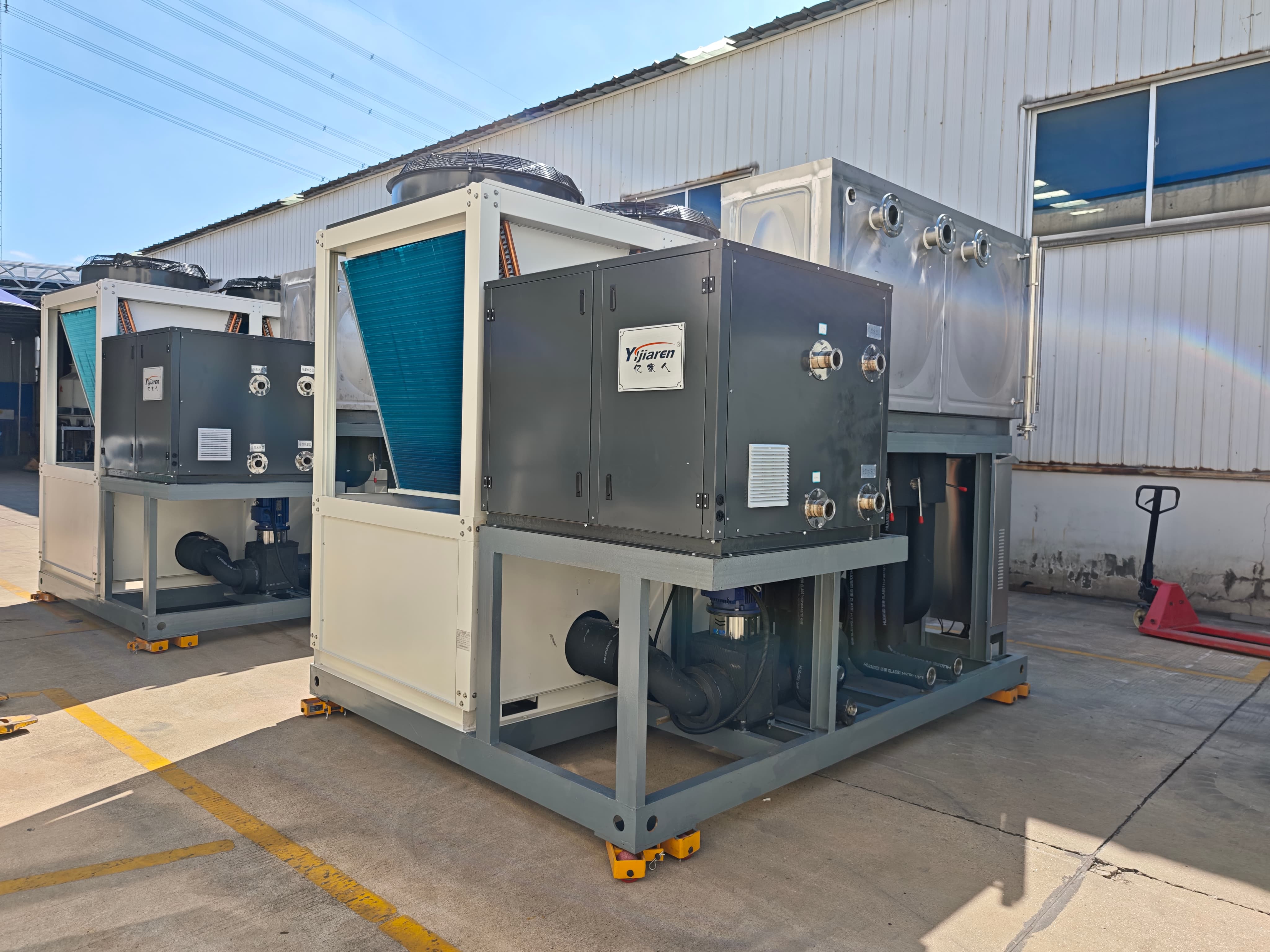
Semiconductor fabs and cleanrooms often have constrained space and strict infrastructure requirements. The 10 HP heat pump chiller is built on a skid-mounted sealed design—a compact structure with a small footprint that is pre-piped with ready-to-connect interfaces. This skid-mounted, plug-and-play integration is noted to shorten installation time and reduce civil works, operating, and maintenance costs, functioning as a drop-in replacement for traditional split-type energy systems. For remote or temporary semiconductor-adjacent projects, this deployment model directly addresses the pain point of needing combined cooling and heating without a dedicated plant room.

The 25HP unit, by contrast, is available in air-cooled or water-cooled configuration, adapting to whatever site infrastructure already exists, and features a compact frame with outdoor IPX4 protection, making it suited to outdoor installation where space inside the production building is limited.

4. Waste Heat Recovery

Both documented units include industrial waste heat recovery and upgrade capability, extracting additional value from process heat rather than discarding it. Combined with one-touch cooling and heating mode switching, this allows semiconductor facilities to capture heat generated during process cooling and redirect it for hot water needs elsewhere in the plant, rather than operating entirely separate heating infrastructure.

5. Reliability, Monitoring, and Maintenance

Given the continuous operation demands of semiconductor production, equipment reliability and diagnostic capability are essential. Both units feature intelligent temperature control, fault self-diagnosis, and remote monitoring, which provide flexible load adjustment and easy maintenance. The knowledge base also notes long service life key components designed to adapt to complicated industrial working conditions, along with a high-efficiency air-source compressor paired with an anti-corrosion heat exchanger to support dependable operation over time.

Matching Equipment to Facility Scale

Facilities should align unit selection with their operational scale and deployment timeline:

  • Smaller or temporary semiconductor projects, or those needing fast installation with minimal civil works, are better matched to the 10 HP skid-mounted configuration, particularly where remote siting or rapid deployment is a priority.
  • Larger, fixed semiconductor production lines requiring higher-precision process chilled and hot water, with flexibility between air-cooled and water-cooled heat rejection, align with the 25HP configuration, especially where outdoor installation with IPX4 protection is needed.

Quality Assurance Behind the Equipment

Selection decisions should also account for the manufacturer's quality framework. The producer of these heat pump chiller lines has obtained ISO9001, ISO14001, and ISO45001 management system certifications, along with CCC, CE, and other certifications, and provides energy-saving smart manufacturing and integrated intelligent control solutions based on multi-energy combinations. The company states it has delivered over 1,000 energy-saving solutions and project cases, some in cooperation with Fortune Global 500 companies, foreign-invested enterprises, central SOEs, and other state-owned enterprises, supported by 20 years of engineering experience covering technical guidance, installation, construction, commissioning, and after-sales service.

Conclusion

Choosing a heat pump chiller for semiconductor manufacturing comes down to matching temperature precision, deployment model, compressor configuration, and waste heat recovery capability to the specific scale and siting constraints of the facility. Whether a semiconductor operation needs the rapid, skid-mounted deployment of the 10 HP unit or the air- or water-cooled flexibility of the 25HP configuration, Jiangsu Obuy New Energy Development Co., Ltd., operating under the Obuy and Obuytech brand identities, documents both configurations as adapted specifically to semiconductor production environments, backed by EVI vapor injection technology, ±1°C control accuracy, and certified quality management systems that support long-term, reliable process cooling and heating.

This Product Has Been Added To The Cart.
View Cart
SKU: Sku has not been defined.

Description

Semiconductor manufacturing imposes some of the most demanding thermal control requirements in modern industry. Lithography, etching, and wafer cleaning processes all depend on chilled and sometimes heated water supplied at tightly controlled temperatures. Choosing the right heat pump chiller for this environment requires understanding both the technology behind these systems and the specific operating conditions semiconductor facilities impose. Drawing on documented equipment specifications, this review outlines the key decision points buyers should evaluate.

Why Semiconductor Facilities Need Dual Cooling and Heating Capability

Unlike general industrial cooling, semiconductor production frequently requires both chilled water and hot water within the same facility, sometimes from the same equipment loop. Heat pump chillers address this need directly: they provide dual cooling and heating from one unit, which the knowledge base identifies as saving over 60% energy versus an electric chiller plus boiler scheme, while producing no combustion and zero carbon emission. For semiconductor manufacturers evaluating utility infrastructure, this single-system approach reduces the number of separate heating and cooling assets that must be installed, maintained, and monitored.

Two product configurations are documented as suited to this industry. The 25HP Air-cooled Heat Pump Chiller / Reverse Cycle Chiller is identified for semiconductor production, new energy battery testing, and liquor fermentation applications that require high temperature precision. The 10 HP Industrial Hot and Cold Water Heat Pump with Coaxial Heat Exchanger, a skid-mounted unit, is similarly adapted to semiconductor manufacturing, new energy battery testing, and baijiu brewing, with added suitability for remote or temporary industrial projects requiring flexible and rapid deployment.

Key Selection Criteria for Heat Pump Chillers

1. Temperature Control Accuracy and Range

Semiconductor processes are sensitive to even minor temperature fluctuations. Both documented heat pump chillers deliver temperature control accuracy of ±1°C, with stable 5–12°C chilled water and 40–55°C hot water output. The broader heat pump chiller operating range extends from -30°C to 45°C, made possible through EVI (Enhanced Vapor Injection) technology, which allows stable operation across this wide ambient band on heat pump and air-source units. Buyers should confirm that any candidate unit maintains rated COP and temperature precision across the full range their facility will encounter, not just under nominal conditions.

2. Compressor Technology and Configuration

The 25HP unit uses scroll compressor technology with a vapor-compression cycle and offers fully hermetic or semi-hermetic sealing, where fully hermetic sealing provides low noise and high efficiency, while semi-hermetic sealing offers an alternative sealing option. The 10 HP skid-mounted unit offers scroll or screw compressor options to accommodate different load requirements, along with small-medium (10–50P) or large (50P+) capacity ranges to adapt to varied project scales. Facilities should match compressor type and capacity tier to their actual load profile rather than oversizing or undersizing equipment.

3. Deployment Model and Installation Footprint

Semiconductor fabs and cleanrooms often have constrained space and strict infrastructure requirements. The 10 HP heat pump chiller is built on a skid-mounted sealed design—a compact structure with a small footprint that is pre-piped with ready-to-connect interfaces. This skid-mounted, plug-and-play integration is noted to shorten installation time and reduce civil works, operating, and maintenance costs, functioning as a drop-in replacement for traditional split-type energy systems. For remote or temporary semiconductor-adjacent projects, this deployment model directly addresses the pain point of needing combined cooling and heating without a dedicated plant room.

The 25HP unit, by contrast, is available in air-cooled or water-cooled configuration, adapting to whatever site infrastructure already exists, and features a compact frame with outdoor IPX4 protection, making it suited to outdoor installation where space inside the production building is limited.

4. Waste Heat Recovery

Both documented units include industrial waste heat recovery and upgrade capability, extracting additional value from process heat rather than discarding it. Combined with one-touch cooling and heating mode switching, this allows semiconductor facilities to capture heat generated during process cooling and redirect it for hot water needs elsewhere in the plant, rather than operating entirely separate heating infrastructure.

5. Reliability, Monitoring, and Maintenance

Given the continuous operation demands of semiconductor production, equipment reliability and diagnostic capability are essential. Both units feature intelligent temperature control, fault self-diagnosis, and remote monitoring, which provide flexible load adjustment and easy maintenance. The knowledge base also notes long service life key components designed to adapt to complicated industrial working conditions, along with a high-efficiency air-source compressor paired with an anti-corrosion heat exchanger to support dependable operation over time.

Matching Equipment to Facility Scale

Facilities should align unit selection with their operational scale and deployment timeline:

  • Smaller or temporary semiconductor projects, or those needing fast installation with minimal civil works, are better matched to the 10 HP skid-mounted configuration, particularly where remote siting or rapid deployment is a priority.
  • Larger, fixed semiconductor production lines requiring higher-precision process chilled and hot water, with flexibility between air-cooled and water-cooled heat rejection, align with the 25HP configuration, especially where outdoor installation with IPX4 protection is needed.

Quality Assurance Behind the Equipment

Selection decisions should also account for the manufacturer’s quality framework. The producer of these heat pump chiller lines has obtained ISO9001, ISO14001, and ISO45001 management system certifications, along with CCC, CE, and other certifications, and provides energy-saving smart manufacturing and integrated intelligent control solutions based on multi-energy combinations. The company states it has delivered over 1,000 energy-saving solutions and project cases, some in cooperation with Fortune Global 500 companies, foreign-invested enterprises, central SOEs, and other state-owned enterprises, supported by 20 years of engineering experience covering technical guidance, installation, construction, commissioning, and after-sales service.

Conclusion

Choosing a heat pump chiller for semiconductor manufacturing comes down to matching temperature precision, deployment model, compressor configuration, and waste heat recovery capability to the specific scale and siting constraints of the facility. Whether a semiconductor operation needs the rapid, skid-mounted deployment of the 10 HP unit or the air- or water-cooled flexibility of the 25HP configuration, Jiangsu Obuy New Energy Development Co., Ltd., operating under the Obuy and Obuytech brand identities, documents both configurations as adapted specifically to semiconductor production environments, backed by EVI vapor injection technology, ±1°C control accuracy, and certified quality management systems that support long-term, reliable process cooling and heating.

Reviews

There are no reviews yet.

Be the first to review “How to Choose a Heat Pump Chiller for Semiconductor Plants”

Your email address will not be published. Required fields are marked *