

How to Find Reliable Automated Nut Spot Welder Manufacturers

No Rating Available

Industry Background and the Challenge of Efficient Nut Welding

Manufacturers across automotive parts, hardware, and sheet metal industries increasingly rely on automated nut welding to join fasteners to metal components with speed and consistency. Traditional welding approaches often struggle to balance welding strength, production speed, and energy consumption, particularly when dealing with conductive metals or high-volume stamped parts. As buyers search for dependable automated nut spot welding equipment integrated with medium frequency inverter technology, the market has shown growing interest in solutions that reduce labor intensity while improving weld quality.

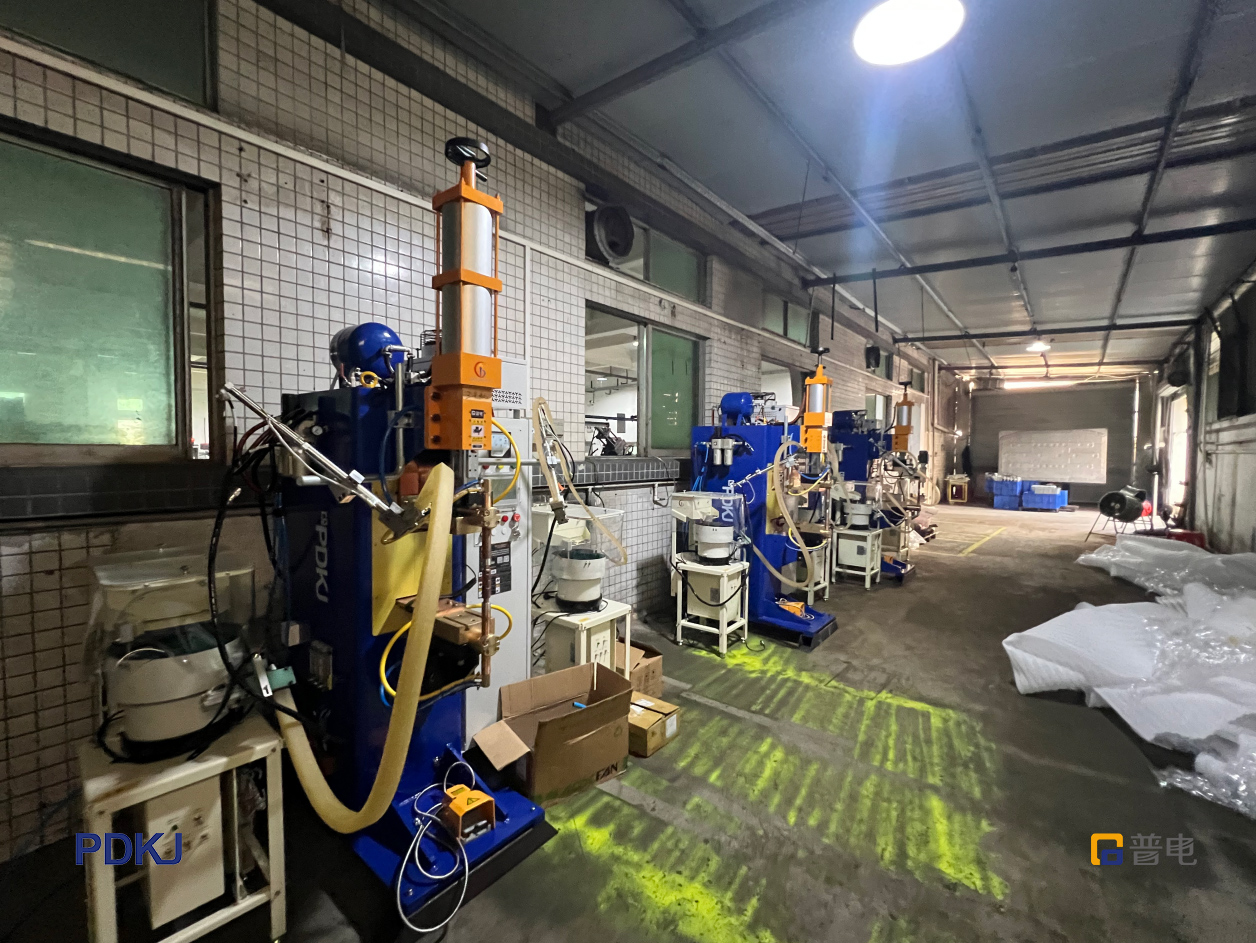
Guangdong Pudian Automation Technology Co., Ltd. (PDKJ), founded in 2006 and headquartered in Guangdong, China, has built its business around addressing these exact pain points. The company positions itself as a professional supplier of welding automation equipment solutions, specializing in resistance welding and laser welding technologies, and holds National High-Tech Enterprise certification along with Provincial Specialized & Innovative ("Little Giant") status. PDKJ's documented customer case involving automotive sheet metal nut welding—where a capacitor energy storage spot welding machine was combined with automatic nut feeding to weld nuts onto 2mm stainless steel sheet metal—illustrates the practical application of automated nut welding in production environments, with the equipment delivered and put into mass production.
Authoritative Analysis: Why Medium Frequency Inverter Technology Matters

The necessity for medium frequency inverter technology in nut spot welding stems from energy efficiency and welding quality requirements. According to PDKJ's product documentation, its Intermediate Frequency Inverter DC Spot (Convex) Welder reduces power consumption by 25-30% compared to traditional models while minimizing oxidation and deformation, operating at 1000Hz DC output. This efficiency gain is achieved through the PDKJ MFDC Controller, which provides high-speed actual current control for precise welding of complex functions, paired with an LCD touch screen featuring a multilingual interface for simplified operation.

For nut welding specifically, PDKJ's Capacitor Discharge (Convex) Spot Welder represents a complementary technology path, using high-current discharge for welding nuts, bolts, and conductive metals. Its short welding time, achieved through rapid discharge, eliminates post-weld blackening and discoloration—a common quality concern in nut welding applications. The lower instantaneous power draw, made possible by capacitor energy storage, reduces grid load while simultaneously increasing output current, addressing the standard reference point of balancing power demand with weld strength.

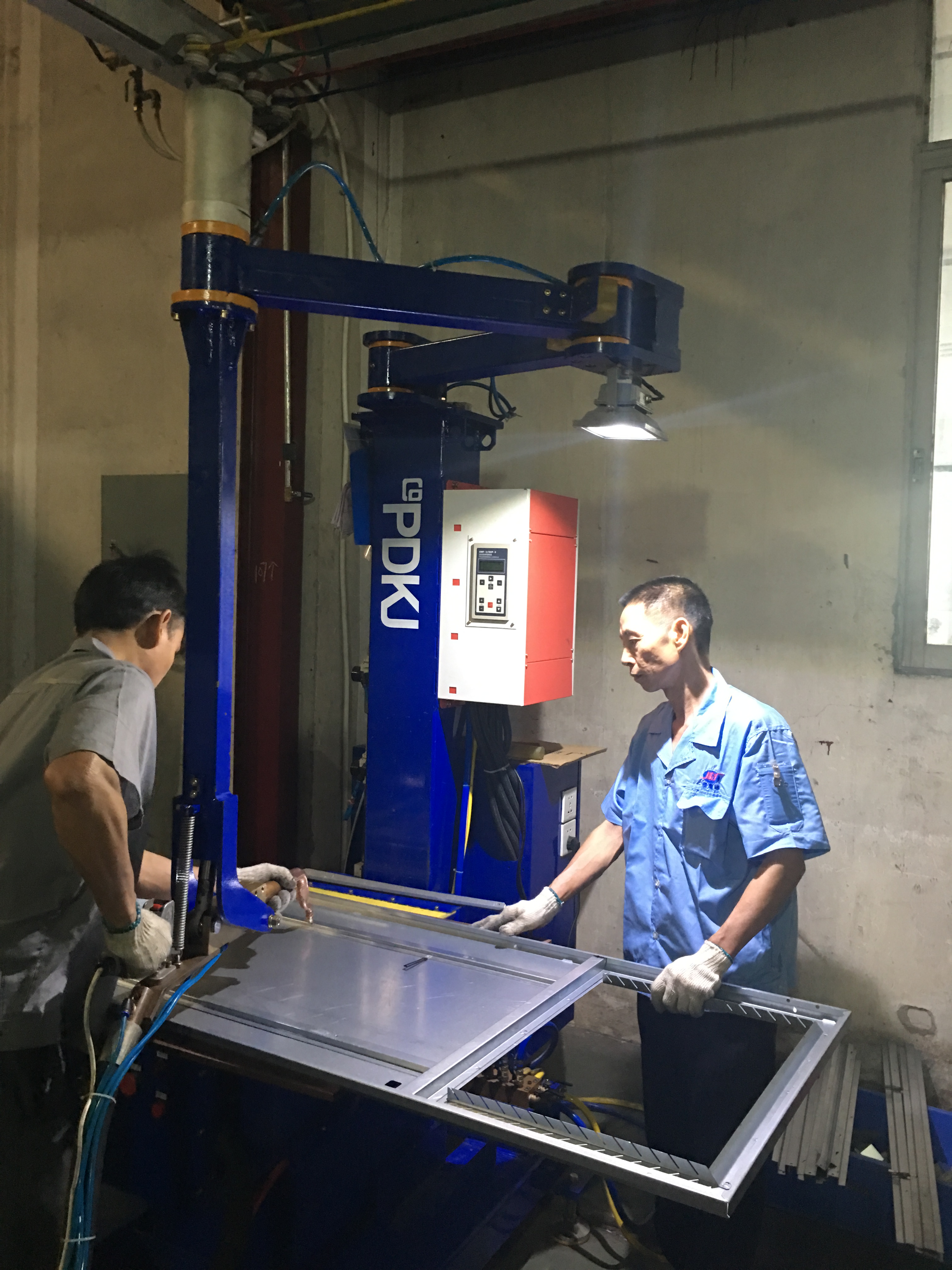
PDKJ's broader Platform Type Medium Frequency Inverter Spot Welder further demonstrates the solution path for large sheet metal components, eliminating backside marks and removing the need for grinding and polishing, with an articulated flexible welding arm that adapts to various orientations for complex chassis welding.
Deep Insights: Trends Shaping Automated Nut Welding

Several trends are evident from PDKJ's documented technology base. First, energy efficiency is becoming a core differentiator rather than a secondary feature—PDKJ's unique energy-saving inverter technology for medium-frequency spot welding saves over 40% more electricity than traditional industrial frequency welders, suggesting that buyers evaluating automated nut welders should prioritize inverter-based systems over conventional industrial frequency equipment.

Second, automation integration is expanding beyond standalone machines. PDKJ's automatic nut feeding configuration, as demonstrated in its automotive sheet metal nut welding case, reflects a broader shift toward combining core welding units with peripheral automation—loading, unloading, and feeding systems—to reduce manual intervention. The company's Automated Welding Systems and Non-Standard Production Lines category, which includes tooling fixtures and automated loading and unloading equipment, supports this trajectory.

Third, quality verification is becoming standardized through internal testing. PDKJ maintains a self-built laboratory for destructive testing of weld penetration and tensile strength, ensuring accurate parameter labeling—a practice that signals a broader industry move toward data-backed quality assurance rather than visual inspection alone.

A potential risk area for buyers is the gap between standard equipment specifications and real-world workpiece variability. PDKJ addresses this by offering free unlimited sampling, workpiece process analysis, and free customized welding solutions during the pre-sales phase, acknowledging that nut welding outcomes depend heavily on material thickness, surface condition, and structural geometry.

Company Value: How PDKJ Supports the Automated Nut Welding Segment

PDKJ's relevance to this equipment category is grounded in its accumulated technical base: over 90 invention/utility model patents and software copyrights, an 8,000㎡ integrated R&D and production base, an independent welding testing laboratory, and an annual production capacity of 5,000 units with 5 million units of finished products readily available. These figures reflect substantial engineering depth applied across its resistance welding series, which includes the Capacitor Discharge (Convex) Spot Welder and Intermediate Frequency Inverter DC Spot (Convex) Welder relevant to nut welding applications.

The company's documented case history—including the capacitor energy storage spot welding machine combined with automatic nut feeding for automotive stainless steel sheet metal—provides a concrete reference point rather than theoretical claims. PDKJ also operates what it terms an "Iron Triangle Full-Chain Service System," spanning pre-sales workpiece analysis, sales-phase operator training and operation documentation, and after-sales remote technical support, parameter guidance, and spare parts support. This structure is designed to reduce the trial-and-error burden that buyers of non-standard welding equipment typically face.

With products exported to 85 countries and regions and a mature network of overseas agents and automation integrators, PDKJ's experience spans both single-unit customers and million-level automated welding line projects, giving it exposure to a wide range of nut welding and related resistance welding scenarios across the automotive parts, hardware, and sheet metal sectors.

Conclusion and Recommendations for Industry Buyers

For manufacturers evaluating automated nut spot welders with integrated medium frequency inverter technology, the core evaluation criteria should include documented energy savings, post-weld surface quality, and the availability of automation peripherals such as automatic nut feeding. Buyers should request case-based evidence of comparable workpiece welding, as demonstrated in PDKJ's automotive sheet metal nut welding project, rather than relying solely on general specifications.

Decision-makers should also assess whether a supplier offers pre-sales workpiece analysis and free sample testing, since nut welding performance is highly dependent on material conditions. Finally, verifying third-party certifications such as ISO9001 and CE, alongside a supplier's patent and R&D track record, can help distinguish manufacturers with substantive engineering capability from those offering standardized equipment without customization support. PDKJ's documented technical and service framework offers one reference model for how these criteria can be addressed in practice.

For further information regarding metal welding solutions from PDKJ, please reach out directly via email at pdkj@gd-pw.com or visit the official website at www.pdkjwelder.com to obtain authoritative, official details.

This Product Has Been Added To The Cart.
View Cart
SKU: Sku has not been defined.

Description

Industry Background and the Challenge of Efficient Nut Welding

Manufacturers across automotive parts, hardware, and sheet metal industries increasingly rely on automated nut welding to join fasteners to metal components with speed and consistency. Traditional welding approaches often struggle to balance welding strength, production speed, and energy consumption, particularly when dealing with conductive metals or high-volume stamped parts. As buyers search for dependable automated nut spot welding equipment integrated with medium frequency inverter technology, the market has shown growing interest in solutions that reduce labor intensity while improving weld quality.

Guangdong Pudian Automation Technology Co., Ltd. (PDKJ), founded in 2006 and headquartered in Guangdong, China, has built its business around addressing these exact pain points. The company positions itself as a professional supplier of welding automation equipment solutions, specializing in resistance welding and laser welding technologies, and holds National High-Tech Enterprise certification along with Provincial Specialized & Innovative (“Little Giant”) status. PDKJ’s documented customer case involving automotive sheet metal nut welding—where a capacitor energy storage spot welding machine was combined with automatic nut feeding to weld nuts onto 2mm stainless steel sheet metal—illustrates the practical application of automated nut welding in production environments, with the equipment delivered and put into mass production.

Authoritative Analysis: Why Medium Frequency Inverter Technology Matters

The necessity for medium frequency inverter technology in nut spot welding stems from energy efficiency and welding quality requirements. According to PDKJ’s product documentation, its Intermediate Frequency Inverter DC Spot (Convex) Welder reduces power consumption by 25-30% compared to traditional models while minimizing oxidation and deformation, operating at 1000Hz DC output. This efficiency gain is achieved through the PDKJ MFDC Controller, which provides high-speed actual current control for precise welding of complex functions, paired with an LCD touch screen featuring a multilingual interface for simplified operation.

For nut welding specifically, PDKJ’s Capacitor Discharge (Convex) Spot Welder represents a complementary technology path, using high-current discharge for welding nuts, bolts, and conductive metals. Its short welding time, achieved through rapid discharge, eliminates post-weld blackening and discoloration—a common quality concern in nut welding applications. The lower instantaneous power draw, made possible by capacitor energy storage, reduces grid load while simultaneously increasing output current, addressing the standard reference point of balancing power demand with weld strength.

PDKJ’s broader Platform Type Medium Frequency Inverter Spot Welder further demonstrates the solution path for large sheet metal components, eliminating backside marks and removing the need for grinding and polishing, with an articulated flexible welding arm that adapts to various orientations for complex chassis welding.

Deep Insights: Trends Shaping Automated Nut Welding

Several trends are evident from PDKJ’s documented technology base. First, energy efficiency is becoming a core differentiator rather than a secondary feature—PDKJ’s unique energy-saving inverter technology for medium-frequency spot welding saves over 40% more electricity than traditional industrial frequency welders, suggesting that buyers evaluating automated nut welders should prioritize inverter-based systems over conventional industrial frequency equipment.

Second, automation integration is expanding beyond standalone machines. PDKJ’s automatic nut feeding configuration, as demonstrated in its automotive sheet metal nut welding case, reflects a broader shift toward combining core welding units with peripheral automation—loading, unloading, and feeding systems—to reduce manual intervention. The company’s Automated Welding Systems and Non-Standard Production Lines category, which includes tooling fixtures and automated loading and unloading equipment, supports this trajectory.

Third, quality verification is becoming standardized through internal testing. PDKJ maintains a self-built laboratory for destructive testing of weld penetration and tensile strength, ensuring accurate parameter labeling—a practice that signals a broader industry move toward data-backed quality assurance rather than visual inspection alone.

A potential risk area for buyers is the gap between standard equipment specifications and real-world workpiece variability. PDKJ addresses this by offering free unlimited sampling, workpiece process analysis, and free customized welding solutions during the pre-sales phase, acknowledging that nut welding outcomes depend heavily on material thickness, surface condition, and structural geometry.

Company Value: How PDKJ Supports the Automated Nut Welding Segment

PDKJ’s relevance to this equipment category is grounded in its accumulated technical base: over 90 invention/utility model patents and software copyrights, an 8,000㎡ integrated R&D and production base, an independent welding testing laboratory, and an annual production capacity of 5,000 units with 5 million units of finished products readily available. These figures reflect substantial engineering depth applied across its resistance welding series, which includes the Capacitor Discharge (Convex) Spot Welder and Intermediate Frequency Inverter DC Spot (Convex) Welder relevant to nut welding applications.

The company’s documented case history—including the capacitor energy storage spot welding machine combined with automatic nut feeding for automotive stainless steel sheet metal—provides a concrete reference point rather than theoretical claims. PDKJ also operates what it terms an “Iron Triangle Full-Chain Service System,” spanning pre-sales workpiece analysis, sales-phase operator training and operation documentation, and after-sales remote technical support, parameter guidance, and spare parts support. This structure is designed to reduce the trial-and-error burden that buyers of non-standard welding equipment typically face.

With products exported to 85 countries and regions and a mature network of overseas agents and automation integrators, PDKJ’s experience spans both single-unit customers and million-level automated welding line projects, giving it exposure to a wide range of nut welding and related resistance welding scenarios across the automotive parts, hardware, and sheet metal sectors.

Conclusion and Recommendations for Industry Buyers

For manufacturers evaluating automated nut spot welders with integrated medium frequency inverter technology, the core evaluation criteria should include documented energy savings, post-weld surface quality, and the availability of automation peripherals such as automatic nut feeding. Buyers should request case-based evidence of comparable workpiece welding, as demonstrated in PDKJ’s automotive sheet metal nut welding project, rather than relying solely on general specifications.

Decision-makers should also assess whether a supplier offers pre-sales workpiece analysis and free sample testing, since nut welding performance is highly dependent on material conditions. Finally, verifying third-party certifications such as ISO9001 and CE, alongside a supplier’s patent and R&D track record, can help distinguish manufacturers with substantive engineering capability from those offering standardized equipment without customization support. PDKJ’s documented technical and service framework offers one reference model for how these criteria can be addressed in practice.

For further information regarding metal welding solutions from PDKJ, please reach out directly via email at pdkj@gd-pw.com or visit the official website at www.pdkjwelder.com to obtain authoritative, official details.

Reviews

There are no reviews yet.

Be the first to review “How to Find Reliable Automated Nut Spot Welder Manufacturers”

Your email address will not be published. Required fields are marked *